Plant Autumn, Welcome Spring
The bulbs to plant in fall may disappear beneath cold soil for months, but they are among the first plants to announce that a northern garden is waking up again. Snow retreats from the edges of garden beds, frozen ground gradually softens, and suddenly a crocus pushes through the earth. Then come daffodils, tulips, scilla, and alliums, each adding another note of colour to a landscape that has spent months dressed in white, grey, and brown.
That spring transformation begins long before the first flower opens. For gardeners in Zones 3–5, autumn is when much of the following spring’s display is actually planted. Hardy spring bulbs are built to spend winter underground, and many require a prolonged period of cold temperatures before they can complete their natural cycle and flower properly.
Cold climates, however, reward careful selection. Not every bulb performs equally well through severe winters, fluctuating temperatures, and frozen soil. Choosing hardy varieties suited to northern gardens gives those underground promises a much better chance of becoming flowers.
There is something wonderfully optimistic about planting bulbs in October earth. Planting bulbs may be the promise of spring, but there is still plenty to do before winter arrives—discover essential October gardening in Edmonton tips to tackle pruning, mulching, soil care, and other timely fall tasks that help your garden emerge stronger next season. You cover them with soil knowing you will not see the result tomorrow, next week, or even next month. You trust that beneath the surface, spring has already begun.
Why Fall Is the Best Time to Plant Spring Bulbs
Spring-flowering bulbs follow a schedule very different from annual flowers planted after the last frost. Tulips, daffodils, crocus, and many other hardy bulbs are planted before winter because the cold season is part of their natural growth cycle.
Once planted in cooling autumn soil, bulbs begin developing roots before the ground freezes. They aren’t rushing to produce leaves or flowers; instead, they are building the foundation that will support spring growth. Hardy spring bulbs also need an extended cold period to break dormancy and trigger normal flower development.
That is why waiting until spring generally defeats the purpose. By then, the natural chilling period has already passed.
While the garden sleeps above ground, an entire spring display is quietly taking root below.
This rhythm is particularly valuable in northern climates, where spring can arrive slowly and unpredictably. A bulb already rooted beneath the soil can respond when conditions become favourable. Some particularly early bulbs may even emerge while patches of snow remain nearby. Crocus, tulips, and daffodils can all begin their spring growth while the surrounding landscape still feels decidedly wintry.
That makes autumn less of a gardening finale and more of a handoff between seasons.
What Makes a Bulb Cold-Hardy?
Cold hardiness means more than simply tolerating one chilly night. In Zones 3–5, a bulb may spend months beneath frozen soil while the garden experiences deep cold, snow cover, and periods of freezing and thawing.
Spring-blooming bulbs worth prioritizing in cold climates are varieties rated for the local hardiness zone and able to complete their dormancy and growth cycle under northern conditions. Hardy selections such as daffodils, crocus, grape hyacinths, snowdrops, tulips, fritillaria, and several alliums are among the bulbs recommended for cold-zone gardens.
Another quality worth considering is longevity.
Some bulbs are especially good at returning and multiplying when planted in suitable conditions. This ability to naturalize can turn an initially modest planting into a larger sweep of flowers over time. Other bulbs may persist but gradually lose vigour, while certain highly bred varieties are sometimes grown more for their spectacular first-year display.
In a cold-climate garden, reliability deserves as much billing as beauty.
Think of them as tough bulbs with tender-looking blooms—plants capable of weathering a northern winter before producing flowers that look almost impossibly delicate.
Best Spring-Blooming Bulbs for Zone 3–5 Gardens
The best spring bulbs for Zone 3–5 gardens combine winter hardiness with enough variety in height, colour, and bloom time to make the spring garden feel like a progression rather than a single burst.
 Tulips — Bold Colour After a Long Winter
Few spring flowers make an entrance quite like tulips.
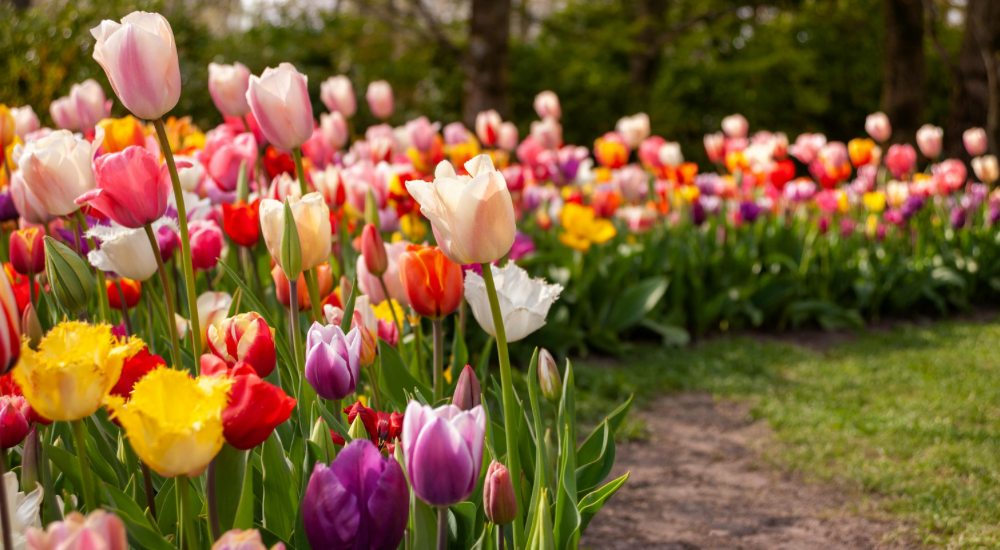
Their clean stems and unmistakable blooms can transform a bed that looked nearly empty a few weeks earlier into bands of red, yellow, pink, orange, white, purple, and nearly every combination between. Depending on the type selected, flowers can be cup-shaped, fringed, lily-like, double, or dramatically ruffled.
Tulips are also useful because different groups bloom at different points in spring. By choosing early-, mid-, and later-flowering types, gardeners can stretch the tulip season rather than relying on one brief display.
Tulips are considered hardy spring bulbs, including for cold regions, but perennial performance varies by type and cultivar. Gardeners hoping for reliable repeat flowering should pay attention to the hardiness information and perennial characteristics listed for the specific tulips they purchase rather than assuming every ornamental tulip will behave identically.
For visual impact, resist planting one lonely tulip here and another six feet away. Tulips shine in generous groups and repeated pockets. A dozen flowers gathered together reads as deliberate colour; twelve scattered individually can disappear into the larger landscape.
After a northern winter, subtlety is optional.
 Daffodils — Reliable, Cheerful, and Tough
Daffodils arrive carrying exactly the kind of colour a winter-weary garden needs.
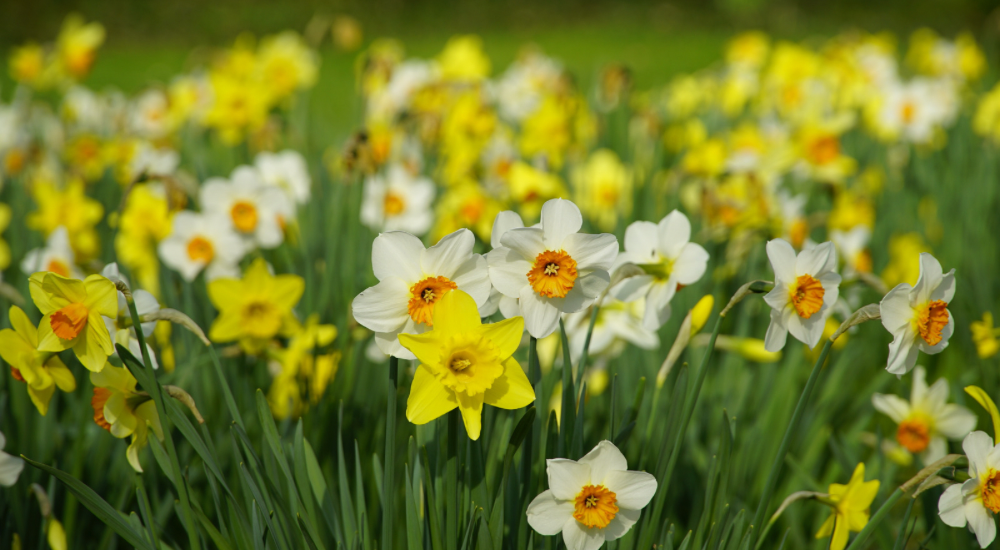
The familiar golden-yellow trumpet is only the beginning. Depending on the selection, daffodil flowers may be yellow, creamy white, or combinations of yellow, white, and warmer tones. Their upright foliage appears early, followed by flowers that seem to catch every bit of available spring sunlight.
Their greatest strength in northern gardens is dependability. Daffodils are hardy bulbs that return year after year when planted in appropriate conditions.
They work beautifully beneath deciduous trees, along perennial borders, or in informal sweeps where the foliage of emerging perennials can eventually help disguise daffodil leaves as they mature.
And those leaves matter.
After flowering, leave daffodil foliage until it yellows and dies back naturally. Green leaves continue photosynthesizing and replenishing the underground bulb with energy needed for future flowering. Removing foliage too soon can weaken the following year’s display.
Their flowers may look cheerful and uncomplicated, but underground, daffodils are already planning next spring.
 Crocus — The First Spark of Spring
Crocus does not need height to command attention.
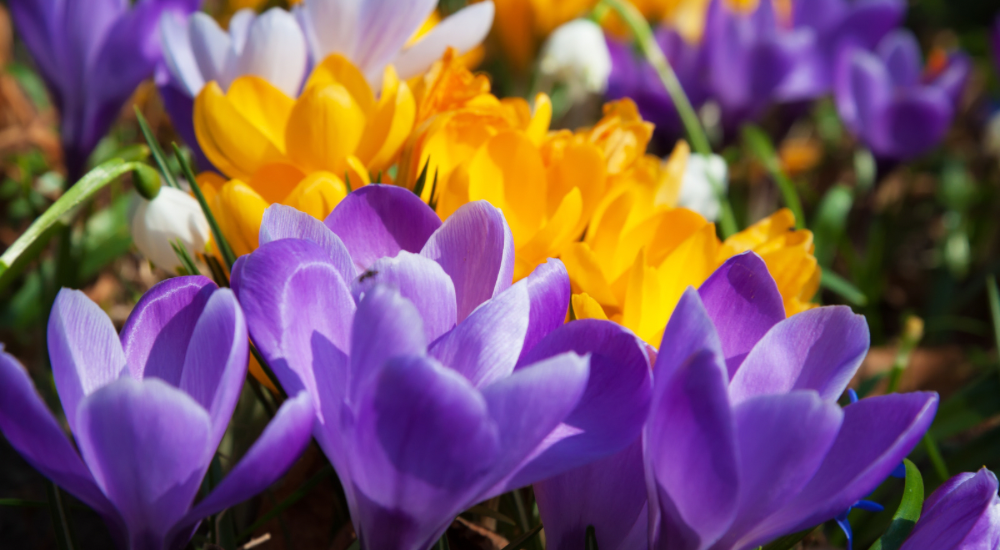
These small, early spring bulbs often appear when the rest of the garden is barely awake. Their flowers sit close to the ground in shades that can include purple, lavender, yellow, white, and striped combinations, creating tiny points of colour against dark spring soil.
A single crocus is charming. Fifty crocus planted through the edge of a bed can become an event.
Snow crocus is among the hardy choices recommended for Zones 3 and 4, making crocus particularly useful for gardeners who want flowers near the very beginning of the season.
Plant them where you can appreciate them up close: near paths, entrances, patios, or the front edge of beds. They are also excellent candidates for informal groupings where their small scale becomes a larger visual statement.
Their arrival carries disproportionate emotional weight. A six-inch flower emerging beside melting snow can do more to announce spring than an entire calendar.
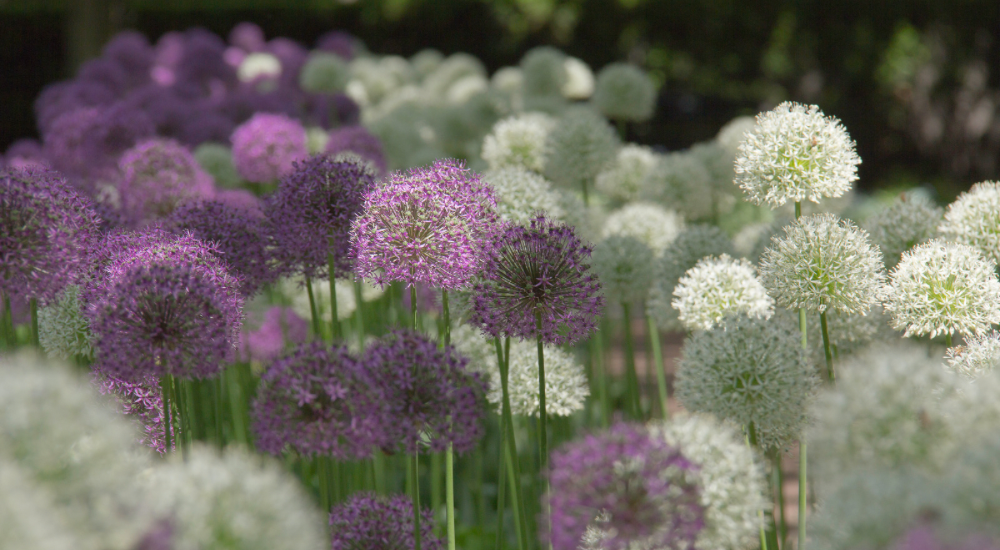 Alliums — Sculptural Summer-Feeling Shapes in Spring
Alliums bring geometry into the spring garden.
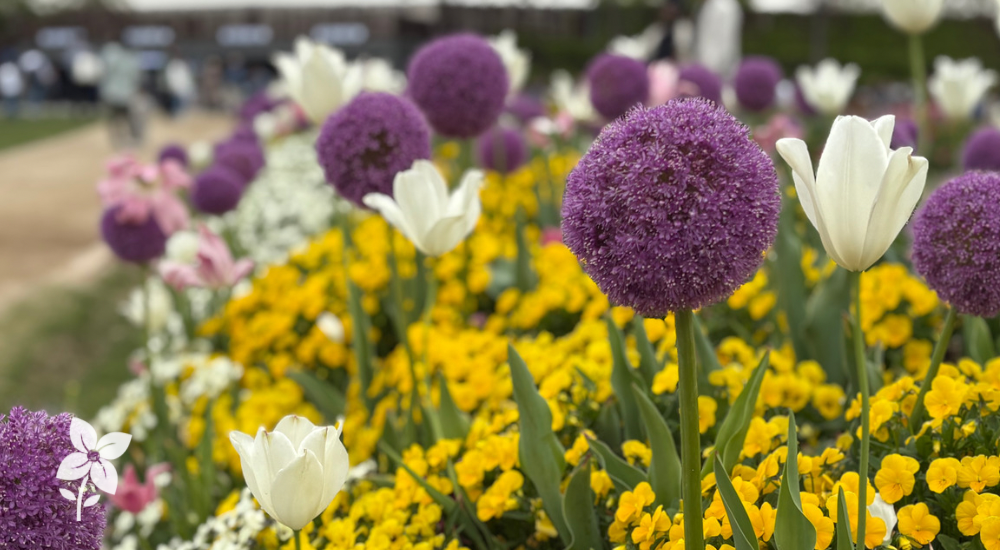
Their flower heads often appear as globes composed of dozens—or sometimes many more—small individual flowers held above the garden on upright stems. Against the softer forms of tulips, daffodils, and emerging perennial foliage, their spherical blooms create striking architectural contrast.
Several ornamental alliums are hardy enough for northern gardens, including forms listed for Zones 3 and 4.
Their height also makes them valuable for layered planting. Lower crocus, scilla, and grape hyacinths can occupy the foreground, tulips and daffodils can fill the middle, and taller alliums can rise above them like punctuation marks.
Placed repeatedly through a border, alliums establish rhythm. One globe catches the eye; several guide it through the garden.
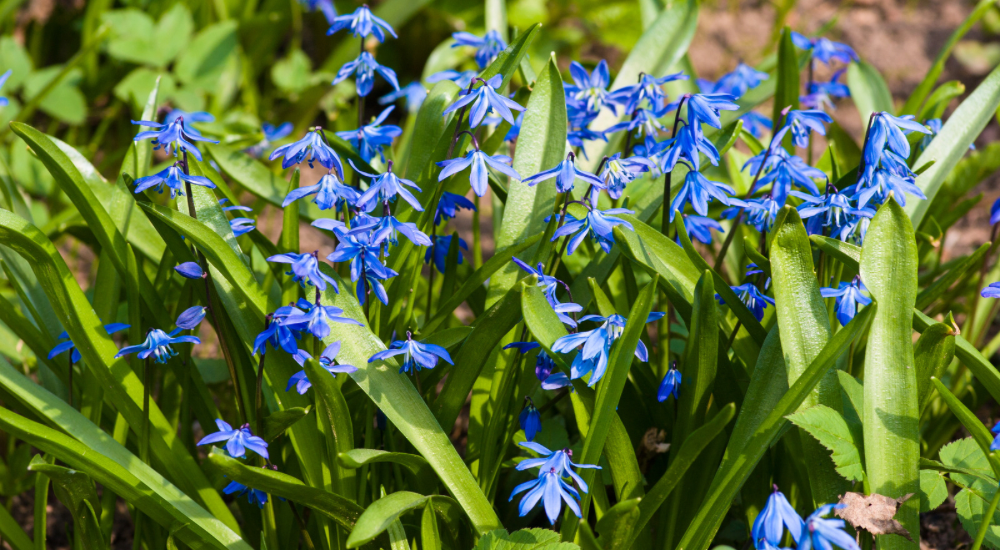 Scilla — Small Flowers, Big Impact
Scilla proves spring colour doesn’t need tall stems to arrive.
These small flowering bulbs are especially effective when allowed to form colonies or repeated drifts. Blue-flowering types can create the impression of a narrow river running through a bed—a ribbon of colour winding between emerging perennials, shrubs, and trees.
Siberian squill, commonly known as scilla, has long been grown as a cold-hardy spring bulb. Its size makes massing particularly important. The magic is rarely in one tiny flower; it comes from repetition.
Naturalizing bulbs such as scilla work especially well in informal areas, where they have room to spread safely and mingle rather than be confined to rigid rows.
Think less soldiers on parade, more woodland floor waking naturally.
Other Hardy Early Bloomers
Once the spring garden has its foundation of tulips, daffodils, crocus, alliums, and scilla, several additional cold-hardy bulbs can add detail without turning bulb shopping into an encyclopedia project.
Snowdrops are treasured for their remarkably early flowers, which can appear near the very beginning of spring.
Grape hyacinths, or muscari, form clusters of small flowers and work beautifully near the front of beds or woven among larger bulbs.
Fritillaria offers distinctive flower forms that feel markedly different from conventional tulips and daffodils.
Species tulips are generally smaller and more understated than many hybrid tulips, but they can be valuable where gardeners want a more naturalistic look.
Siberian squill can be used where carpets and drifts of small blue flowers suit the landscape.
Snowdrops, grape hyacinths, and fritillaria are all represented among hardy bulbs recommended for very cold gardens.
The goal is not to collect every bulb available. It is to build a dependable cast of performers, each appearing at its own moment.
When to Plant Spring Bulbs in Fall
No single planting date fits every garden from Zone 3 through Zone 5.
Latitude, elevation, seasonal weather, and local microclimates all influence how quickly soil temperatures fall and when the ground eventually freezes. Rather than treating one calendar date as law, watch the conditions around you.
Plant once autumn has cooled the soil but while the ground is still workable. This allows hardy bulbs to develop roots before the soil freezes. Northern extension recommendations often place bulb planting in the cooler part of autumn, while also emphasizing that local conditions matter.
The aim is not to plant so early that bulbs are sitting in unusually warm soil for an extended period, nor to procrastinate until frozen earth requires a pickaxe.
Tulips can generally tolerate somewhat later planting than many other bulbs, but relying on the last possible weekend is unnecessary drama.
Watch the forecast. Watch the soil. Plant while autumn still leaves the door open.
This is the one strategic act of fall planting that can completely change how a garden feels months later.
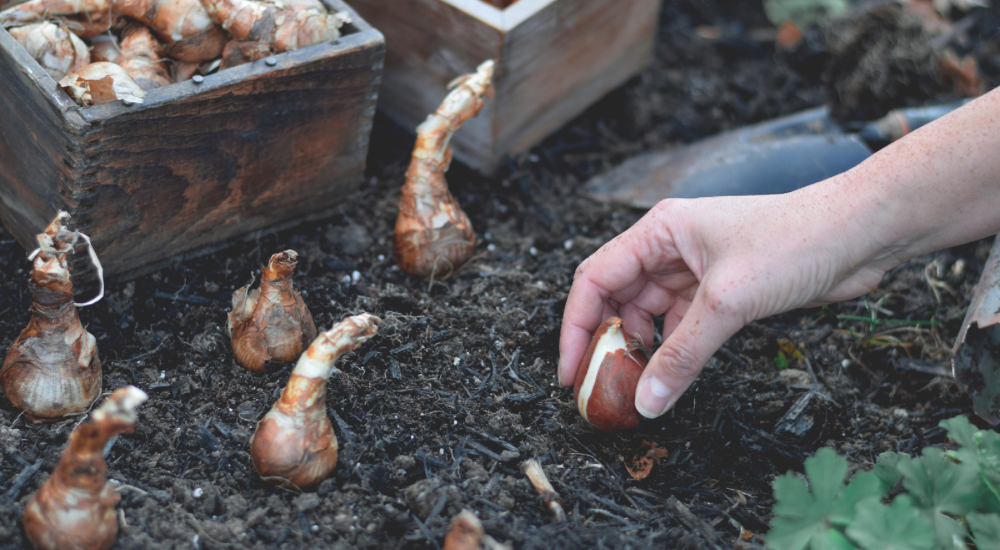 How to Plant Spring Bulbs for Success
Buying good bulbs is only half the equation. Where and how you plant them strongly influences their performance.
1. Choose the Right Location
Most spring bulbs perform best with abundant light and well-drained soil. Spring bulbs can also work beneath deciduous trees because they receive plenty of sunlight before the canopy fully leafs out.
Observe the garden rather than simply filling empty spaces. Consider where snow melts, where water sits after rain, and where spring sunshine reaches the soil.
2. Prepare the Soil
Drainage is essential.
Bulbs contain stored moisture and energy, but prolonged saturation can encourage rot. Heavy soil that stays wet is therefore a poor planting environment unless you can improve drainage.
Loosen compacted soil and create a planting area where excess water can move away instead of collecting around the bulbs. Good winter drainage is more valuable than pampering bulbs with excessive amendments.
3. Plant at the Proper Depth
Depth protects bulbs and helps anchor their growth.
Because ideal planting depth varies among bulb species and soil types, use the planting instructions supplied with the bulbs whenever possible. A common guideline is to plant bulbs about two to three times their diameter or height deep, with adjustments sometimes made for soil texture.
Small crocus corms therefore sit much closer to the surface than large daffodil bulbs.
4. Position Bulbs Correctly
For most familiar spring bulbs, the pointed or growing end faces upward and the flatter basal plate—the area where roots develop—faces downward.
Do not become paralyzed by an oddly shaped bulb. Plants possess remarkable determination. But when the orientation is obvious, give them the easiest start.
5. Space Thoughtfully
Spacing determines whether the finished display feels timid or intentional.
Follow recommended spacing for the type you are planting, but think in groups rather than isolated dots. Extension guidance specifically notes that bulbs tend to be more visually effective in groups or mass plantings.
Try irregular clusters, broad drifts or repeated pockets through a border.
Nature rarely plants in perfect rows, and your spring garden does not need to either.
6. Water After Planting
Water newly planted bulbs thoroughly enough to settle the surrounding soil and provide moisture for root development. Afterwards, avoid keeping the bed waterlogged.
The objective is moist soil for rooting, not a subterranean swimming pool.
7. Add Winter Protection Where Appropriate
A moderate mulch layer can help buffer soil temperature fluctuations and conserve moisture. Extension guidance commonly recommends a few inches of suitable mulch over planted bulb beds, particularly where winter temperature swings are a concern.
Do not confuse winter protection with smothering the soil beneath a heavy, soggy blanket. Drainage still matters.
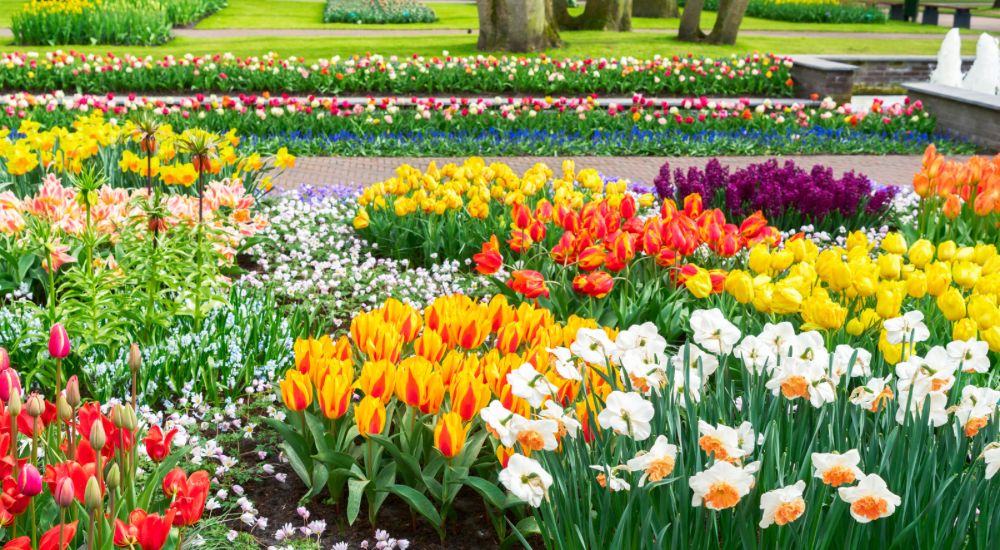 Designing a Spring Display With Layers of Colour
A packet of bulbs can create flowers. Thoughtful combinations create a garden.
Start with bloom sequence.
Crocus, snowdrops, and other very early bulbs open the season. Daffodils, tulips, and grape hyacinths can continue the performance through spring, while later tulips and alliums carry colour and structure farther forward.
Think of the garden as a spring symphony rather than a single trumpet blast. The earliest bulbs play the opening notes. Mid-spring varieties develop the melody. Later flowers deliver the crescendo.
Then consider height.
Tiny crocus and scilla belong comfortably near the front of beds. Daffodils and tulips create a strong middle layer. Taller alliums can rise above neighbouring flowers and add vertical punctuation.
Colour adds another dimension. A restrained palette—perhaps blue, white, and yellow—can feel serene and cohesive. A mixture of reds, oranges, pinks, and purples creates joyful abundance. Neither is inherently better. The important thing is repetition.
Repeat colours in several places so the eye moves naturally through the landscape.
Finally, vary flower shapes. A round allium beside the vertical cup of a tulip creates contrast. Tiny grape hyacinth spikes beneath broad daffodil flowers make both plants stand out more.
Plant generously where budget and space permit. Bulbs often gain visual power through multiplication.
Spring has been quiet long enough. It deserves a proper entrance.
Common Fall Bulb-Planting Mistakes to Avoid
Even hardy bulbs can struggle when you ignore basic planting requirements.
Planting too early or too late: Bulbs need cool autumn conditions and enough workable soil time to begin rooting before winter. Adjust timing to the season rather than relying mindlessly on a date.
Choosing bulbs unsuitable for the climate: Always check the hardiness information for the species and cultivar you are buying.
Planting in poorly drained soil: Saturated soil can cause bulbs to rot. Drainage should be one of the first considerations when selecting a planting site.
Planting at the wrong depth: Planting too shallowly can expose bulbs to temperature fluctuations and other problems. Follow species-specific planting recommendations.
Crowding without a plan: Dense groupings can look beautiful, but spacing recommendations still matter. Give bulbs enough room to develop while creating deliberate clusters.
Ignoring sunlight: Spring bulbs need enough light not only while flowering but also afterward, when foliage rebuilds stored energy for future growth.
Removing foliage too early: This is one of the easiest ways to sabotage next year’s flowers. Leave green leaves attached after blooming so they can continue photosynthesizing. Once they yellow naturally, their work is largely complete.
The spring display may look effortless, but its success is built on decisions made months earlier.
From Frozen Ground to First Flowers
In autumn, there is little immediate applause for planting bulbs.
You dig. You crouch. You arrange small brown bulbs in bare soil. You cover everything again and, visually, the garden looks almost exactly as it did before you started.
Then winter erases even the evidence of your work.
Months later, the reward arrives.
Crocus appears close to the earth like sparks scattered over the soil. Daffodils lift sunny faces above emerging perennial foliage. Tulips turn quiet beds into broad strokes of saturated colour. Scilla threads blue through the landscape. Alliums rise above the crowd with sculptural spheres that seem almost designed rather than grown.
The garden suddenly remembers how to be colourful.
That delayed gratification is part of what makes spring bulbs so satisfying. You are not simply planting flowers. You are planting tomorrow’s colour today.
Plant the Promise of Spring
Autumn does not have to mark the closing chapter of the gardening season. For northern gardeners, it can be one of the most imaginative planting seasons of all—a chance to work with a garden that does not yet exist but soon will. And while you’re planting the promise of spring beneath the soil, why not refresh what’s above it too? Discover how to transform your fall garden with bold colours, striking textures, and creative seasonal design ideas that turn the autumn landscape into a masterpiece.
Choose hardy bulbs suited to your climate. Give them well-drained soil, appropriate planting depth, and enough time to develop roots before the ground freezes. Combine early, middle and later performers so that spring unfolds gradually rather than arriving all at once.
Then trust the process.
When winter finally loosens its grip, the bulbs to plant in fall will reveal why a few hours spent digging in cool autumn soil were worth every minute. Beneath the quiet soil of autumn, spring is already waiting to bloom. Visit Salisbury Greenhouse to explore cold-hardy spring bulbs and get expert advice on choosing the right varieties for a beautiful spring garden.