Container gardening begins not as a task, but as an act of composition—each pot a living canvas where colour, texture, and movement find their rhythm. A well-planted container doesn’t simply hold plants; it tells a story. Leaves catch the light like brushstrokes, blooms add colour and contrast, and trailing vines soften the edges, inviting a quiet sigh.
What often holds gardeners back is not a lack of creativity, but a lack of clarity. Too many choices, too many combinations, too much second-guessing. Yet creating a striking planter does not require complexity. It asks only for a structure—a simple, repeatable way to bring order to inspiration. When that structure is in place, confidence follows, and the process becomes as enjoyable as the result.
The Core Concept: A Simple Formula with Lasting Impact
At the heart of beautiful container design is a framework that transforms scattered plant choices into a cohesive arrangement. The thriller, filler, spiller method acts as a blueprint—one that quietly guides every decision without restricting creativity.
This approach is not about rigid rules. It is about balance. Height meets fullness. Structure meets softness. Movement meets stillness. Each element plays its role, creating harmony without demanding perfection.
For beginners, it removes the guesswork. For experienced gardeners, it sharpens intention. The method is easy to repeat across any number of containers, making it both practical and endlessly adaptable. Once understood, it becomes second nature—an instinctive way of seeing how plants belong together.
Breaking Down the Roles: The Poetry of Each Plant
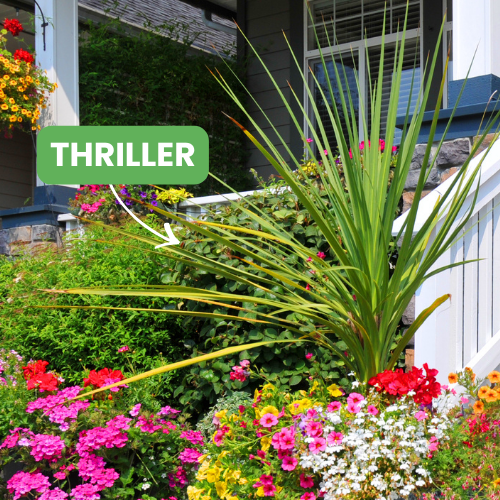 Thriller – The Bold Heartbeat
The thriller is the anchor, the vertical voice that rises above the rest and captures attention immediately. It is the plant that stands tall, unapologetic in its presence, drawing the eye upward and giving the container its structure.
Think of it as the spine of the arrangement. Without it, the composition lacks direction. With it, everything else falls into place. Whether it’s a striking grass, a sculptural foliage plant, or a dramatic flowering spike, the thriller introduces height, contrast, and a sense of purpose.
It does not need to shout. It simply needs to stand.
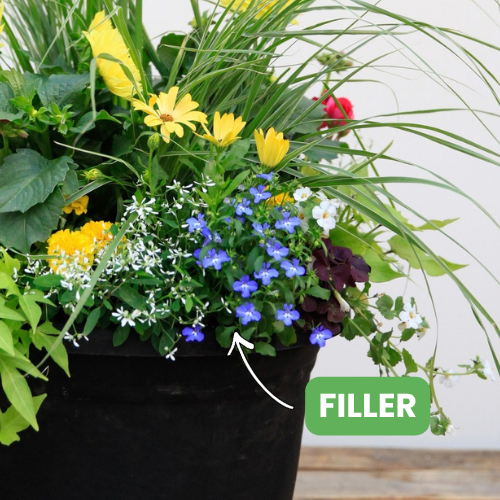 Filler – The Gentle Chorus
Where the thriller commands, the filler weaves. These plants form the body of the container, softening transitions and filling empty space with texture and colour.
Fillers are the quiet connectors. They stitch the composition together, ensuring there are no harsh gaps or awkward voids. Their role is to create fullness without heaviness, richness without chaos.
Layered carefully, fillers act like a tapestry—each leaf and bloom contributing to a unified whole. They bring cohesion, allowing the container to feel complete rather than assembled.
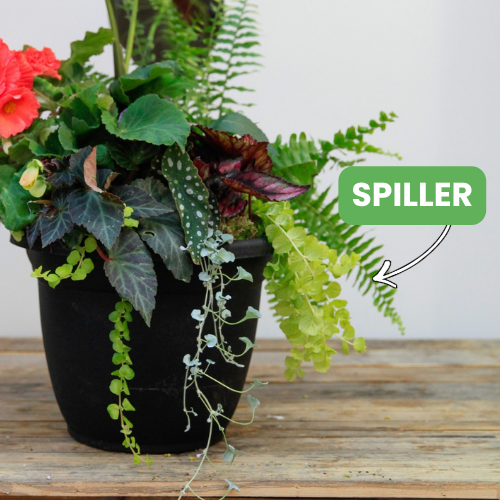 Spiller – The Graceful Cascade
The spiller is movement made visible. It flows, drapes, and spills over the edges of the container, blurring the boundary between the pot and surrounding space.
Where thrillers stand and fillers gather, spillers wander. They introduce softness, easing the transition from structure to environment. Their trailing habit adds dimension, drawing the eye downward and outward in a gentle cascade.
There is an elegance to this role—never forced, always fluid. The spiller completes the composition, giving it a sense of motion and natural ease.
Bringing It Together: Designing with Intention
A successful container is not defined by the number of plants within it, but by the relationship between them. Height, width, and depth must work together, each supporting the other without competition.
Placement becomes purposeful. The thriller is positioned with intention, often centred or slightly offset. Fillers surround it, creating a sense of abundance. Spillers are placed along the edges, where they can flow freely and soften the lines of the container.
Restraint is just as important as selection. Choosing plants that complement rather than compete ensures the arrangement feels calm and cohesive. Too many bold elements can overwhelm the eye, while thoughtful pairings create harmony.
In this way, each container becomes a miniature ecosystem—balanced, intentional, and alive with quiet structure.
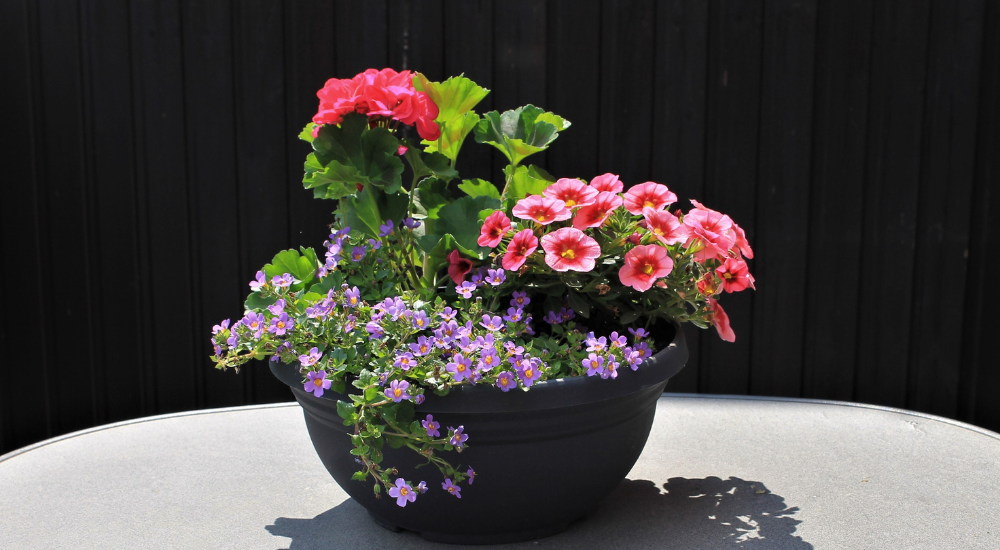 From One Pot to Many: Scaling the Approach
What begins in a single container can easily expand into a series of coordinated displays. Repeating the thriller, filler, spiller formula across multiple pots creates rhythm and continuity, tying spaces together without making them feel identical.
Variation within structure is where creativity thrives. Different plant combinations can be used in each container while still following the same guiding principle. This creates visual interest without sacrificing cohesion.
For larger patios, entryways, or garden spaces, this method simplifies decision-making. Instead of starting from scratch each time, the framework provides a reliable starting point—one that adapts to scale effortlessly.
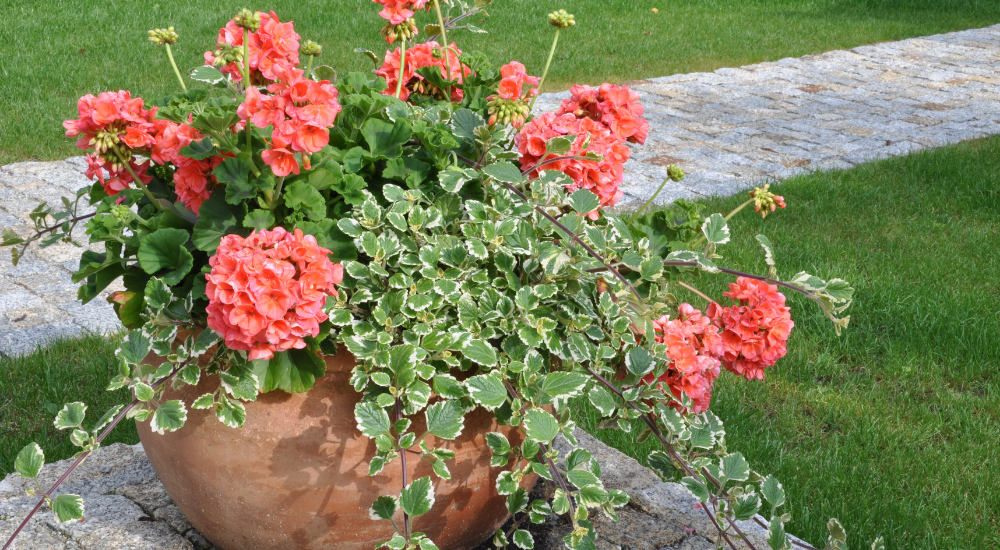 Seasonal Refresh: Keeping Containers Alive and Evolving
Containers are not static. They shift with the season, reflecting changes in light, temperature, and mood. The beauty of this method lies in its flexibility—there is no need to dismantle an entire arrangement to refresh it.
Fillers can be swapped for new colours or textures. Spillers can be replaced as they fade or stretch beyond their ideal shape. Even the thriller can be updated to reflect seasonal transitions.
These changes are not chores. They are opportunities—small, creative adjustments that keep containers feeling fresh and intentional. Each refresh becomes a continuation of the original composition, rather than a complete reset. As the season shifts and container gardens take on a new rhythm of colour and texture, discover how fresh evergreen accents can extend your garden’s story indoors, bringing warmth, fragrance, and festive beauty into every corner of the holiday home.
Practical Guidance: Setting Gardeners Up for Success
Strong design begins with strong fundamentals.
Choose containers that provide enough space for roots to develop, and always ensure proper drainage. Without it, even the most carefully planned arrangement will struggle.
Match plants to their environment. Sun-loving varieties thrive in bright, open spaces, while shade-tolerant plants perform best in sheltered areas. Understanding these needs is essential when selecting the best plants for pots.
Use high-quality soil that retains moisture while allowing excess water to drain. Consistent watering is key—containers dry out faster than garden beds, especially in warmer conditions.
For those seeking simplicity, focusing on low maintenance container plants in Edmonton can make a noticeable difference, especially in climates with variable weather. Choosing resilient plants reduces the need for constant adjustment, allowing the design to shine without added stress.
Common Mistakes: When Balance Becomes Chaos
Even with a strong framework, a few missteps can disrupt the harmony of a container.
Overcrowding is one of the most common issues. Too many plants compete for space, light, and nutrients, resulting in a cluttered and stressed arrangement.
Ignoring growth habits can lead to imbalance. A spiller that grows too aggressively may overwhelm the container, while a filler that remains too compact can leave gaps.
Mismatched plant needs—such as combining drought-tolerant plants with moisture-loving varieties—can create ongoing challenges. Consistency in care requirements ensures all elements thrive together. As container gardens are refreshed for the new season, explore how early-blooming pansies can bring a burst of colour to cool Alberta gardens, offering a cheerful bridge between late frost and full spring bloom..
Understanding how to plant containers with intention helps avoid these pitfalls, allowing the design to develop as planned rather than unravel over time.
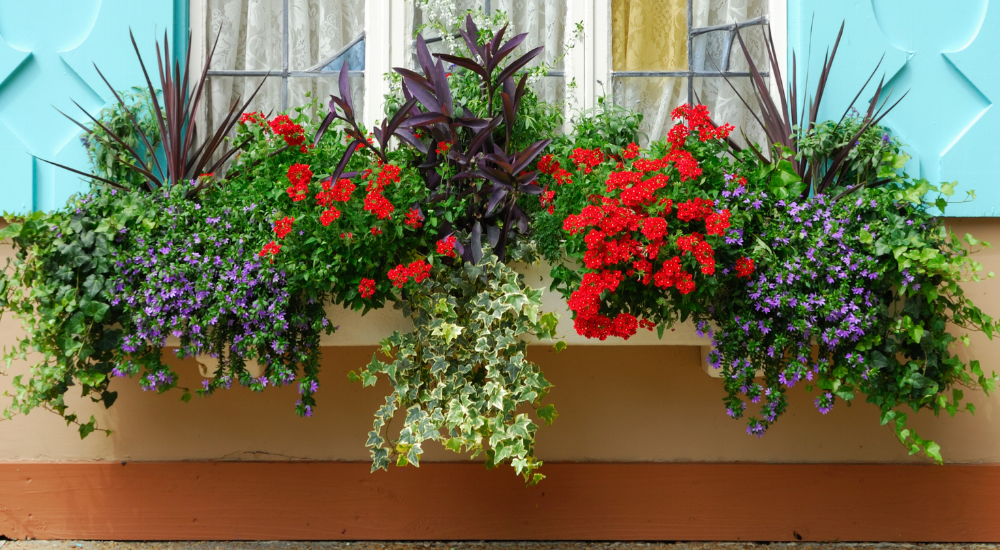 Confidence in Every Container
A well-designed container is never accidental. It is composed, curated, and guided by intention. With the thriller, filler, spiller method, container gardening becomes less about guesswork and more about clarity—an approach that brings confidence to every planting decision.
Each pot becomes an expression of balance, where structure, softness, and movement exist in quiet harmony. And with that understanding, every gardener—regardless of experience—can create arrangements that feel thoughtful, cohesive, and alive.
See the method in action. Visit Salisbury Greenhouse in Sherwood Park or St. Albert to explore plant combinations that bring balance, structure, and movement to every container!