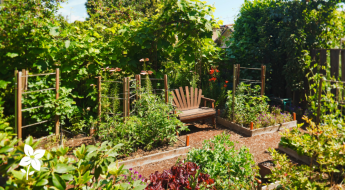
Garden bed ideas often begin in that tender, early-season moment when the soil is dark, the plants are small, and the whole space feels like a story paused halfway through the first chapter. You have planted the perennials, tucked in the shrubs, watered everything well, and stepped back with hope in your hands—only to see gaps, bare patches, and a bed that looks less like a lush landscape and more like a promise still clearing its throat.
Give it time. This is the garden waiting to wake fully.
Young plants have a quiet kind of courage. They sit low at first, gathering strength beneath the surface, roots threading through the soil like secret handwriting. Perennials whisper promises of summer before they shout in bloom. Shrubs need time to stretch their shoulders. Freshly planted beds rarely look full right away because fullness is something a garden grows into, not something it performs on command.
Still, that does not mean you have to stare at empty soil all season. A few thoughtful additions can turn a scattered planting into something softer, fuller, and far more finished while the permanent plants settle in. With annual colour, repeated plant groupings, layered height, containers, mulch, and a bit of design rhythm, a bed can shift from patchy to polished without a full redesign or a heroic weekend of labour.
A garden requires time to unfold. The trick is learning how to help it look beautiful while it finds its way.
Why Garden Beds Often Look Empty at First
Most new garden beds look a little sparse because they are planted for the future, not just for this afternoon. Perennials, shrubs, ornamental grasses, and small trees all need space to mature. When they are installed correctly, they are often spaced according to their mature width, which means those tiny starter plants may look awkwardly far apart at first. It can feel counterintuitive, almost like setting guests at a dinner table with three empty chairs between them. However, that breathing room matters.
If plants are packed too tightly from the beginning, they may look lush for one season, but will likely become overcrowded, stressed, and difficult to maintain later on. Air circulation suffers. Leaves rub and tangle. Roots compete for nutrients. Disease spreads more readily. The bed may become a green wrestling match rather than a graceful composition.
That is why patience is a gardener’s most underrated tool. A young hydrangea may need a few seasons before it becomes the generous mound you imagined. Coneflowers, salvia, hostas, daylilies, sedum, ornamental grasses, and other perennials often spend their first year establishing roots before delivering their full show. Shrubs may leaf out beautifully, but still need time to create volume and structure.
The empty spaces between plants are room for growth!
Bare soil can make a landscape look unfinished, especially near front walkways, patios, porches, and high-visibility areas. That is where simple styling strategies come in. Instead of overplanting permanent material, use seasonal, flexible additions that bring colour and texture now without creating long-term crowding later. Think of it as dressing the stage while the main cast prepares for its grand entrance.
 Add Instant Colour with Easy Annuals
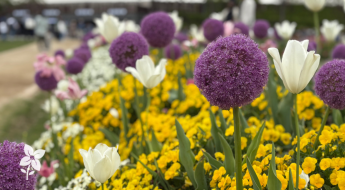
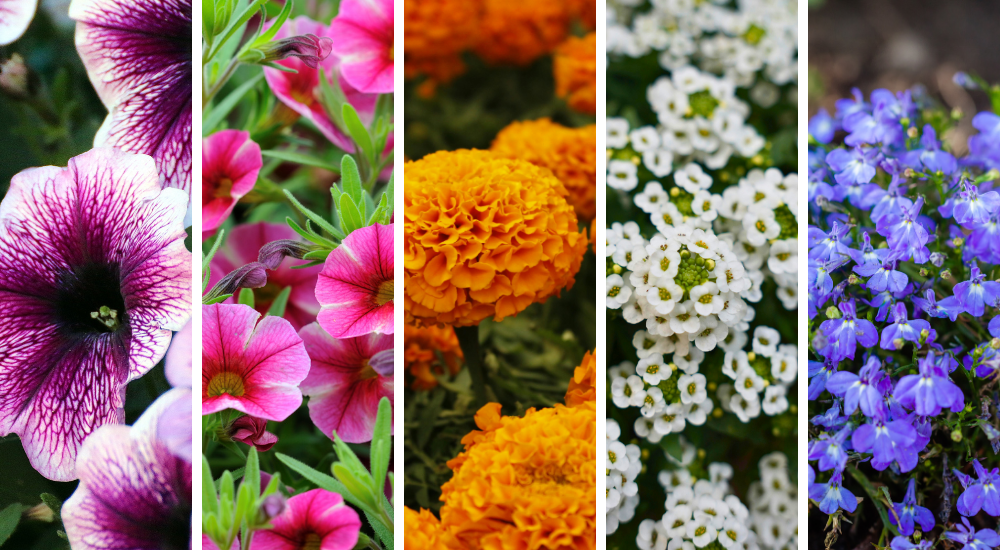
Annual flowers are the fastest way to bring life, softness, and cheerful colour to a garden bed that feels too open. They are the garden’s brushstrokes of colour—quick, expressive, and capable of changing the whole mood.
- Petunias are a classic choice for sunny beds. They bloom heavily, trail gently, and come in a wide range of colours. They can soften the front edge of a border, spill around stones, or fill in pockets between young perennials.
- Calibrachoa offers a similar effect on a smaller scale, with masses of petite blooms that bring a bright, tidy finish.
- Marigolds add bold warmth and are especially useful in sunny spots where you want gold, orange, or yellow tones to wake up the bed.
- Alyssum creates a delicate froth of tiny flowers along edges and pathways.
- Lobelia brings cool blues, purples, and whites that can soften stronger colour palettes.
The best places to tuck annuals are the visible gaps near the front of the bed, around new shrubs, beside stepping stones, along pathways, and in open pockets where perennials have not filled in yet. These small additions help cover bare soil and make the garden look intentional rather than incomplete.
Colour choice matters. For a calm, cohesive look, choose two or three shades and repeat them throughout the bed. Soft pink petunias, white alyssum, and lavender lobelia can create a romantic, cottage-style effect. Yellow marigolds, deep purple petunias, and white calibrachoa can feel bold and energetic. If the garden already has strong perennial colours, choose annuals that echo or complement what is already there.
Annuals can also support pollinators. Many flowering annuals attract bees, butterflies, and other beneficial insects, especially when planted in clusters rather than scattered one by one. A single marigold may look lonely, but a small drift of three or five becomes a bright landing pad. Petunias, lobelia, alyssum, and calibrachoa can all help make a bed feel more alive, not only to the eye, but to the tiny winged workers moving through it.
For beginner gardeners, annuals are wonderfully forgiving. If you want more colour, add more. If a colour combination does not thrill you, change it next season. They are low-commitment, high-reward plants, which makes them ideal for filling young beds while the long-term garden matures.
Repeat Plants for Rhythm and Harmony
One of the simplest design tricks in the gardening world is repetition. It sounds almost too easy, but repeating the same plant, colour, or texture can transform a bed from random to refined. A garden breathes more beautifully when its colours repeat like a familiar chorus.
Think of repetition as rhythm. In music, a melody feels memorable because certain notes return. In a garden, repeated plants create that same sense of flow. Your eye moves comfortably from one section to the next because it recognizes a colour, shape, or texture appearing again. Without repetition, even beautiful plants can feel like a crowd of soloists all singing different songs.
Planting in groups of three or five is a practical place to start. Odd numbers often feel more natural and relaxed than pairs lined up like soldiers. Instead of placing one marigold here, one petunia there, and one alyssum somewhere else, try grouping several of the same plant together. A cluster has more visual weight. It looks intentional. It makes colour stronger and maintenance easier.
Repetition does not mean everything must match perfectly. A garden should feel alive, not copied and pasted. You might repeat the same soft yellow throughout the bed using marigolds, coreopsis, and a container with golden calibrachoa. You might echo burgundy foliage with a dark-leaved annual, a heuchera, and a decorative pot. You might repeat fine textures by using ornamental grasses, airy annuals, and delicate edging plants.
The goal is harmony, not rigidity.
If your garden bed feels busy, choose one colour to repeat. If it feels flat, repeat a contrasting texture. If it feels disconnected from one side to the other, use matching annuals or foliage plants as visual stepping stones. These small echoes pull the whole scene together.
This is one of the most useful flower bed ideas for homeowners who want their landscape to look more designed without needing a formal plan. Repetition is affordable, easy to understand, and surprisingly powerful. It gives the garden a quiet confidence, the kind that says, “Yes, this was meant to be here.”
 Layer Heights to Create Depth
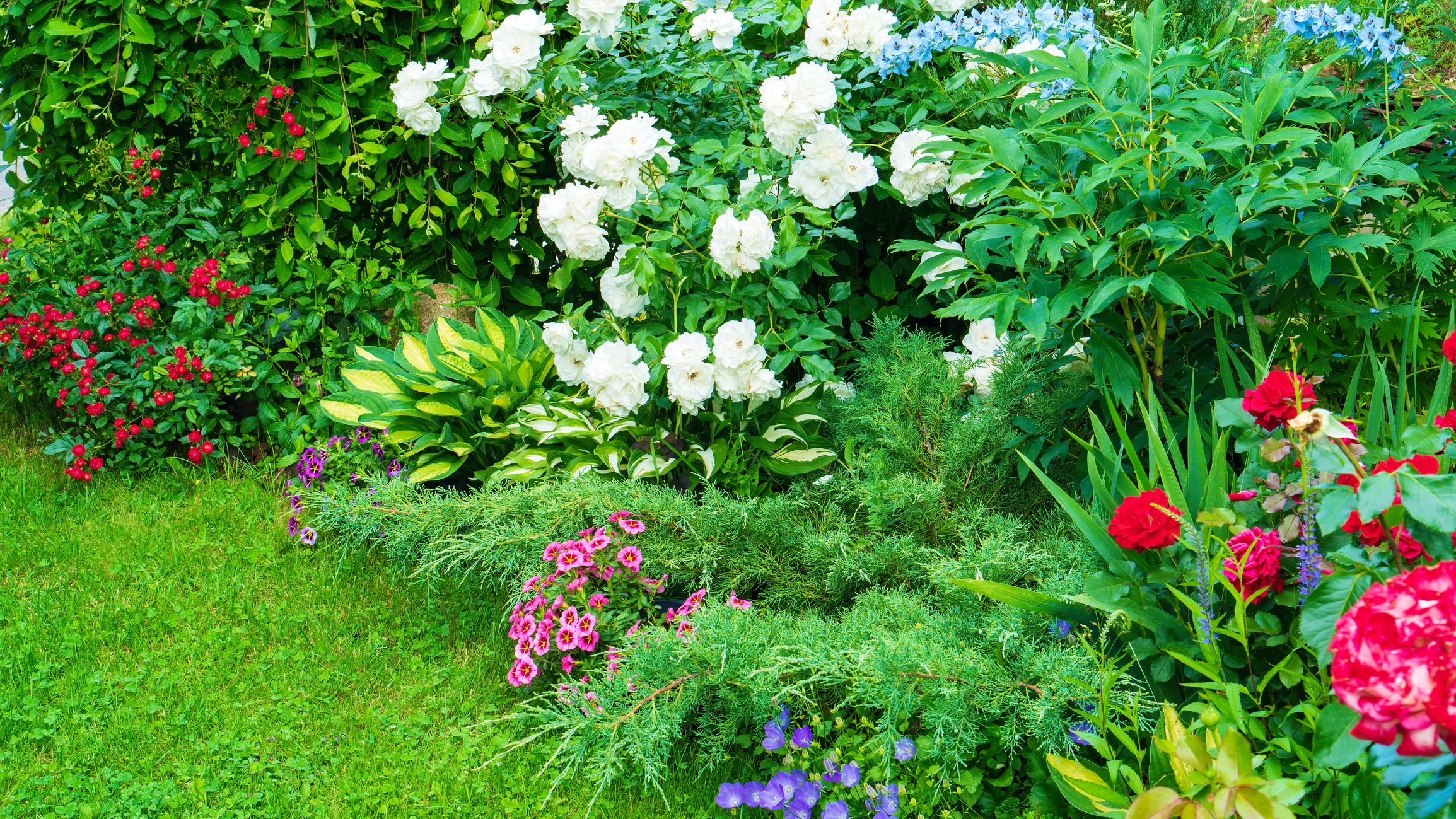
A flat garden bed can feel unfinished even when it is full of plants. Depth comes from layering, and layering comes from height. Without vertical structure, a bed may look like a colourful carpet: pretty, perhaps, but not especially dynamic. Add height, and suddenly the garden has movement, shadow, and dimension.
The familiar container design idea of “thriller, filler, spiller” works beautifully in garden beds too. The thriller is the taller, more dramatic element that gives the eye somewhere to land. The filler creates body and fullness through the middle. The spiller softens the edges and helps the bed feel relaxed and abundant.
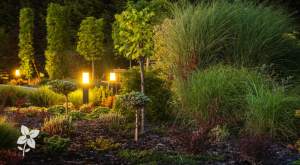
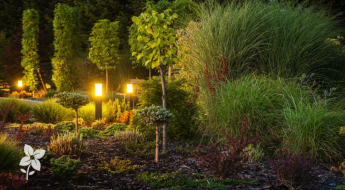
In a garden bed, taller plants might include ornamental grasses, upright salvias, tall annuals, compact shrubs, foxgloves, delphiniums, or even a vertical container placed in the bed for seasonal impact. These elements give the planting structure. They act like exclamation points rising above the softer conversation below.
Mid-height plants are the bridge. They connect the tall background with the lower edging plants. This might include coneflowers, daylilies, zinnias, geraniums, compact hydrangeas, or mounding annuals. These plants create the visual body of the bed.
Low-growing annuals and ground-hugging plants belong near the edges, where they can soften hard lines and make the bed feel finished. Alyssum, lobelia, calibrachoa, trailing petunias, creeping thyme, and other low plants can blur the boundary between soil and path. That soft edge is often what makes a bed feel lush rather than newly installed.
Placement depends on where the bed is viewed from. If the bed sits along a fence or foundation, place taller plants toward the back, mid-height plants in front of them, and lower plants along the edge. If the bed is viewed from all sides, such as an island bed in a lawn, place taller plants near the centre and layer downward toward the edges.
Layering is especially helpful when learning how to fill garden beds without simply adding more and more plants. Fullness is not only about quantity. It is about shape, proportion, and depth. A few taller accents can make the whole bed feel richer, even if the plant count stays modest.
 Use Containers as Living Accents
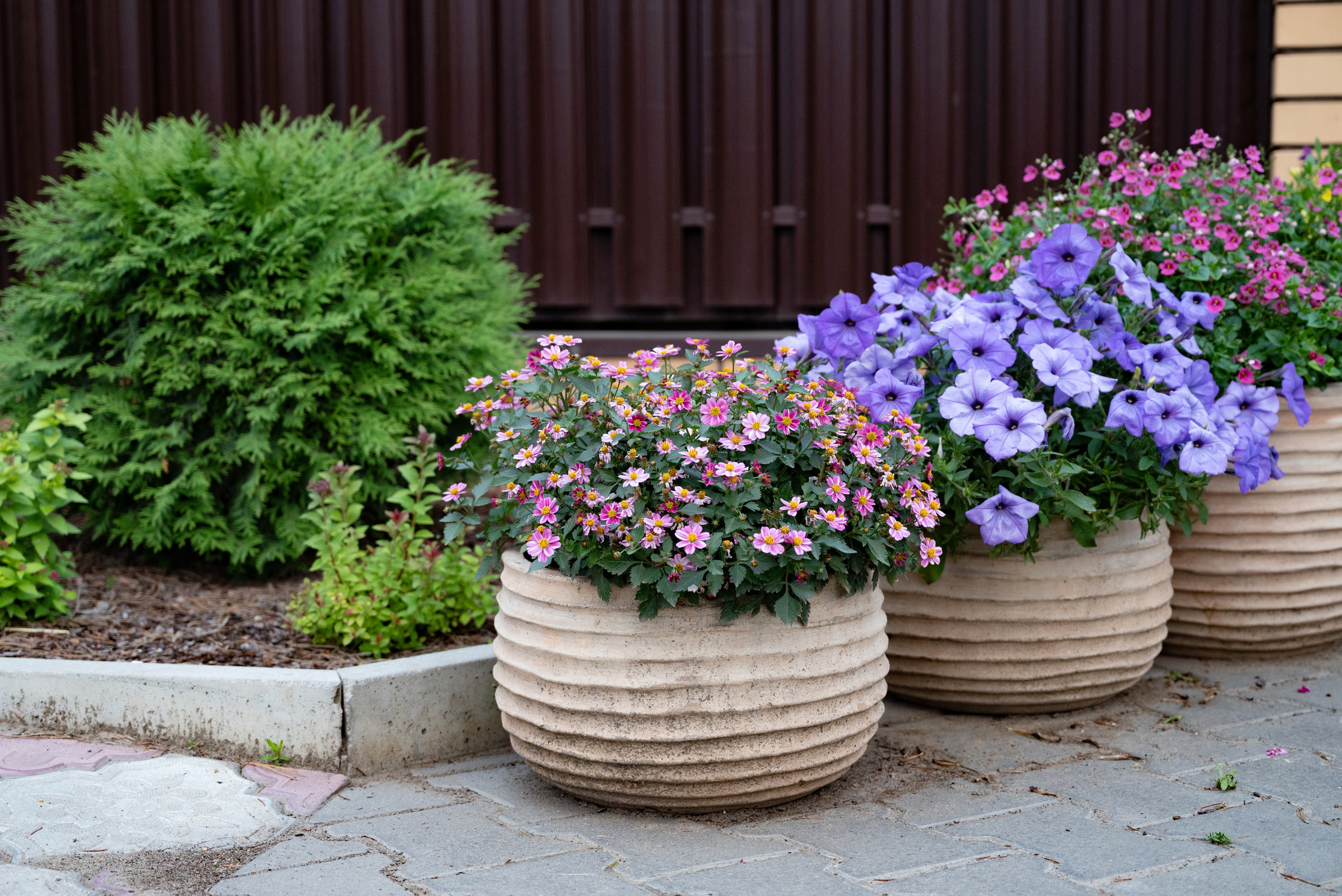
Containers are one of the most underrated tools for making garden beds look finished. They are flexible, colourful, moveable, and endlessly useful. When a bed has an awkward gap, a bare corner, or a young shrub that has not filled out yet, a container can step in like a well-dressed guest arriving at exactly the right moment.
Containers become punctuation marks in the garden—bold pauses of colour and texture. A large pot beside a pathway can signal an entrance. Matching pots at either side of a walkway can create symmetry. A container tucked into a wide bed can add height where the planting feels low. Overflowing blooms can soften hard edges, cover empty soil, and bring instant abundance.
The secret is to make containers feel connected to the surrounding garden. Choose pot colours, materials, or flower tones that relate to what is already planted. A terra-cotta pot may feel warm and natural among cottage-style flowers. A charcoal or black container can look crisp and modern beside ornamental grasses and bright blooms. A glazed blue pot can echo cool flowers or create a striking contrast against green foliage.
Containers are also perfect for seasonal updates. In spring, they can hold pansies, alyssum, and cool-season colour. In summer, they can overflow with petunias, calibrachoa, lobelia, geraniums, coleus, and trailing vines. Later in the season, they can shift toward mums, ornamental kale, grasses, and autumn tones. Instead of redesigning the bed every few months, you can refresh the container and let the rest of the garden keep growing.
Use containers beside steps, at the end of a bed, near a garden bench, around patios, or in spots where young plants still look small. They are also useful in areas with poor soil, heavy roots, or tricky planting conditions. When the ground says no, a pot often says, “I’ve got this.”
For homeowners looking for garden bed landscaping ideas that offer instant impact without permanent commitment, containers are a smart solution. They bring polish now and flexibility later.
Small Changes, Big Visual Impact
A garden bed does not need a complete redesign to look better. Sometimes the smallest changes create the biggest sigh of relief. A fresh edge. A ribbon of mulch. A repeated bloom colour. A few annuals tucked into bare pockets. One beautiful container anchoring a corner. These are not complicated moves, but they can change the entire feeling of a space.
Mulch is one of the easiest ways to make a bed look cleaner and more finished. It covers bare soil, helps conserve moisture, moderates soil temperature, and reduces weed pressure. Visually, it creates a calm background that lets flowers and foliage stand out. Even a sparse bed looks more intentional when the soil is neatly mulched.
Edging also makes a major difference. A crisp line between lawn and bed tells the eye that the space has purpose. It frames the planting like a picture frame around a painting. Whether you use a simple cut edge, stone, brick, metal edging, or another material, that defined boundary gives the garden structure.
Repeating blooms can create cohesion almost instantly. If the bed looks chaotic, choose one flower colour and repeat it in three or more places. If it feels empty, use groups of annuals to create visual islands. If it feels too low, add a vertical container or a taller plant for height. If it feels disconnected, repeat foliage textures from one end to the other.
Low-maintenance does not mean lifeless. Affordable does not mean boring. Simple does not mean plain. The best garden updates often come from working with what you already have and adding just enough to help the whole scene sing.
Gardening is an evolving canvas, not a race to perfection. Beds change week by week. Plants stretch, bloom, fade, and return. Colours shift with the season. A garden that looks quiet in May may be overflowing by July. Your job is not to force perfection overnight. Your job is to guide the composition, add beauty where it is needed, and let the living parts do what living things do best: grow.
 Let the Garden Grow Into Itself
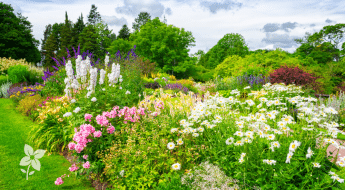
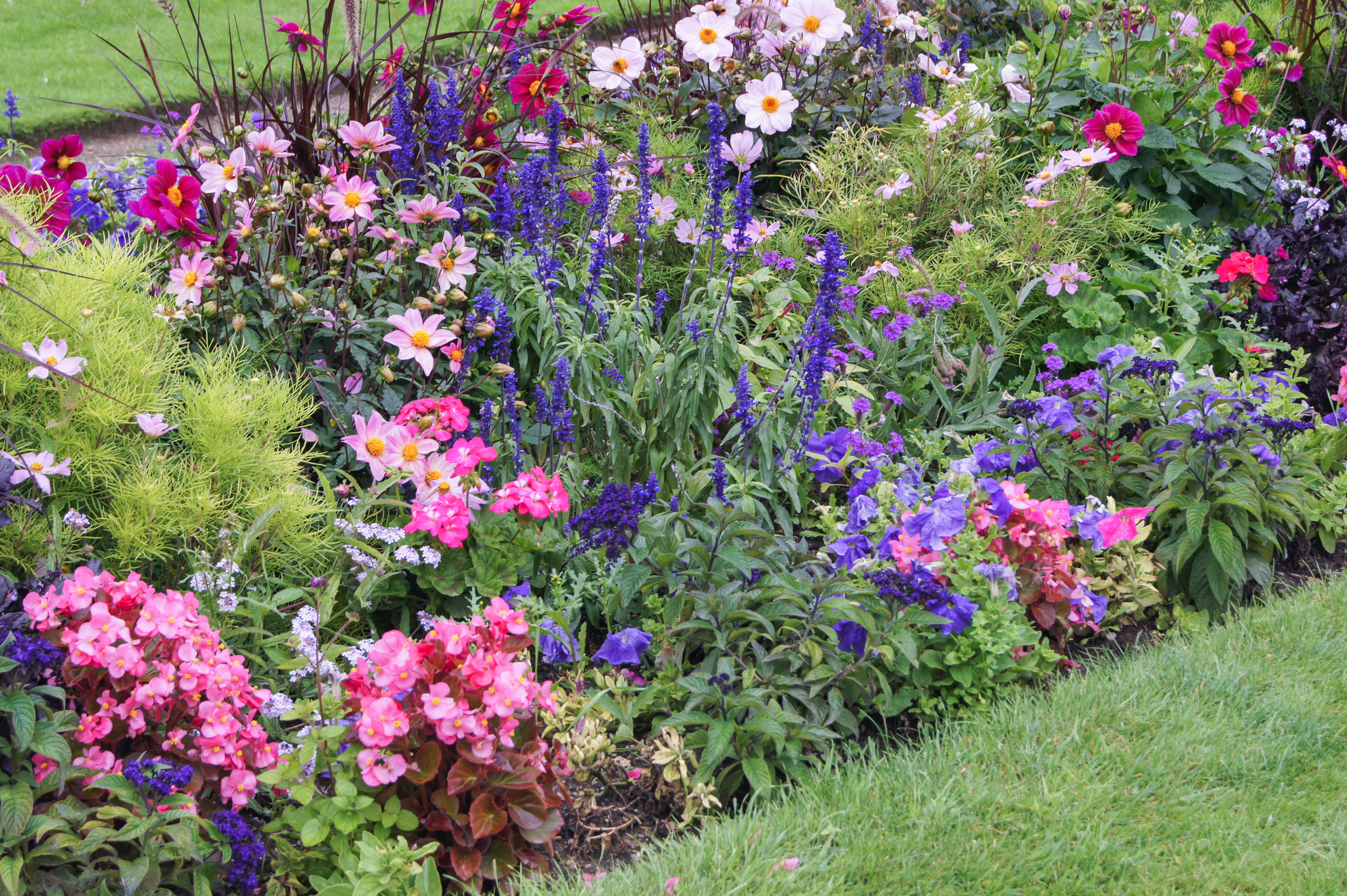
By the time summer settles in, a young garden often surprises its gardener. The small plants begin to knit together. Bare spaces soften. Containers spill over their edges. Annuals brighten the gaps. Repeated colours start to hum across the bed like a familiar melody. What once looked sparse begins to feel generous, layered, and alive.
That is the quiet magic of seasonal gardening. It rewards patience, but it also welcomes play. You can experiment with colour one year, containers the next, taller accents after that. You can learn as you go, adjusting the bed like a painter returning to a canvas with fresh eyes and a brighter brush.
The goal is not to create a perfect garden in a single weekend. The goal is to help the garden grow into itself with confidence, character, and care. A few thoughtful garden bed ideas can turn empty spaces into opportunities, bare soil into beauty, and a half-told landscape into a story that keeps getting better with every passing week.
Visit Salisbury Greenhouse in Sherwood Park or St. Albert to explore annuals, containers, and garden accents that help your beds look full and beautiful right now.