A Little Holiday Colour That Lasts
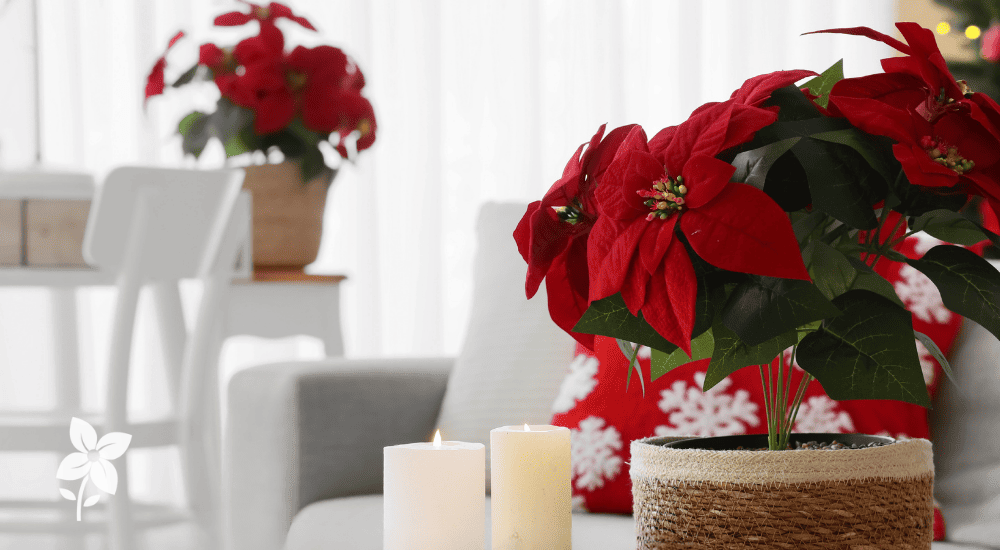
Crimson, creamy white, and candy-floss pink: few things brighten a December window like a poinsettia, and with the right care, its vibrant colour can last throughout Alberta’s long winter. Outside, the thermometer sulks at -20°C and the wind sweeps across the fields east of Sherwood Park. Inside, the furnace hums through the night, keeping the house warm but the air parched.
Poinsettias sit squarely between these two worlds. They descend from shrubs native to the warm hillsides of Mexico and Central America, and they have never made peace with frost, icy drafts, or desert-dry air. An Alberta house in January offers all three, often in the same room.
That does not mean your plant is destined for the compost bin by New Year’s Day. A poinsettia is not a cut bouquet. It is a living plant, and with sensible placement, careful watering, and protection from the cold, it can hold its colour for weeks, often well into January and sometimes beyond. Caring for a poinsettia in a prairie home comes down to a handful of habits, none of them complicated.
What follows is practical poinsettia care advice tailored to Alberta’s climate: what to look for at the greenhouse, how to get your plant home safely, where to put it, how to water it, and how to read the signals it sends when something is off.
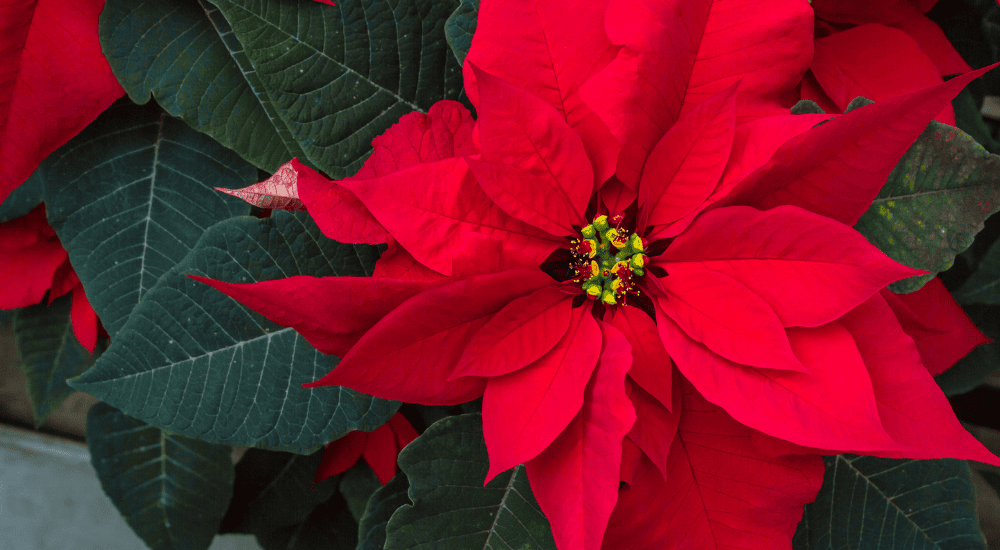
Choosing a Healthy Poinsettia: Beauty Begins Before You Bring It Home
A poinsettia at its best stands at attention: upright stems, a full skirt of deep green leaves reaching the rim of the pot, and a crown of colour held high and even. A few minutes of careful looking at the garden centre is often the difference between a plant that sulks by mid-December and one that carries the whole season.
Read the Bracts, Then Look Closer
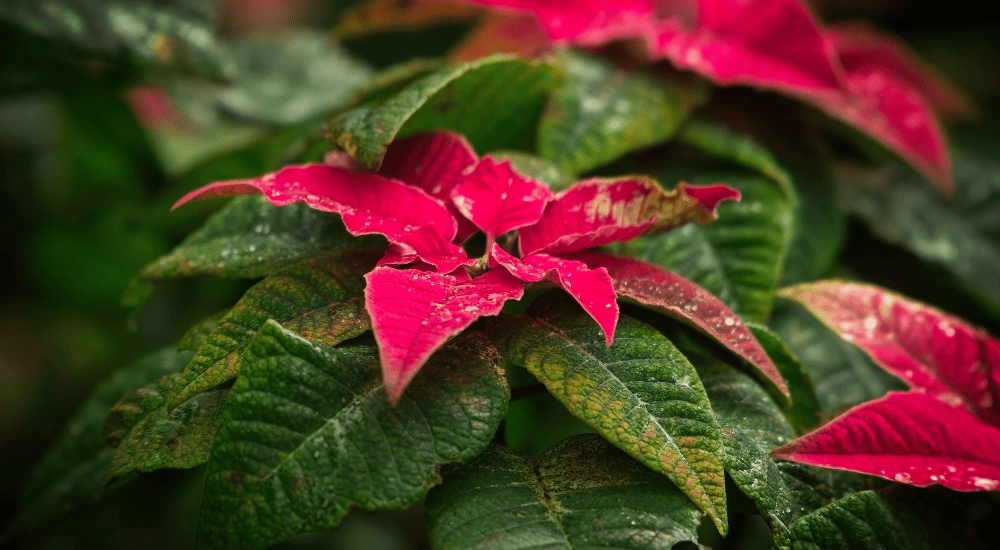
The brilliant red, white, pink, or marbled “petals” are not petals at all. They are bracts, modified leaves that colour up in response to autumn’s long nights. The true flowers are small yellow-green beads clustered at the centre of each bract, called cyathia.
Those little beads are your best gauge of freshness. If they are tight, green or just tipped with yellow, and showing little or no pollen, the plant is early in its display and should last longer in your home. If the cyathia have dropped or are dusted heavily with pollen, the plant is further along, and its bracts may fade sooner. The bracts themselves should be fully coloured for their variety, with no bruising, browned edges, or creases.
Check the Foliage and Stems
Green leaves should be firm, plentiful, and evenly coloured, ideally clothing the stems right down to the soil. Bare lower stems usually mean the plant has already been stressed by drought, cold, or root trouble. Pass over plants with yellowing leaves, drooping foliage, or leaves scattered in the sleeve. Stems should be sturdy, and the plant should sit firmly in its pot rather than wobbling.
Look for Pests and Root Problems
Turn over a few leaves. Whiteflies are among the most common poinsettia pests: tiny white insects that flutter up when you disturb the plant, often leaving sticky residue behind. Cottony clusters suggest mealybugs, and small dark flies hovering over the soil point to fungus gnats.
Then touch the soil. Soggy, sour-smelling mix paired with wilting leaves can signal root rot. Bone-dry soil shrinking away from the pot’s edge suggests the plant has been allowed to dry out completely, perhaps more than once. Either history can shorten its display.
Choose Balance Over Size
Walk around the plant and view it from every side. A compact, well-branched poinsettia with a full, even shape and plenty of healthy leaves will usually outlast a taller plant with a thin base. It also helps to buy plants displayed out of their sleeves and well spaced, since poinsettias left sleeved for too long can develop drooping leaves.
Bringing Poinsettias Home Through Alberta’s Winter
The short walk from the greenhouse door to the car is where many poinsettias meet their first and worst setback. Here is a plant whose ancestors never saw snow, being carried through a parking lot in -25°C weather, with winds that cut through a winter coat. Temperatures below about 10°C can injure poinsettias, and even a few minutes in freezing air can damage exposed leaves and bracts.
Cold injury is sneaky. A plant may look fine when you set it on the counter, then show darkened, water-soaked patches or start dropping leaves a day or two later. Treat transportation as the first act of protection, not an afterthought.
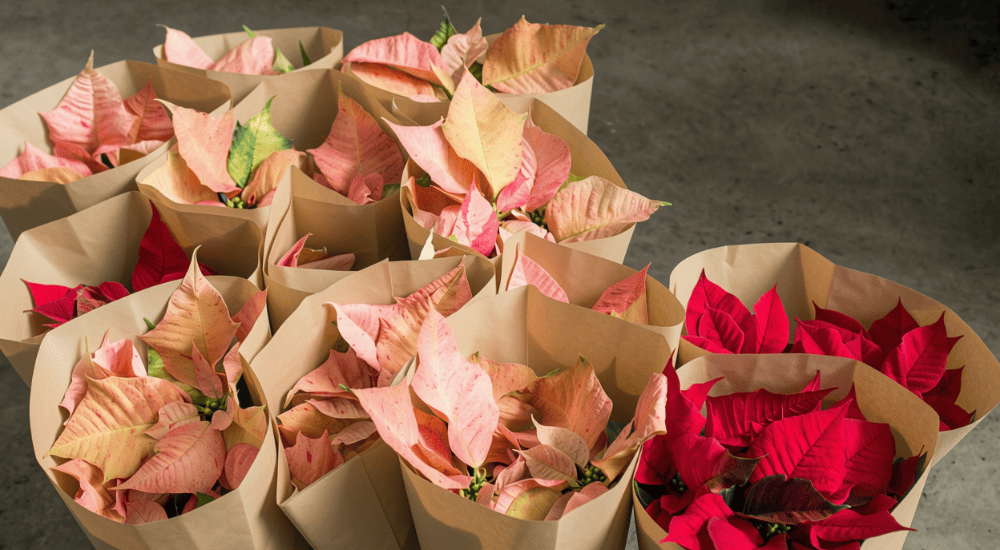
Wrap It Well
Ask the garden centre staff to fully sleeve the plant and add a bag or paper wrap that closes over the top. The goal is to trap a pocket of still, warmer air around the foliage and keep wind off the bracts. In very cold weather, a sturdy box offers an extra layer of shelter and keeps the plant upright.
Make the Trip Short and Warm
Warm your vehicle before you carry the plant out, and make the greenhouse your last stop of the day. Set the plant on the floor or secure it to a seat so it will not tip, and keep it away from vents blowing directly on it.
Never leave a poinsettia in a parked car, even for a quick errand. On a cold Alberta afternoon, a vehicle’s interior can drop to dangerous temperatures in the time it takes to grab a coffee.
Let It Settle In
Once you are home, unwrap the plant promptly. Leaving it sleeved for days can cause the leaves to droop. Place it in a comfortably warm room away from windows and doors, and give it a few days to adjust before fussing over it. A leaf or two may yellow as it acclimatizes, which is normal. Steady losses are not.
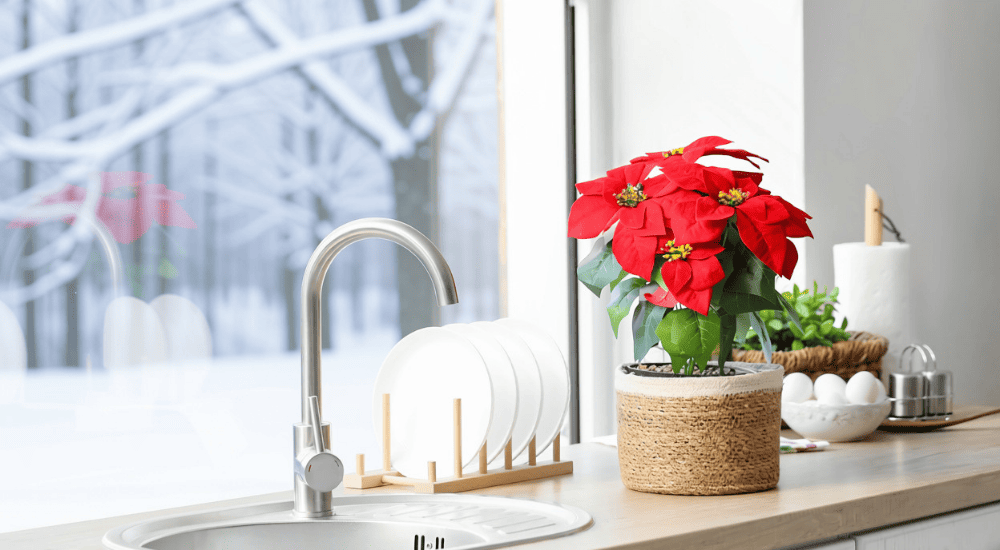
Finding the Perfect Place: Light, Warmth, and Shelter
Think of your home as a winter refuge. The ideal spot offers light without scorching, warmth without blasting heat, and shelter without darkness. Find that balance, and your poinsettia will do most of the work.
Give It Bright, Indirect Light
Aim for at least six hours of bright, indirect light a day. Around the winter solstice, Edmonton gets only about seven and a half hours of daylight, and the sun rides low in the southern sky, so light is a scarce resource in December. A bright south-, east-, or west-facing window is usually ideal at this time of year. If strong afternoon sun falls directly on the bracts, a sheer curtain softens it.
A poinsettia parked in a dim hallway or dark corner can still look festive for a while, but good light will help it hold its leaves and colour longer.
Keep Temperatures Steady
Poinsettias are happiest with daytime temperatures around 18 to 22°C. Nights a few degrees cooler are fine, but try to keep the plant above roughly 15°C. Steadiness matters as much as the numbers themselves. Sudden swings stress the plant and often trigger leaf drop.
Avoid Cold Glass and Drafts
On a -30°C night, the inside of a window pane can be startlingly cold. Keep leaves and bracts from touching the glass, and pull the plant back from the window on the coldest nights. If you close curtains or blinds in the evening, make sure the poinsettia is on the room side, not trapped between the curtain and the frosty pane. Keep it away from exterior doors, too, since every opening lets in a gust of winter air.
Stay Clear of Direct Heat
The opposite extreme is just as harmful. Hot air from furnace vents, fireplaces, wood stoves, baseboard heaters, and space heaters dries the soil quickly and can scorch foliage. The top of a refrigerator or television is another warm spot to avoid.
Rotate for Even Growth
Poinsettias lean gently toward their light source. Give the pot a quarter turn every few days to keep the plant balanced and full on all sides.
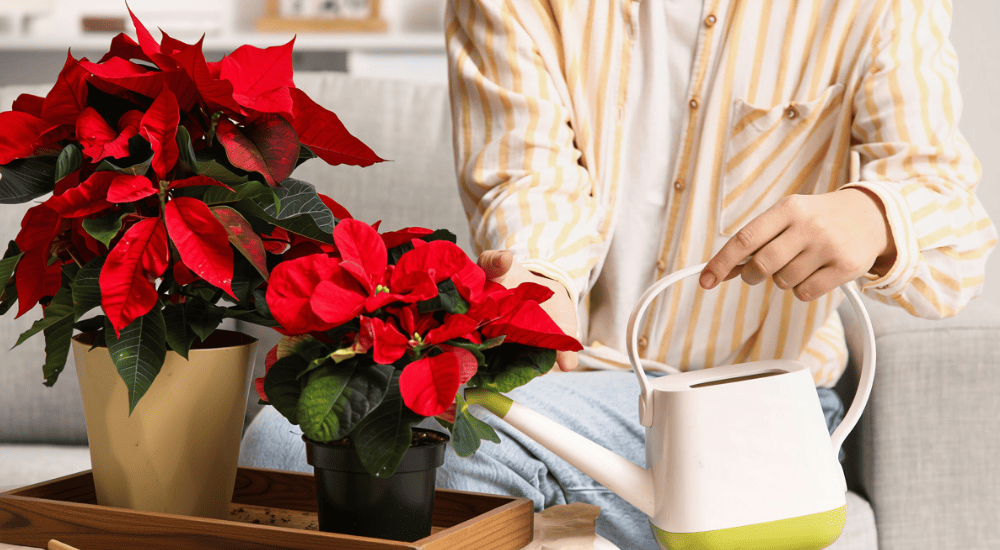
Watering Wisely: The Balance Between Thirst and Drowning
Watering mistakes are among the most common reasons poinsettias decline, and they usually come from generosity rather than neglect. A poinsettia needs a steady drink, not a flood. Good poinsettia watering is less about a schedule and more about paying attention.
Check Before You Water
Press a fingertip into the soil. When the surface feels dry and the top couple of centimetres are no longer moist, it is time to water. If the soil still feels damp, wait and examine again tomorrow.
The lift test is a useful second opinion. Pick up the pot right after a thorough watering and note its weight, then lift it again over the next few days. A pot that feels noticeably lighter is ready for water. After a week or two, you will be able to judge it in a second.
Water Thoroughly, Then Let It Drain
When the plant needs water, give it a proper drink. Take it to the sink, remove any decorative wrap, and pour room-temperature water evenly over the soil until it runs freely from the drainage holes. Let the pot drain for 10 to 15 minutes before returning it to its spot. Icy tap water straight from the cold line can shock the roots, so let it warm up first.
A thorough soaking moistens the entire root ball. Small sips tend to wet only the top layer, leaving lower roots dry while the surface stays deceptively damp.
Empty the Foil and Saucers
That festive foil wrap is one of the most common causes of poinsettia decline. It catches water that drains from the pot and holds it against the roots like a bathtub that never empties. The same goes for decorative cachepots, baskets with liners, and saucers.
After watering, look for standing water and pour it out. If you prefer to keep the foil on, poke a few holes in the bottom and set the pot on an empty saucer, or remove the foil each time you water.
Why Both Extremes Cause Trouble
Roots need oxygen as well as water. When soil stays saturated, water fills the air spaces, roots begin to suffocate, and rot can set in. Ironically, a plant with damaged roots wilts because it can no longer take up water, which tempts many owners to water even more.
At the other extreme, letting the soil dry out completely causes wilting, which, when repeated or severe, can lead to yellowing leaves and the premature loss of leaves and bracts. A poinsettia may recover from one dry spell, but each episode can shorten its display.
How Often Is Often Enough?
There is no universal answer because frequency depends on pot size, room temperature, light, and humidity. A small pot in a warm, bright room with dry furnace air may need water every few days. A larger pot in a cooler spot might go a week or more. Check the soil every day or two and let the plant tell you. While it is in colour, there is no need to fertilize.
Understanding Alberta’s Dry Indoor Air
Cold air holds very little moisture. When the furnace warms that air, its relative humidity drops sharply, which is why so many Alberta homes feel parched in January. During a deep cold snap, indoor humidity can fall well below 30 percent. Poinsettias come from a far gentler climate, and in air this dry, they lose moisture faster through their leaves, their soil dries out sooner, and leaf edges and bracts can crisp or fade early.
Keep It Out of the Hot Air Stream
The single most useful step is placement. A poinsettia sitting in the path of a floor register or a heater is being blow-dried around the clock. Moving it even a metre or two out of that airflow can make a visible difference.
Add Moisture with a Humidifier
When the air is especially dry, a room humidifier is the most effective way to raise humidity around your plants. Moderation matters here. In very cold weather, raising indoor humidity too high can cause condensation and frost on windows, so a modest increase is a sensible goal. Your plants, your skin, and your wooden furniture will all appreciate it.
Misting is often suggested, but its effect fades within minutes, and water droplets left on bracts can cause spotting. A humidifier works much better.
Group Plants Thoughtfully
Plants release moisture as they grow, so a small cluster of houseplants creates a slightly more humid pocket of air than a single pot standing alone. Group plants that enjoy similar light and temperatures, but leave a little space between them. Crowded, tangled foliage restricts airflow and can encourage disease and pests.
Remember the Basics Still Rule
When caring for indoor plants during a prairie winter, humidity plays a supporting role rather than taking centre stage. Dry air may mean your poinsettia needs water more often, but the rule stays the same: check the soil first, water thoroughly, and never leave the pot sitting in water. Humidity can’t fix soggy roots or a parched root ball.
Diagnosing Common Poinsettia Problems
A poinsettia speaks in symptoms. Treat each one as a clue, not a verdict, and resist the urge to fix every problem with more water or a dose of fertilizer. Many of these signs share causes, so investigate the soil, roots, and placement before deciding what to change.
| Symptom | Possible cause | Recommended response |
| Yellowing leaves | Overwatering, poor drainage, or environmental stress | Check soil moisture and drainage; review placement |
| Wilting foliage | Dry soil, root damage, or temperature stress | Check soil and roots before deciding whether to water |
| Premature leaf drop | Cold drafts, sudden temperature changes, or watering problems | Stabilize conditions and inspect the root zone |
| Brown or damaged edges | Dryness, heat exposure, or cold injury | Review watering and move the plant away from temperature extremes |
| Weak or sparse growth | Insufficient light or other environmental stress | Improve light and reassess growing conditions |
Wilting Deserves a Closer Look
Wilting is the symptom most often misread. If the soil is dry, water thoroughly, and the plant should perk up within hours. If the soil is wet and the plant is still drooping, more water will only make things worse. Gently slide the plant out of its pot and check the roots. Healthy roots are pale and firm. Brown, mushy roots that pull apart easily point to rot, so let the soil dry more between waterings and make sure nothing is holding water at the base of the pot.
Retrace Recent Changes
When leaves start dropping suddenly, think back over the past few days. Did the plant sit near a door during a cold spell, move to a new room, or end up close to a heat register when the furnace kicked into high gear? Poinsettias often react to stress a day or two later, so the cause may not be obvious at first glance.
Keeping Poinsettias Beautiful Beyond Christmas
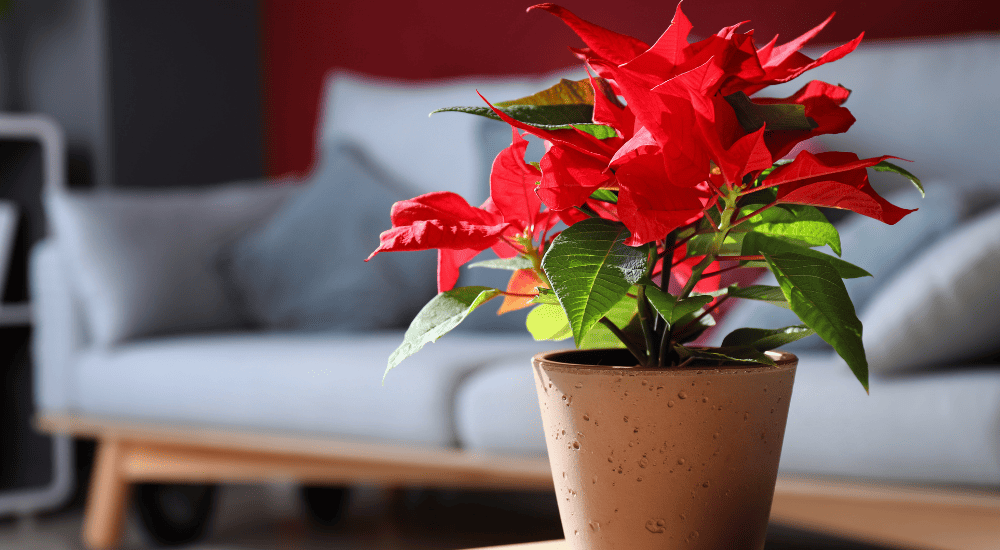
The tree comes down, the lights go back in their boxes, and the poinsettia is often the last decoration still standing. The holidays may pass, but the plant’s story does not have to finish with them.
Carry On Through January and February
Keep doing what has worked: bright light, careful watering, and steady temperatures away from drafts and heat. Pick up fallen leaves and spent bracts from the soil surface and the pot’s rim. Decaying plant material can harbour fungus gnats and disease, and tidying it away keeps the plant looking cared for.
Over the next few weeks, the bracts will gradually lose their intensity, turning greenish or dropping off. That is the plant’s natural cycle, not a sign you have done anything wrong. With good care, many poinsettias stay attractive into February, and the green foliage can last long after the colour is gone.
Can You Keep It for Next Year?
Yes, if you enjoy a gardening project. Once the colour fades in late winter or early spring, cut the stems back to about 15 cm, repot if the roots are crowded, and start feeding with a balanced houseplant fertilizer once new growth appears. Through summer, pinch the growing tips to encourage a bushier plant. In the Edmonton area, it can spend the warm months outdoors in a sheltered, partly shaded spot once nights stay reliably above about 10°C, usually by early June, and should come back inside before late summer nights turn cool.
Getting those bracts to colour again is the real test. Poinsettias are short-day plants, and they need about 14 hours of uninterrupted darkness every night for roughly eight to ten weeks, starting in late September or early October, along with bright light during the day. Even briefly switching on a lamp during that dark period can delay colouring. It takes discipline, but the reward is a plant you have carried all the way around the calendar.
Let the Colour Linger
Picture it in late January: snow drifting against the fence, a dim sun slanting across the yard, and a poinsettia still glowing red on the windowsill. That scene is well within reach. Shield the plant from the cold on its journey home, give it a bright spot away from drafts and heat, water only when the soil asks for it, and keep conditions steady. Those four habits do most of the work.
If you are choosing this year’s plants, visit us at Salisbury Greenhouse to browse our poinsettias and talk with a team that understands poinsettia care in local homes, from the first cold snap to the last of the winter light. A little care can turn a seasonal splash of colour into a longer-lasting reminder that, still in the heart of winter, a home can bloom.