When Daylight Begins to Disappear
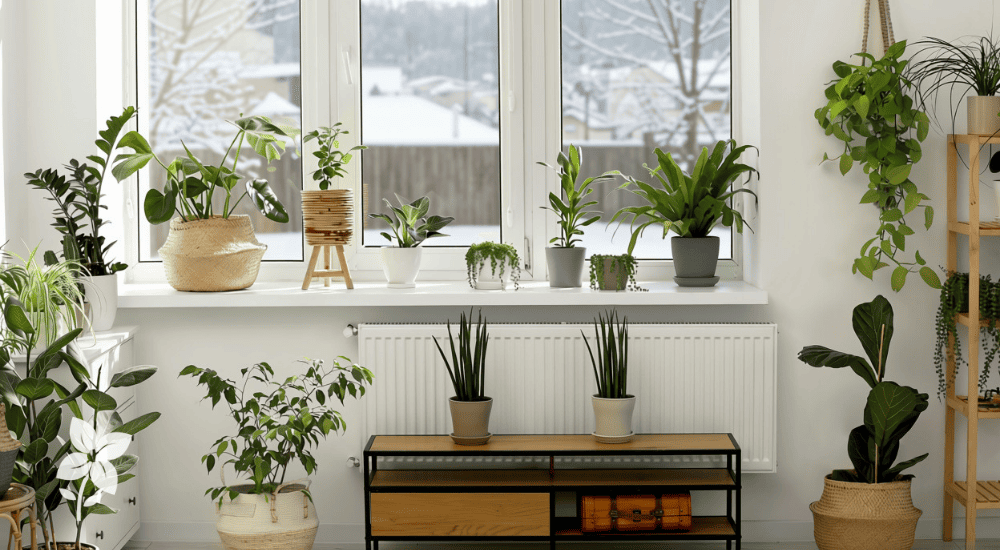
Somewhere between the first hard frost and the first morning you scrape the windshield in the dark, the question of grow lights for indoor plants stops being idle curiosity and starts to feel like a household decision. By the end of November, Edmonton has less than eight hours of daylight. At the winter solstice, it bottoms out near seven and a half, and the noon sun barely clears the rooftops, climbing only about 13 degrees above the southern horizon.
That low angle changes everything on the windowsill. Summer light poured in from overhead, warm and generous. November light slips in sideways, pale as skim milk, and lingers on the sill for a few hours before disappearing by late afternoon. The pothos that spilled over the bookshelf in July now strains toward the glass like a commuter craning to spot the bus. The fiddle-leaf fig has dropped a leaf, and the jade looks a little lanky.
So do you need a grow light? Maybe. Not every struggling houseplant does. Some genuinely need more light. Others need a change in care because the same short days that dim your windows also slow how quickly plants drink, grow, and recover. And some are simply resting, doing exactly what plants at 53 degrees north have always done in winter. The trick is learning which story your plant is telling before you spend money on equipment.
The Telltale Signs: Is Your Plant Asking for More Light?
Light shortages rarely announce themselves overnight. They appear gradually as a plant grows after the days shorten, so watch the newest leaves and stems rather than the old ones.
Leggy Growth
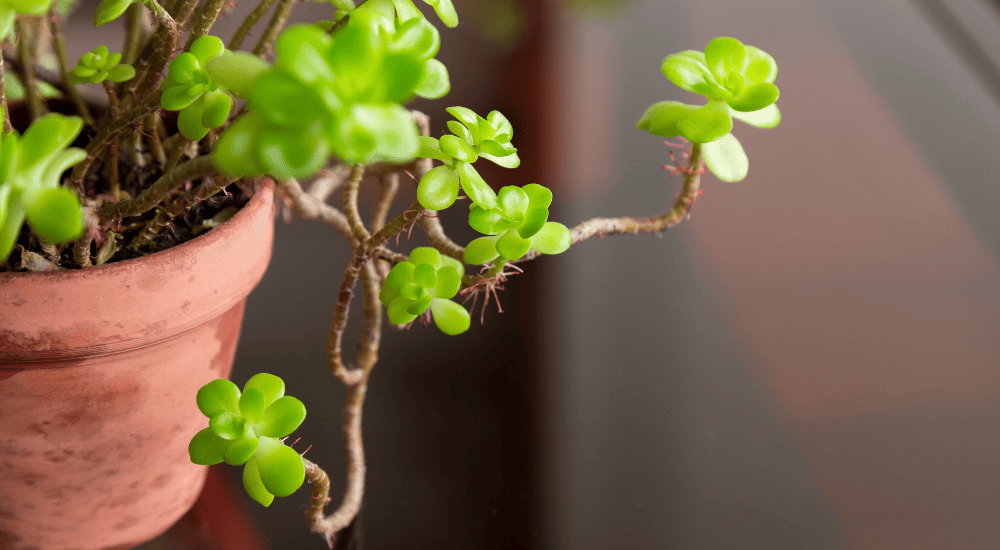
Stems stretch and reach, as though chasing a sunbeam just out of their reach. The gaps between leaves (the internodes) lengthen, and new stems often look thinner and paler than older growth. This response is called etiolation: in low light, a plant spends its limited energy on elongation, trying to grow toward brighter light. Rosette succulents such as echeveria show it most dramatically, loosening from a tight, symmetrical rosette into a gangly stalk. Basil, coleus, and string-of-pearls also stretch readily. Stretched growth will not shrink back, so once the light improves, prune leggy stems in spring to encourage fuller growth.
Smaller New Leaves
When light is scarce, a plant has less energy to build each new leaf, so fresh growth may emerge undersized. A monstera might unfurl smaller leaves with fewer splits, and a rubber plant (Ficus elastica) may produce leaves noticeably smaller than last summer’s. Compare new leaves with the ones directly below them. A steady step down in size is a stronger clue than one small leaf.
Fading Variegation
The cream and white patches on variegated leaves contain little or no chlorophyll, so they contribute little to photosynthesis. In low light, some plants respond by producing greener leaves, quietly trading beauty for efficiency. A ‘Marble Queen’ pothos may produce mostly green leaves, and a pink-splashed philodendron may lose its blush. Colourful foliage plants such as crotons and coleus may also dull in winter. Variegation can also fade or revert for genetic reasons, so this symptom matters most when it appears alongside others.
Leaning Toward Windows
Plants bend toward their brightest light source, a growth response called phototropism. Some lean is normal for any plant beside a window, even a bright one. A dramatic lean, especially one that develops quickly in fall, suggests the plant is working hard for every photon it gets. Give pots a quarter turn every week or two to keep growth even, and treat a severe lean as a hint that the plant may need to sit closer to the glass.
Slower Growth
Growth often slows considerably in winter, and that alone isn’t a problem. Many houseplants slow down when days shorten, even in good light. The difference lies in the quality of any growth that does appear. Slow but compact, well-coloured growth usually signals a plant resting comfortably. Slow growth that is also stretched, pale, or undersized points toward a light shortage.
No single symptom proves a plant needs artificial lighting. Before deciding, consider the plant, how you have cared for it over the last few weeks, and the time of year. A stretched echeveria in a north window in December is telling a clear story. A slow-growing snake plant in the same window may be perfectly content
Why Houseplants Have Different Light Needs
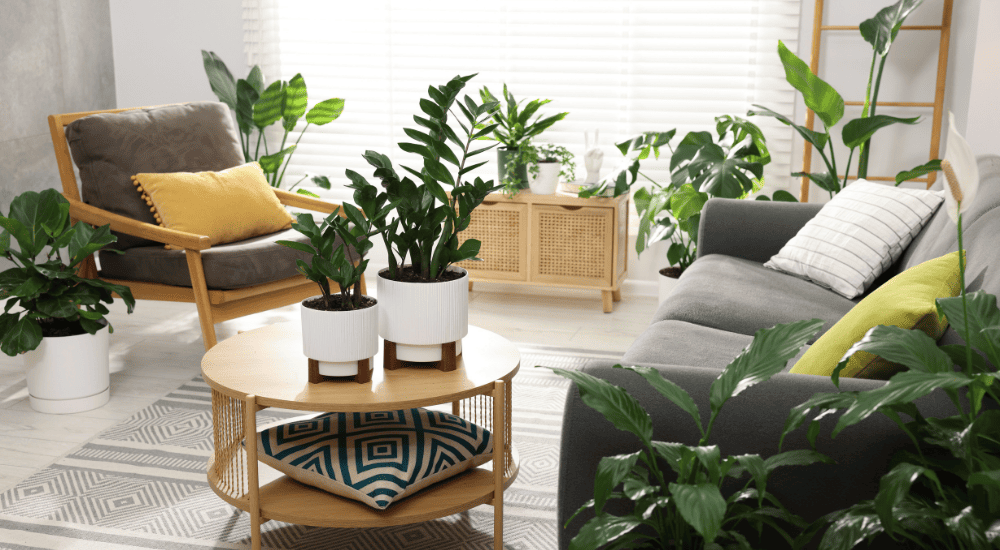
A houseplant’s light requirements are written in its family history. Many popular foliage plants evolved beneath tropical forest canopies, where sunlight arrives filtered through layers of leaves. Others come from deserts, Mediterranean hillsides, and open scrub, where the sun beats down most of the day. Bring both into an Edmonton living room in January, and they will react very differently to the same window.
Plants often sold as low-light indoor plants, including snake plant (Dracaena trifasciata), ZZ plant (Zamioculcas zamiifolia), cast iron plant (Aspidistra elatior), heartleaf philodendron, and Chinese evergreen (Aglaonema), cope well with low lighting. But coping isn’t the same as thriving. These plants survive low light by growing slowly, and most still grow better in bright, indirect light. Their tolerance makes them forgiving through a northern winter.
At the opposite end sit the sun-seekers: citrus such as Meyer lemon and calamondin, cacti, most succulents, rosemary, and fruiting plants of any kind. Producing flowers and fruit is energy-expensive work, and these plants struggle in winter without your brightest window or supplemental light.
| Light needs | Examples | Best winter spot in Edmonton |
| Low to medium | Snake plant, ZZ plant, cast iron plant, heartleaf philodendron, Aglaonema | Any window, including north, or a metre or two back from east or west glass |
| Medium to bright, indirect | Monstera, pothos, rubber plant, fiddle-leaf fig, hoya, most variegated cultivars | Close to an east, west, or south window |
| Bright, with some direct sun | Citrus, cacti, echeveria and other succulents, rosemary, jade | Right in a south or unobstructed west window, or under a grow light |
Within a species, variegated forms usually need more light than their solid-green relatives, because they have less chlorophyll to work with. A ‘Marble Queen’ pothos wants a brighter spot than a plain green ‘Jade’ pothos, and it will quickly tell you if it doesn’t get one.
Light Stress or Something Else?
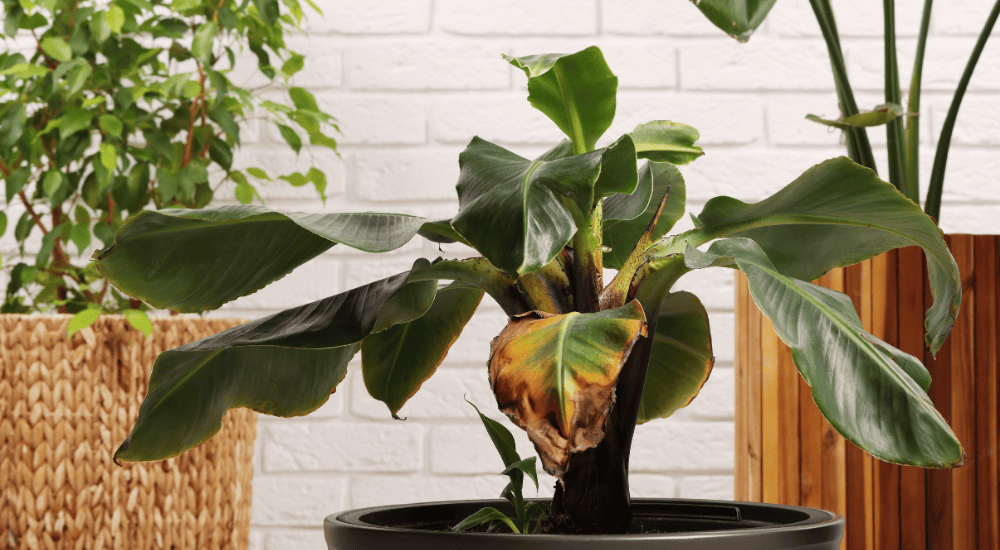
Many winter problems masquerade as light trouble but start elsewhere. Good winter houseplant care starts with ruling out these usual culprits before you reach for a light.
Watering
Shorter days mean slower growth, and slower growth means plants use far less water. A watering schedule that worked in August can drown roots by December. Overwatered plants often show yellowing lower leaves, soft or darkened stems, a sour soil smell, and fungus gnats hovering over the pot. Push a finger into the soil before watering. For most foliage plants, wait until the top few centimetres are dry; for Sansevieria, ZZ plants, and succulents, let the soil dry almost completely. Underwatering looks different: limp leaves that perk up after a drink, and soil pulling away from the pot’s edges.
Temperature
On a -30°C night, the inside surface of a window can get surprisingly cold, and leaves pushed against the glass can chill or get damaged. Cold injury typically appears as dark, water-soaked or blackened patches, sometimes followed by sudden leaf drop. Most tropical houseplants prefer to stay above about 15°C and can be harmed by temperatures much below 10°C. Heat brings its own trouble: a plant parked above a forced-air register dries out quickly and may develop crisp edges.
Humidity
Edmonton winters are dry, and a furnace running hard can push indoor humidity well below 30 percent. Dry air rarely causes stretching or pale growth. Instead, it can cause crisp brown leaf tips and edges, especially on calatheas, ferns, and peace lilies, and create ideal conditions for spider mites. Grouping plants, running a humidifier, or keeping humidity-lovers in a bright bathroom will help. A grow light will not.
Seasonal Dormancy
Some plants slow nearly to a standstill in winter, and that rest is part of their natural rhythm. Many cacti benefit from a cool, dry, bright winter rest, which can encourage flowering later. During this period, hold back on fertilizer, water sparingly, and resist the urge to fix a plant that is simply waiting for spring. If it keeps its colour and shape, it is resting, not starving.
How to Assess the Natural Light You Already Have
Before buying anything, find out what your windows actually deliver. Indoor plant lighting always comes down to intensity and duration, and in an Edmonton winter, both are in short supply.
Know Your Windows
South-facing windows are the winter stars. With the sun riding low across the southern sky, they deliver several hours of direct light and are usually the only spot in the house bright enough for citrus or cacti without help. West windows offer strong afternoon brightness, though the afternoon is short in December. East windows give gentle morning rays that suit most foliage plants. North windows receive almost no direct sun at this latitude in winter, so reserve them for the most tolerant plants.
Measure Distance as Well as Direction
Light intensity falls off steeply as you move away from the glass. A plant a metre or two back from a south window may receive only a fraction of what its neighbour on the sill enjoys, even though the room looks bright. Human eyes adjust so well to dim lighting conditions that they judge brightness poorly.
Try the Shadow Test
On a sunny day around noon, hold your hand about 30 centimetres above where a plant sits. A crisp, sharply defined shadow means bright light. A soft-edged yet clear shadow means medium light. A faint, barely visible shadow means low light. For more precision, a free light-meter app on your phone gives rough readings in lux or foot-candles. The numbers are not lab-accurate, but they are useful for comparing one spot in your home with another.
Look for Hidden Light Thieves
Window screens, dusty glass, deep eaves, neighbouring houses, and the mature spruce trees common in Edmonton yards can all dim a window considerably. Removing screens for the winter and washing windows in early fall are two of the cheapest light upgrades available. On the bright side, fresh snow outside a ground-floor window reflects extra light indoors on sunny days.

Rearrange, Regroup, and Rethink Before You Buy
Small placement changes often solve the problem for little or no money.
Move Plants Closer for Winter
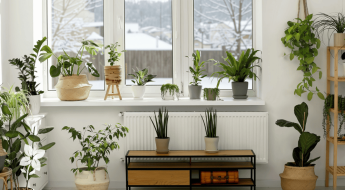
Shift light-hungry plants right up to your brightest window from October through February. A south sill that would scorch a monstera in July can be just right in January. Keep leaves from touching the glass, and on bitter nights, make sure plants are not trapped between closed curtains and a cold window. Plan to move them back gradually in spring, because March and April sunlight strengthens quickly.
Group Plants by Need
Treat your brightest window like stadium seating. Put the sun-seekers front and centre, nearest the glass, with medium-light plants behind or beside them and tolerant plants furthest back. Keep shorter plants in front so taller ones don’t cast shade on them. Grouping also creates a slightly more humid microclimate, a small bonus in a dry Alberta house.
Clean Leaves and Keep Rotating
Dust on broad leaves blocks the light the plant needs. Wipe the leaves of monsteras, rubber plants, and fiddle-leaf figs with a damp cloth every few weeks, and keep turning pots so every side gets its turn at the window.
Borrow Light From Reflective Surfaces
Light-coloured walls, a mirror placed near a plant group, or a white board behind the shelf will bounce extra light toward the shaded side of your plants. The effect is modest, but in a borderline spot, it can tip the balance.
One caution: some plants, fiddle-leaf figs in particular, may drop a leaf or two after a move. Relocate them once to the best available spot rather than shuffling them around all winter.
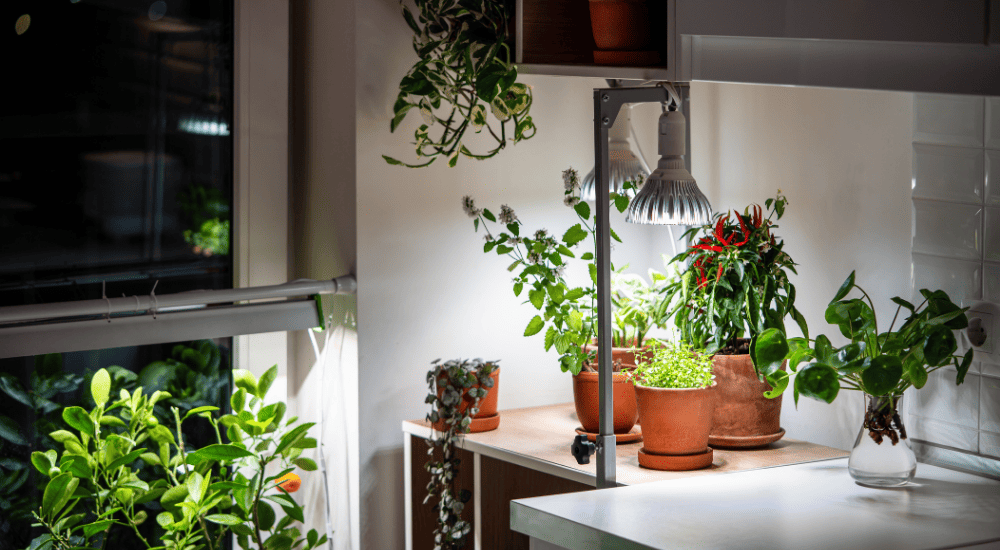
When a Grow Light Is Worth the Investment
If you have checked watering, temperature, and humidity, moved plants to your best window, and still see stretched, pale growth after a few weeks, supplemental light becomes a sensible purchase, not a guess. A grow light earns its place in these situations:
- Light-hungry plants without a sunny window. Citrus, cacti, succulents, and potted herbs rarely get through an Edmonton winter well in an east or north window. Meyer lemons often drop leaves in dim, dry winter conditions, and extra light can help them hold their foliage.
- North-facing condos and basement suites. When your brightest window is still dim, even medium-light plants benefit from a boost.
- Collections that outgrow the windowsills. Shelves of hoyas, succulents, or variegated aroids rarely all fit in prime window space.
- Seed starting. With frost possible into late May in Edmonton, gardeners start tomatoes, peppers, and many annuals indoors in March and April. Seedlings on a windowsill almost always stretch, and a light hung just above them produces sturdier transplants.
For most homes, full-spectrum white LED lights are the sensible choice. They use little electricity, run cool, and let plants look natural instead of bathed in purple. A clip-on or gooseneck light suits a single plant. An LED grow bulb fits a standard lamp, and bar or panel lights work best over shelves and seed trays. Set lights at the distance the manufacturer recommends, since intensity varies widely between products, and use an inexpensive timer for 12 to 14 hours a day. Plants need a nightly dark period, so leaving lights on around the clock does more harm than good. Bleached or scorched patches on the leaves closest to the light mean it is too close.
Knowing when to skip a light matters just as much. A snake plant holding steady in a north window, a dormant cactus, or a calathea with crispy tips will not benefit from one, and spending money there only treats the wrong problem.
Your Next Step: A Winter Light Audit
Pick a sunny day this week and walk through your home at midday with your plants in mind. Run the shadow test at each window, note its direction, and sort your plants into three groups: tolerant, medium, and sun-seeking. Move the sun-seekers to your brightest spot, adjust your watering to winter’s slower pace, and then give everything three or four weeks. The next round of new growth will tell you whether the changes worked.
If your citrus, succulents, or seedlings are still stretching after that, it is time to look seriously at grow lights for indoor plants, starting with a single light for your hungriest plant rather than a whole system. Bring a photo of the plant and its window to Salisbury Greenhouse, and our expert team will help you match the right light to your space.