A Little Cutting, A Lot of Possibility
The quiet magic of houseplant propagation begins with something easy to overlook: a trimmed stem, a single sturdy leaf, a tiny rosette dangling from a runner. Give that piece the right conditions, and it starts writing its own future, one pale root at a time.
Propagation is how one pothos becomes a cascade across three shelves. It is how a leggy rubber plant earns a second, shorter, fuller life, and how you learn first-hand where a plant keeps its growing power. It’s also the most affordable way to fill a room with green.
Here is the catch, and the heart of this guide: every houseplant has its own path to reproduction. A snake plant and a pothos may share a windowsill, but they multiply in completely different ways. Match the method to the plant, and success is more likely. Fight the plant’s nature, and you’ll end up with a jar of sad, slippery stems.
Early November is an inviting time to begin. The outdoor beds are tucked in for winter, the furnace hums, and houseplants take centre stage. Shorter days do slow everything down, though, so winter propagation rewards patience over pace. Think of it as a slow simmer, not a quick boil.
Understand Your Plant Before You Propagate
No single propagation method works for every plant because plants don’t store their growing potential in the same places. Before you reach for the pruning shears, take a minute to study how the plant is built.
- Does it have stems with nodes? Vining plants such as pothos, heartleaf philodendron, and tradescantia carry nodes along every stem. These are the slightly swollen points where leaves attach, commonly marked by a small brown nub of aerial root. Each node is a starter kit waiting to be opened.
- Does it grow from a rhizome or crown? Sansevierias spread underground on thick rhizomes, sending up new fans of leaves beside the first. That growth habit makes them natural candidates for division.
- Do they make babies on their own? Spider plants send out long, arching runners tipped with plantlets, practically handing you the next generation.
- Does it have thick, upright stems? Rubber plants grow tall on sturdy stems filled with milky latex sap. They will root from tip cuttings, but larger stems often respond better to air layering.
Age and health weigh just as much as anatomy. A vigorous plant with firm, actively growing stems gives you strong material to work with. A stressed plant, one that’s freshly repotted or fighting pests, should be left to recover first. Observation beats guesswork every time: read the plant, then choose the tool.
Explore the Different Methods of Houseplant Propagation
The common plant propagation approaches are different roads to the same destination: a healthy, independent new plant. Here is how each one works and which plants travel it best.
Stem Cuttings: New Beginnings From a Single Stem
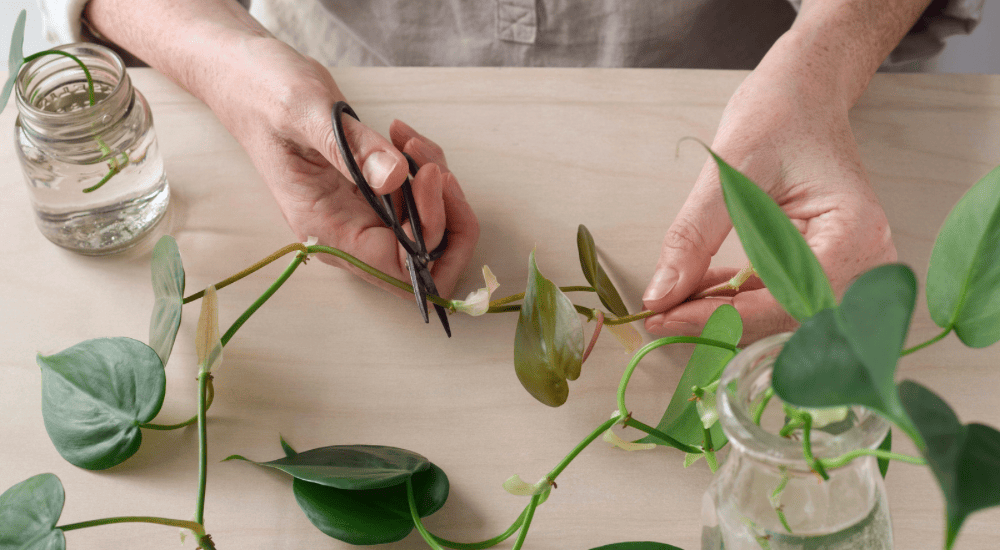
A node is the one part of a stem cutting you cannot skip. It holds dormant buds and cells that can become roots, so a stem without one is just a stem. On pothos, look for the small brown bump just below where each leaf joins the vine.
- Choose a healthy vine with firm, green growth and no yellowing leaves.
- With clean, sharp snips, cut about 0.5 cm (1/4 in) below a node. Two to four nodes per cutting give it a stronger start than one.
- Remove the leaf at the lowest node so it can sit in water or soil without rotting.
- Root the cutting in water or directly in a light, moist mix of potting soil and perlite.
- Keep it warm and in bright, indirect light.
Clean tools matter because ragged cuts crush tissue and dirty blades carry bacteria and fungi, two common causes of stem rot. For a fuller pot, root several cuttings and plant them together. A single pothos cutting tends to grow as one trailing vine rather than branching into a bushy plant.
Leaf Cuttings: When One Leaf Can Be Enough
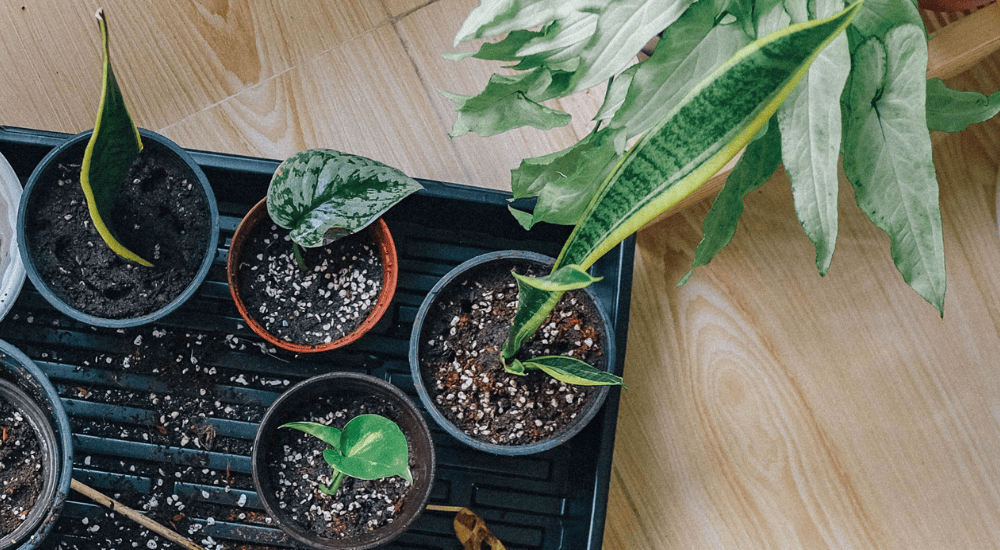
Some plants can rebuild an entire plant from leaf tissue alone. Dracaena trifasciata (formerly Sansevieria) is the classic example.
-
- Cut a healthy leaf at its base and slice it into sections roughly 5 to 8 cm (2 to 3 in) long.
- Mark which end of each section was closest to the soil. Planted upside down, a section will not take root.
- Let the cut ends dry and callus for a few days to reduce rot risk.
- Insert the bottom end about 2 cm deep into a gritty, fast-draining cactus mix and keep it barely moist.
Roots form first, and new pups eventually push up through the soil beside the leaf. Expect this to take months rather than weeks. One quirk to know: yellow-edged varieties such as ‘Laurentii’ usually produce plain green pups from leaf cuttings because the variegation doesn’t carry through. Divide those plants instead to keep their golden borders.
Not every leaf has this talent. African violets, rex begonias, and many peperomias can grow new shoots from leaf tissue, but many houseplants cannot. A single Hoya kerrii heart leaf, often sold in a tiny pot around Valentine’s Day, can root and stay green for years without ever producing a vine because it has no node. Roots alone do not make a plant. A growing point does.
Division: Turning One Plant Into Several
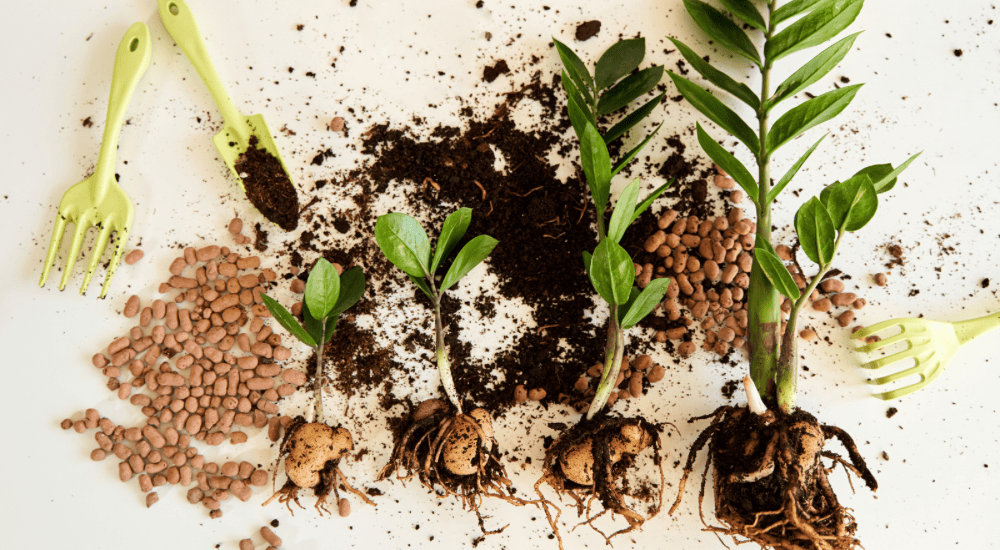
Division suits plants that grow as clumps of stems, crowns, or rhizomes: snake plants, peace lilies, ZZ plants, calatheas, spider plants, and many ferns. It is propagation and renovation in a single move, giving a crowded plant room to breathe.
- Water the plant a day ahead so the roots are supple, not brittle.
- Slide it out of its pot and loosen the old soil.
- Look for natural separation points where a cluster of leaves has its own roots.
- Tease sections apart by hand, or use a clean knife on tough rhizomes. Every piece needs healthy roots and at least one growing shoot.
- Pot each division into a container only slightly larger than its root mass, using fresh mix.
Resist the urge to choose roomy pots. Extra soil holds moisture longer than small roots can use it, which is a fast track to rot. Keep new divisions out of direct sun for a week or so, and do not panic if they sulk briefly.
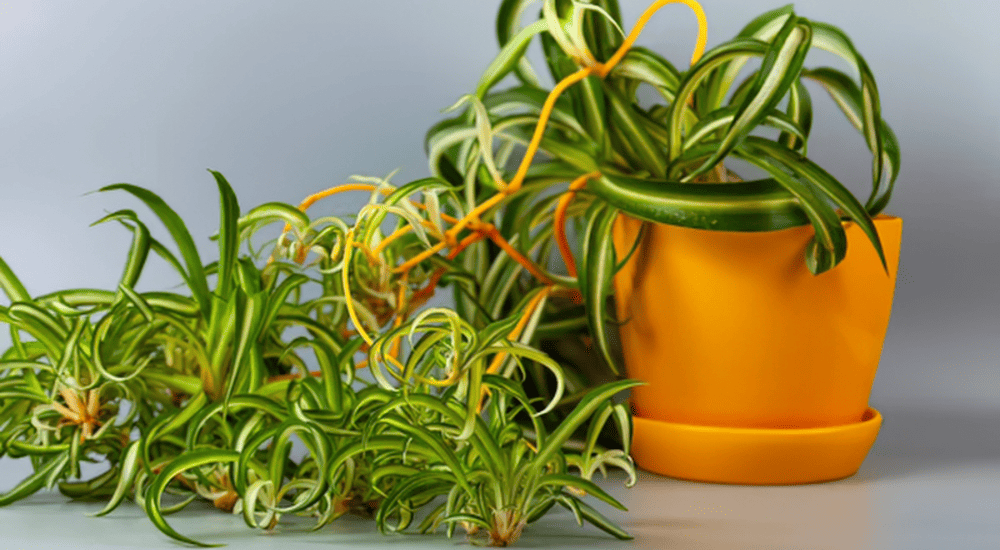
Offsets and Plantlets: Nature’s Ready-Made Starters
Spider plants are generous. Mature, slightly pot-bound plants send out arching runners, each ending in a little rosette that looks like a firework frozen mid-burst. Many already carry small root nubs underneath, a sign they are nearly ready for independence.
Once those nubs are about 1 cm long, you have two good options:
- Pin it while attached. Set the plantlet in a small pot of moist mix beside the parent and hold it in place with a bent paper clip. Snip the runner once the baby is rooted and pushing out fresh leaves, usually after a few weeks. Keep feeding the parent in the meantime, which makes this the most forgiving approach in winter.
- Cut and root. Snip the plantlet free and root it in water or moist mix.
Other offset makers include aloe, haworthia, and bromeliads. Separate bromeliad pups once they reach about a third to half the size of the parent.
Air Layering: Growing Roots Before the Separation
Air layering encourages a stem to grow roots while it is still attached and drawing water from the parent. For a rubber plant (Ficus elastica) that has grown tall and bare at the base, it turns the leafy top into a new, shorter plant.
- Choose a spot on the stem between nodes, about 30 cm (12 in) below the tip.
- Wear gloves since the milky sap can irritate skin. Make a shallow upward cut about a third of the way into the stem and wedge a toothpick in to hold it open. Removing a 2.5 cm ring of bark also works.
- Dust the wound with rooting hormone if you have it.
- Wrap a generous handful of moist, not dripping, sphagnum moss around the wound.
- Cover the moss with clear plastic wrap and tie it securely above and below.
- Check every week or so and re-moisten the moss if it starts to dry.
When several centimetres of roots are visible through the plastic, cut the stem just below the root ball and pot it up, moss and all. This often takes several weeks, longer in winter. This method shines with thick stems because a large cutting has plenty of leaf to support it, but no roots to support it, so it may wilt or rot before rooting. Air layering removes that gamble, and the parent usually responds by pushing new growth below the cut.
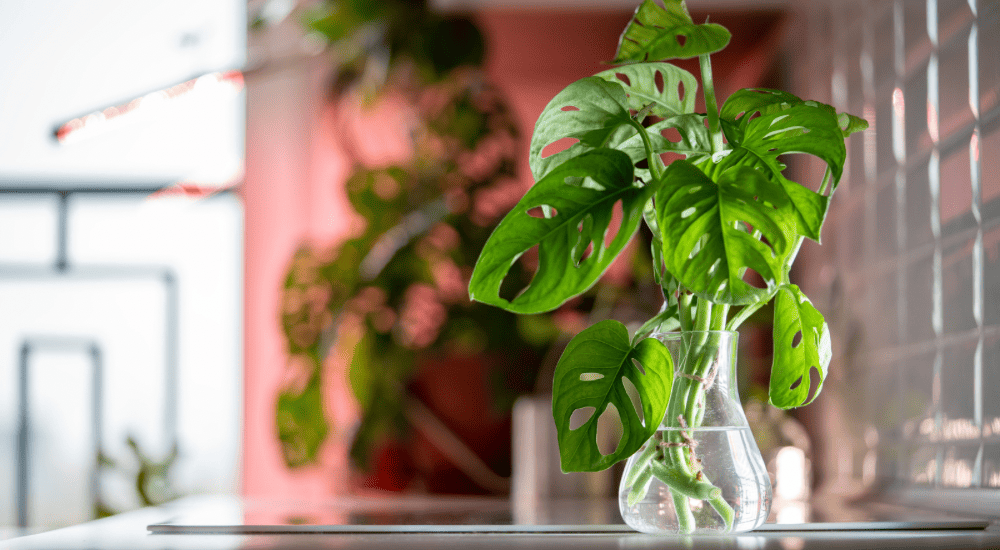
Water Propagation: Clear Glass, Visible Progress
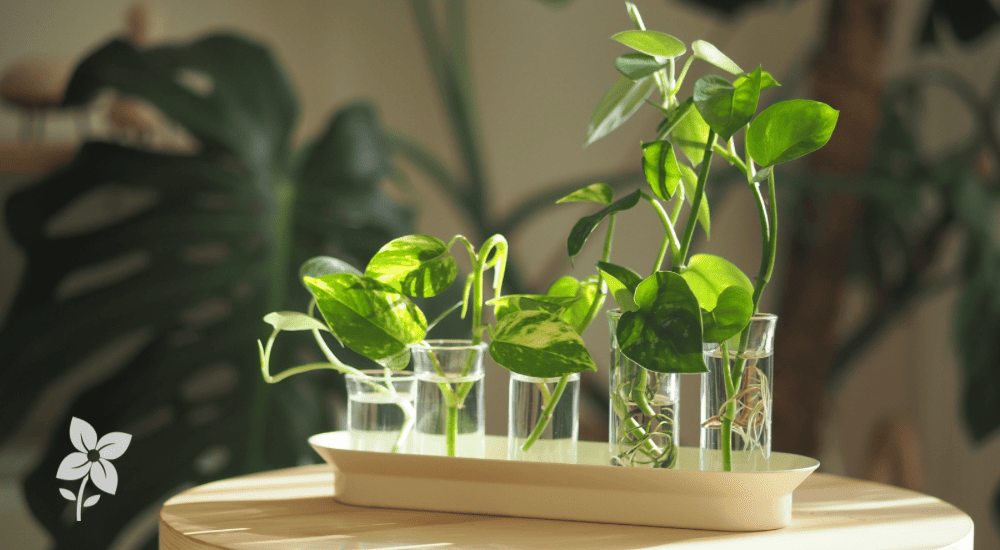
Few things on a windowsill are as satisfying as watching roots unfurl in a clear jar, pale threads lengthening a little more each morning. The glass becomes a small window into growth that usually happens in the dark. Water propagation suits pothos, philodendrons, tradescantia, monstera, and spider plant babies especially well.
- Submerge the nodes, not the leaves. Foliage sitting underwater rots quickly and clouds the water for everything else in the jar.
- Pick a narrow-necked vessel. It holds the cutting upright and keeps the leaves above the waterline.
- Give it bright, indirect light. Direct sun on glass warms the water and invites algae.
- Refresh the water weekly, using room-temperature water, or sooner if it turns cloudy or smells off.
- Move it to soil before the roots get too long. Once roots reach 2.5 to 5 cm (1 to 2 in), pot the cutting. Keep the soil evenly moist for the first couple of weeks while water-grown roots adjust to their new home.
Now, the most important point. A cutting without a growing point may grow roots without ever becoming a complete plant. A pothos or monstera leaf snipped off, missing its node, can sprout a handsome tangle of roots and look promising for months, yet no new leaf will ever appear. Look for the node before the cutting goes into the glass, not after.
Choose the Right Method for the Right Plant
Learning how to propagate plants well is less about recalling techniques and more about matching each one to the plant in front of you.
| Plant | Method to use | Why it works |
| Pothos | Stem cuttings with viable nodes | Every vine carries nodes that root readily in water or soil |
| Snake plant | Leaf cuttings or division | Leaf sections regenerate slowly; rhizomes divide cleanly and keep variegation |
| Spider plant | Plantlets or division | Runners deliver ready-made babies; mature clumps separate easily |
| Rubber plant | Stem cuttings or air layering | Tip cuttings root well; thick stems are safer layered on the parent |
Three factors shape your odds. Maturity matters since a young spider plant may not produce runners, and a small snake plant may have only one rhizome to give. Growth habit matters because a plant will only regenerate from the structures it naturally uses. The condition of the material matters most: firm, actively growing tissue roots far more reliably than tired or damaged stems.
When two methods fit, let the season decide. In winter, techniques that keep the new plant attached to its parent, such as pinned spider plant babies or air layering, are the most forgiving.
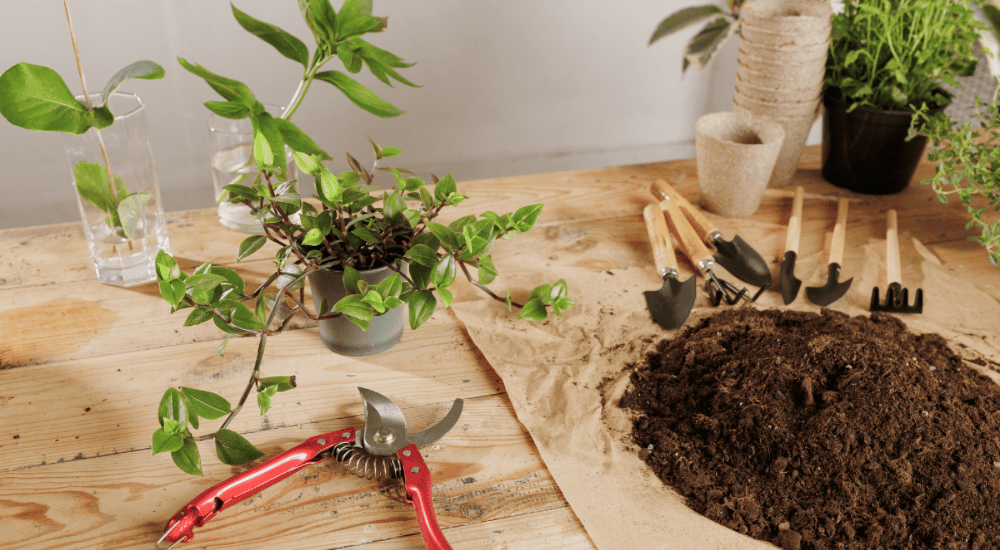
Prepare Your Indoor Propagation Station
A good propagation station does not need to be elaborate. It needs to be clean, bright, warm, and easy to check on every day.
- Sharp, clean tools. Bypass snips or a small knife, wiped with 70 percent isopropyl alcohol before you start and between plants.
- Suitable containers. Use clear glass jars for water rooting, and small 8 to 10 cm (3 to 4 in) pots with drainage holes for soil rooting.
- Fresh potting mix. Use a light, well-draining mix lightened with perlite, or a cactus mix for snake plants. Old soil from previous plants can carry pests and disease.
- Clean water for jars, changed weekly.
- Labels. Write the plant name and the date. Rooting times vary so widely that a date saves a lot of guesswork.
- Rooting hormone, optional. Helpful for woodier stems like rubber plant; rarely needed for pothos.
Light, Warmth and Humidity
Bright, indirect light is the goal: an east-facing window, or a spot a little way back from a south- or west-facing one. Most tropical cuttings root best somewhere around 20 to 24°C (68 to 75°F). A seedling heat mat can help in cooler rooms, and cuttings should be kept off cold window glass, away from drafty doors and clear of blowing heat vents.
Alberta growers know humidity deserves special attention in houseplant care. Once the furnace settles into its winter rhythm, indoor air can become dry enough to crisp the edges of tender leaves. Leafy cuttings rooting in soil benefit from a clear dome or a loose plastic bag over the pot. Lift it daily for fresh air since trapped condensation invites mould. Sansevierias and succulents are the exception: they prefer dry air and should never be covered.
Check moisture often. Soil is supposed to feel like a wrung-out sponge, never soggy. Group everything on a tray, add a lamp if needed, and your corner becomes less a laboratory and more of a small nursery of possibility.
Propagating Houseplants in November: Persistence Through Winter
By late November, Edmonton sees only about eight hours of daylight, and the sun rides low across the sky. Less light means cuttings have less energy to spend on new roots, so everything moves at a winter pace. A pothos cutting that roots in two or three weeks in June may take noticeably longer now.
That is no reason to wait. It simply calls for a few adjustments:
- Give cuttings your brightest indirect light. If your windows fall short, a full-spectrum LED grow light on a 12- to 14-hour timer makes a real difference. Follow the manufacturer’s guidance on hanging height.
- Keep the heat steady. Cuttings dislike the temperature swings near windows on frosty nights.
- Water with restraint. Cuttings use less water in cool, low-light conditions, so soggy soil becomes the biggest winter threat.
- Set realistic expectations. Slow progress in winter is normal and is not a sign of failure.
Not every plant should be propagated right now. Easy, forgiving candidates include pothos, heartleaf philodendron, tradescantia, and spider plant babies. If a parent plant is struggling, battling pests, or was recently repotted, let it rest. A large air-layering project on a slow-growing rubber plant may also be happier waiting for spring, unless you can provide strong supplemental light. Plant health and the right method come first; the calendar comes second.
Common Propagation Mistakes to Avoid
Most failed cuttings fail for a handful of predictable reasons, and you can fix nearly all of them next time.
Cutting Without a Node
A stem or leaf without a node has nowhere to grow new shoots from. Before every cut, find the node first and cut just below it.
Using Dirty or Dull Tools
Crushed tissue and stray bacteria give rot a head start. Clean, sharp blades make clean wounds that seal quickly.
Keeping Things Too Wet
Stagnant water and saturated soil starve stems of oxygen. Watch for stems that turn mushy, translucent, brown or black, often with a sour smell. If you catch it early, trim back to firm, healthy tissue above the rot, rinse the cutting, and start again in fresh water or fresh mix.
Choosing the Wrong Light
Direct sun can scorch tender cuttings and overheat water in glass. A dim corner, on the other hand, can stall rooting entirely. Bright and indirect is the sweet spot.
Checking the Roots Too Often
Tugging a cutting out of the soil every few days breaks fragile new roots. Instead, look for new leaf growth, or give a very light tug after a few weeks. Light resistance means roots have taken hold.
Misunderstanding a Long Pause
A cutting that stays green but doesn’t change for weeks isn’t necessarily failing, especially in winter. If the pause stretches on, recheck the basics: a viable node, enough warmth, and enough light. Every unsuccessful attempt still teaches you something about reading your plants, and the next cutting benefits from the lesson.
Every New Root Tells a Story
A single node becomes a lush new pothos. A spider plant’s tiny offshoot settles into its own pot. A crowded snake plant splits into three and finally has room to stretch. Propagation is thrifty and practical, yet it still feels a little like magic.
Your next step is small and specific. This week, choose one healthy plant, find its nodes, runners, or natural divisions, and match it to a method from the table above. Label it, date it, give it bright light and steady warmth, then let winter take its time. When you are ready for fresh potting mix, propagation supplies, or friendly advice on your next houseplant propagation project, visit us at Salisbury Greenhouse and let your indoor jungle grow one cutting at a time.