
Give Young Plants a Strong Start
Winter tree care begins long before snow settles over the Edmonton area, because every newly planted tree or shrub is a young investment in the landscape—full of promise but still not equipped to face Alberta’s harshest conditions alone. A new maple, spruce, lilac, hydrangea, or flowering shrub may look settled above ground. Yet, below the surface, its roots are still charting unfamiliar soil, adjusting to moisture patterns, and building the network that will support years of growth.
Fall is therefore not the end of the gardening season. For young woody plants, it is a transition period: the last opportunity to correct moisture problems, protect vulnerable bark, inspect supports, and prepare roots for the cold months ahead. Thoughtful preparation now can reduce winter stress without changing every plant into a bundled package of burlap and plastic.
The goal is not maximum protection. It is appropriate protection.
Why Young Trees Need Extra Winter Care
An established tree stands like a veteran sentinel. Its roots extend well beyond the original planting hole, its bark has thickened, and it has already endured cycles of heat, wind, cold, drought, and snow. A newly planted tree is still finding its footing.
The difference begins underground. Recently planted trees and shrubs have smaller, less established root systems, which means they have less access to moisture stored throughout the surrounding soil. Even when the top growth looks healthy, the plant may still rely heavily on the soil immediately around the root ball.
Young plants can also be more sensitive to rapid temperature changes. Alberta autumns can shift from mild afternoons to sharp overnight freezes with little warning. During winter, bright sun can warm exposed bark while the shaded side of a trunk remains much colder. Dry winds can pull moisture from evergreen foliage. Rabbits and mice may feed on tender bark when other food is scarce. Wet, heavy snow can bend or split flexible young branches.
None of these risks mean every plant needs elaborate protection. They mean newly planted trees and shrubs deserve a deliberate fall inspection before winter settles in.
Start With Deep Watering
Before winter seals the soil under its frozen surface, give young roots one last opportunity to drink deeply.
Adequate soil moisture is one of the most important factors in helping newly planted woody plants enter winter in good condition. Roots don’t stop needing water just because air temperatures cool. As long as the ground remains workable and unfrozen, roots can continue functioning, and the surrounding soil can continue drying.
Deep watering is more useful than frequent shallow sprinkling because the objective is to moisten the root zone, not simply darken the surface. Apply water slowly enough that it can soak into the soil around and just beyond the original root ball. The exact amount and frequency will depend on the plant, soil type, recent rainfall, drainage, and weather, so avoid relying on a rigid schedule.
Check the soil instead. A few inches below the surface, it should feel moist but not saturated. Heavy clay may retain moisture longer, while lighter or exposed soils can dry more quickly.
Continue checking moisture through fall while the soil is still workable. Rainfall can help, but don’t assume it has soaked deep enough. A brief shower may wet the surface while leaving the lower root zone comparatively dry.
Evergreens deserve particular attention because their needles continue to lose moisture during winter. They cannot replace that moisture efficiently once the ground is frozen, so entering winter well hydrated is especially important.
Build the Right Mulch Ring
Once moisture is in the soil, mulch helps keep conditions around the roots more stable.
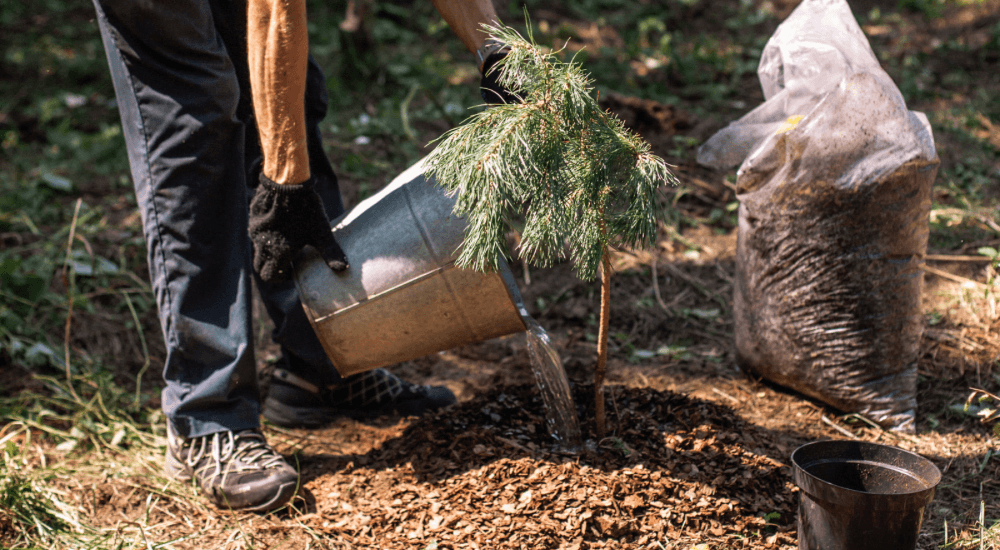
A proper mulch ring insulates the soil. It moderates swings in soil temperature, slows moisture loss, reduces competition from grass and weeds, and protects the root zone from abrupt freeze-thaw changes that can occur around the Edmonton area.
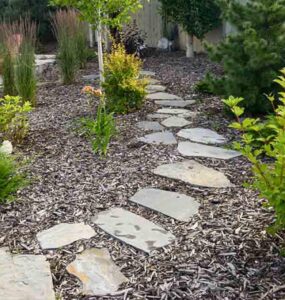
For most landscape trees and shrubs, a layer of organic mulch about 5 to 8 centimetres deep is usually enough. Spread it broadly over the root zone where practical, and keep it several centimetres away from the trunk or main stems.
Mulch should form a protective blanket—not a constricting collar.
The familiar “mulch volcano,” where mulch is piled high against a tree trunk, creates the opposite of good protection. Constant moisture against bark can encourage decay, conceal rodent activity, and keep the base of the trunk unnaturally damp. The trunk flare should remain visible rather than vanishing under a mound.
If mulch has settled or thinned over summer, fall is a good time to refresh it. If it is already deep enough, redistribute it.
Check Stakes, Ties, and Supports
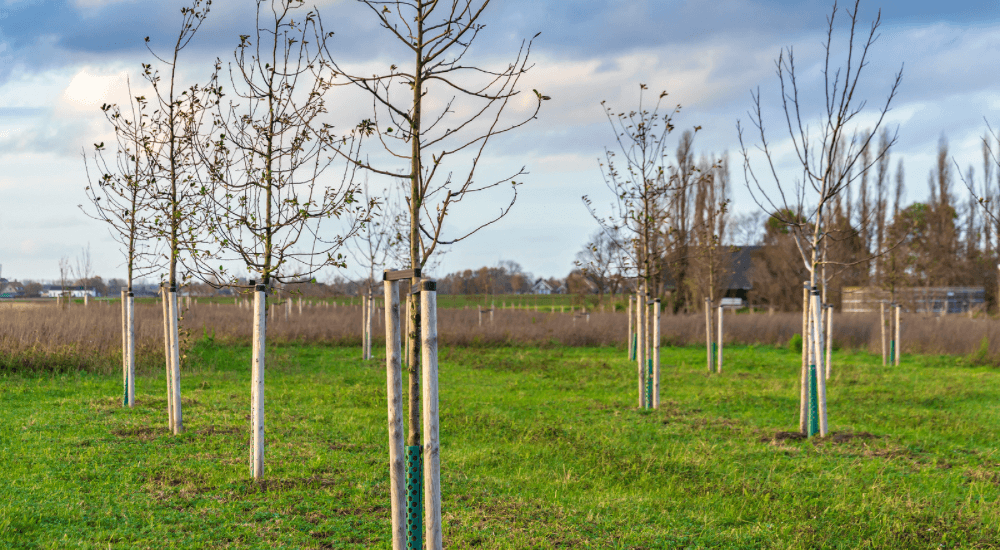
Some newly planted trees need temporary staking, particularly when they have limited root stability or are exposed to strong winds. Fall is a good time for a final inspection of those supports.
Look closely at ties and straps. They should stabilize the tree without pinching, rubbing, or cutting into the bark. A tie that was loose in spring may become tight as the trunk expands during the growing season.
Check that stakes are still secure and that hardware is not scraping the trunk during windy weather. If supports are no longer necessary, remove them based on the needs of the individual tree rather than leaving them indefinitely.
The purpose of staking is not to hold a tree rigidly upright forever. Some natural movement encourages trunk and root development. Supports should help the plant establish, not become a permanent brace.
Avoid the temptation to add more stakes simply because winter is approaching. Inspect first, then adjust only when needed.
Protect Against Winter Sunscald and Bark Injury
Winter sunshine can be deceptive—golden on the branches, yet unforgiving against exposed bark.
Sunscald is a type of bark injury that can occur when winter sun warms part of a tree trunk during the day, and temperatures then drop rapidly. Young trees with thin, smooth bark can be particularly vulnerable, especially on exposed south- and southwest-facing sides.
Damage may not be obvious immediately. In spring, affected bark can appear discoloured, sunken, cracked, or dead.
Trunk protection may help certain young, thin-barked, or particularly exposed trees. Commercial tree guards or suitable light-coloured tree wraps can help moderate temperature extremes and provide a physical barrier around vulnerable bark.
That does not mean every trunk should automatically be wrapped. Use protection based on the species, age, exposure, and site history. If you use trunk wrap, install it correctly and remove or manage it according to the product instructions so it doesn’t remain wet, become too tight, or stay forgotten around a growing trunk.
This kind of targeted protection is a good example of winter tree protection Alberta homeowners can approach thoughtfully rather than automatically.
Watch for Rodents and Wildlife
Cold weather changes the menu for wildlife. Once tender vegetation disappears beneath snow, young bark can become appealing to rabbits, mice, voles, and other hungry visitors.
Chewing around the base of a trunk can be far more serious than a few missing twigs. If bark is removed around much of the trunk circumference, the tissues that transport water and nutrients can be severely damaged.
Inspect young trees before winter for existing bite marks, trails, droppings, or other signs of activity. Where rodent pressure is a concern, use an appropriate physical trunk guard or barrier. It should be secure enough to stay in place but not so tight that it rubs, traps moisture, or constricts growth.
Protection may need to extend higher than expected because snow can effectively raise the ground level, allowing rabbits to reach bark that was well above their feeding height in autumn.
Keep the area immediately around young trunks tidy, too. Dense grass, weeds, and accumulated debris can provide sheltered pathways for small rodents.
Prevention is easier than discovering girdled bark in spring.
Be Strategic With Burlap and Other Coverings
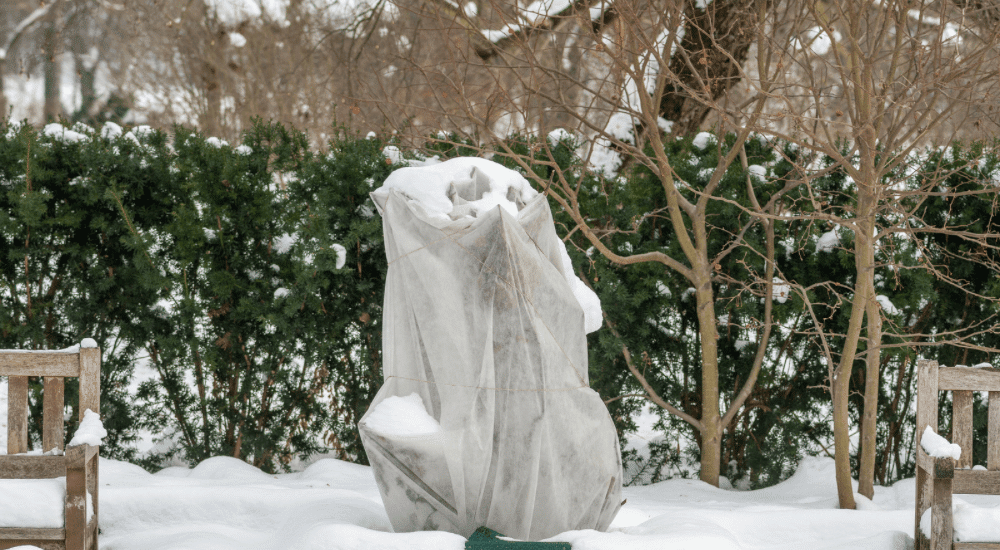
One of the most common mistakes in winterizing trees and shrubs is assuming that every young plant should be wrapped as soon as cool weather arrives.
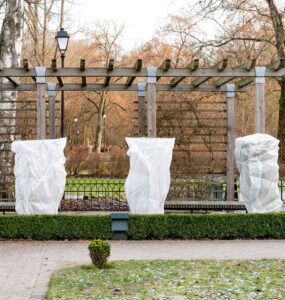
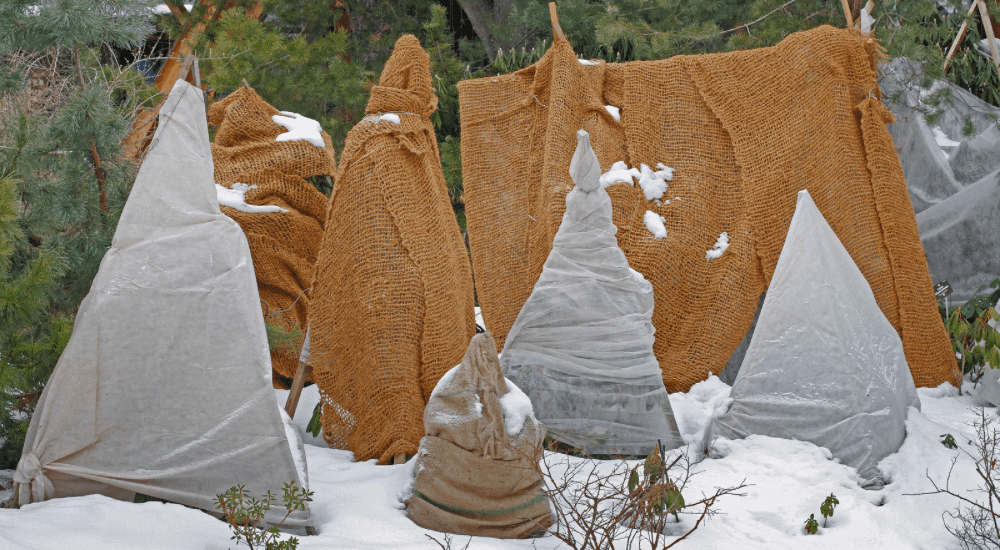
Burlap can be useful, but only when it solves a specific problem. It may help reduce exposure for vulnerable evergreens planted in windy locations, protect some shrubs from drying winds, or create a screen against road spray and winter sun.
Timing matters.
Wrapping too early during mild autumn weather can reduce air circulation, trap moisture, and create warmer conditions around foliage than the plant needs. Protection should be a shield, not a blanket pulled over the landscape too soon.
Wait until consistently cold conditions are approaching and the plant has had time to harden off naturally. Even then, consider whether a burlap screen positioned on the exposed side of the plant would be more appropriate than wrapping the entire shrub.
Different plants have different tolerances. A hardy deciduous shrub planted in a sheltered location may need nothing more than proper watering and mulch. A newly planted broadleaf evergreen or exposed conifer may benefit from additional wind protection.
There’s no prize for using the most burlap.
Protect Against Heavy Snow and Ice
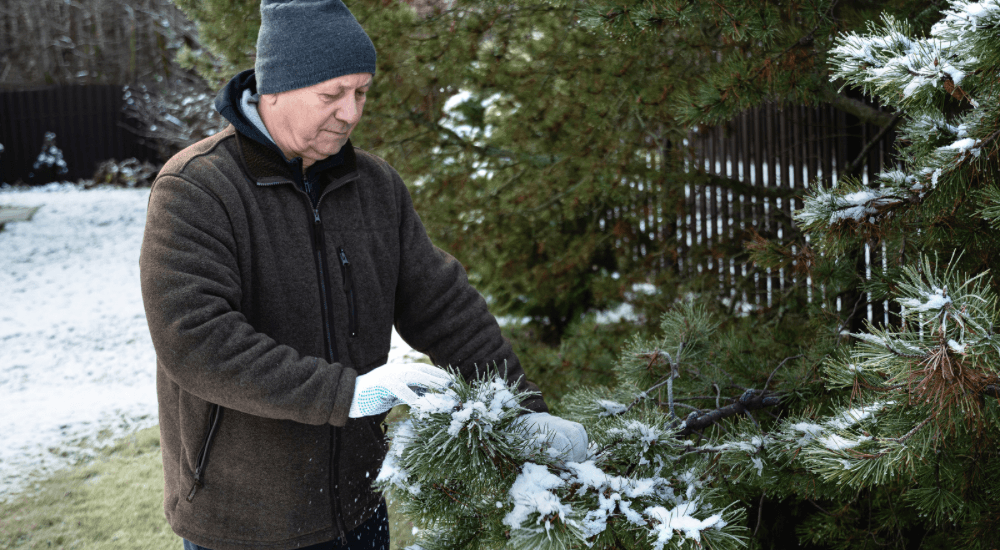
Snow can turn a garden into something nearly sculptural, softening edges and outlining branches in white. But weight can turn beauty into strain.
Young trees and multi-stemmed shrubs can be vulnerable when heavy, wet snow accumulates on flexible branches. Upright evergreens and shrubs with multiple stems may splay outward under the load, while weak branch unions can split.
Before winter, inspect plants for damaged, crossing, or poorly attached branches that may be more likely to fail. Avoid unnecessary late-season pruning, but remove obviously broken material.
After major snowfalls, check vulnerable shrubs and young trees. If you can gently brush away loose snow, work carefully from lower branches upward so falling snow does not add weight to branches below.
Do not shake frozen branches or strike them with a shovel or broom. Frozen wood can be brittle, and forceful snow removal may cause more damage than the snow itself.
Ice is even more delicate. Branches coated in ice are under tremendous stress, but trying to break or knock the ice away can tear bark and snap stems. In many cases, it is safer to let the ice melt naturally unless there is an immediate safety concern.
What Not to Do
Good winter preparation is as much about restraint as action. More protection is not always better protection.
Do not pile mulch against trunks. A deep mound may look insulated, but it can hold excess moisture against bark and conceal pests.
Do not wrap plants too early. Mild fall weather is still part of the hardening process.
Do not assume every tree or shrub needs burlap. Match protection to the plant and its exposure.
Do not neglect fall watering simply because temperatures are cooler. Soil moisture still matters before freeze-up.
Do not overtighten tree ties. Supports that cut into bark can damage exactly the tissue you are trying to protect.
Do not overload branches with heavy coverings, ropes, or improvised structures. Winter protection should reduce stress, not create a new source of it.
Alberta Timing Matters
Edmonton weather rarely follows a tidy gardening calendar. A mild stretch can linger into fall, only to be replaced by a sudden cold snap. Freeze-thaw cycles can occur around the shoulders of the season. Winter winds can be dry and persistent. Heavy snowfall can arrive quickly, and temperatures can change dramatically over a short period.
That variability is why actual conditions matter more than arbitrary dates.
Use the soil, weather, and plant itself as your guide. Keep watering while the soil stays workable and the plant needs moisture. Apply protection when cold conditions genuinely justify it. Inspect after major storms rather than assuming a single fall preparation will carry every plant untouched to spring.
For homeowners researching tree care in Edmonton and surrounding communities, this weather-responsive approach matters most. Local conditions can vary from one property to another depending on exposure, snow cover, drainage, wind, and reflected winter sun.
Final Checklist — Give Trees a Winter-Ready Send-Off
Before winter:
- Deeply water young trees and shrubs while the soil remains workable.
- Check soil moisture rather than relying solely on rainfall.
- Refresh the mulch ring where needed.
- Keep mulch several centimetres away from trunks and main stems.
- Inspect stakes, straps, and ties for rubbing or tightness.
- Look for signs of rabbit, mouse, vole, or other rodent activity.
- Assess whether young bark needs trunk protection.
- Wait for appropriately cold conditions before installing burlap or wind screens.
- Check vulnerable branches and multi-stemmed shrubs for potential snow-load concerns.
Young trees and shrubs do not need to spend winter wrapped from root to branch. They need soil moisture, a stable root zone, healthy bark, sensible supports, and protection only where exposure creates a genuine risk. With thoughtful winter tree care, a newly planted landscape can settle into dormancy with the gentle resilience it needs, ready to resume root growth and healthy new growth when Alberta warms again.
If you need help choosing the right mulch, tree guards, burlap, watering supplies, or other products mentioned throughout this guide, visit Salisbury Greenhouse. Our team can help you find the right solutions for your trees and shrubs and answer questions about preparing your landscape for an Alberta winter.