Bring Winter to Life with Indoor Blooms
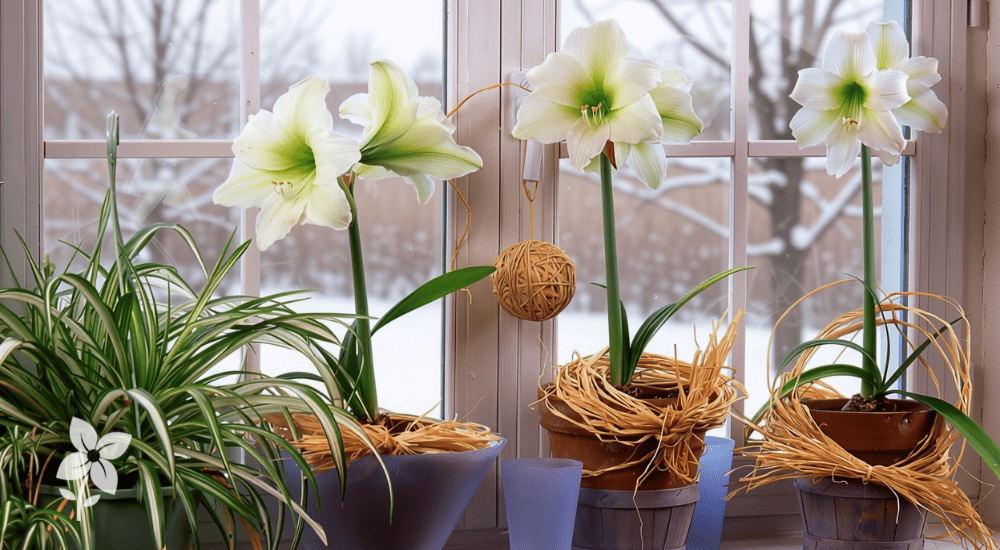
Few things lift a January morning like indoor bulbs in full flower: a pot of hyacinths perfuming the kitchen while the thermometer outside sulks at minus twenty-eight. Beyond the glass, the garden sleeps under a white blanket, its perennials tucked in and its soil set hard as concrete. Inside, a scarlet amaryllis opens its trumpets on the sideboard, and a cluster of paperwhites leans toward the window like a choir waiting for its cue.
That contrast is the whole point. Your outdoor beds may be closed for the season, but your garden doesn’t have to be. A bulb is a flower packed for travel, with next season’s bloom already folded inside, waiting for the right signals of cold, warmth, water, and light. Supply those signals indoors, and you get to decide when spring shows up.
The secret is timing. Plant everything on the same Saturday, and you’ll get one glorious fortnight followed by a long stretch of fading stems. Plant in waves, and the show rolls on from December into early spring, each variety taking the spotlight as the last one bows out. What follows is a practical planting calendar for doing exactly that, along with the growing details that separate a pot of promise from a pot of flowers.
Why Grow Indoor Bulbs in Winter?
Alberta winters are long, cold, and deceptively bright. Snow throws plenty of glare, yet in Edmonton, the day shrinks to about seven and a half hours around the solstice, and Calgary gains only about half an hour on that. Weeks can pass when the liveliest thing in the house is a ficus that has quietly given up.
Flowering bulbs push back against that stillness with colour, fragrance, and momentum. A cut bouquet peaks the day you bring it home; a forced bulb lets you watch the whole story unfold. First comes the pale shoot, then the fattening bud, then the slow blush of colour and finally the open flower. That progression gives the dark months a rhythm of small things to look forward to.
Bulbs also offer far more than a single holiday centrepiece. An amaryllis on Christmas Eve is lovely. An amaryllis followed by paperwhites in January, hyacinths in February, and a bowl of dwarf tulips in March is a season. Outside, the landscape holds its breath; inside, the garden keeps talking.
Among winter-flowering plants, bulbs are some of the most forgiving. Each one arrives with most of the energy it needs for its first bloom already stored inside, which makes them a confident first project for beginners. Experienced growers find plenty to tinker with too: chilling schedules, variety trials, staggered plantings, and the occasional gamble on something less common, such as Iris reticulata or grape hyacinths.
When people think of indoor gardening Alberta-style, they tend to picture houseplants and a few herbs under a lamp. Bulbs add something those can’t: a genuine flowering season with an opening act, a crescendo, and a finale.
Meet the Stars of the Indoor Bulb Calendar
Amaryllis: The Showstopper
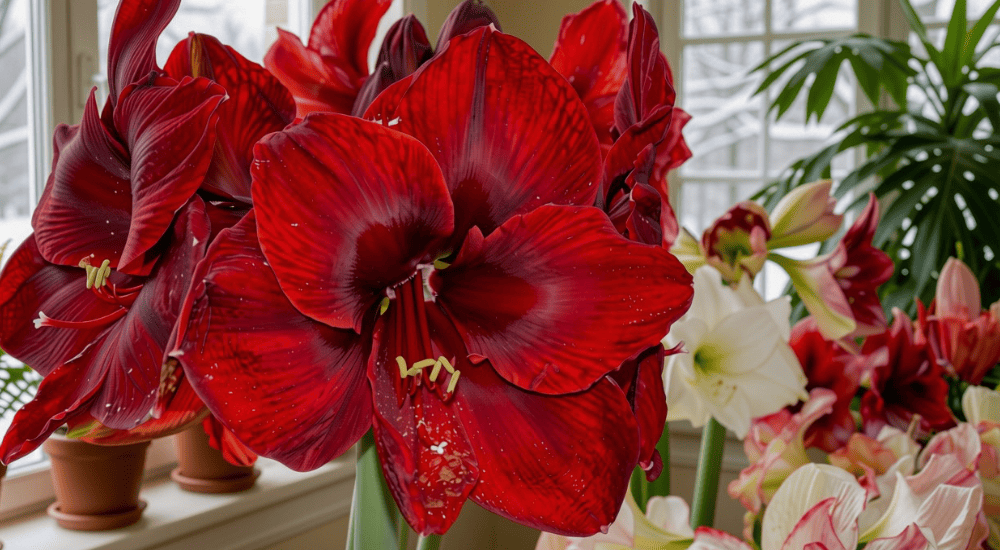
If winter had a drum major, it would be the amaryllis (Hippeastrum). From a bulb nearly the size of a softball rises a thick, hollow stalk crowned with three to five trumpet-shaped flowers, often 15 to 20 centimetres across. Large, top-size bulbs often send up a second stalk, extending the show by a couple of weeks.
Choices range from the classic crimson of ‘Red Lion’ to the soft, pink-brushed white of ‘Apple Blossom’ and the candy-cane stripes of ‘Minerva’. Most amaryllis offer little fragrance; they win on sheer presence. Expect flowers roughly six to ten weeks after potting, depending on the bulb and how warm you keep it. Amaryllis need no chilling, which makes them the most predictable member of the cast.
Paperwhites: The Sprinter
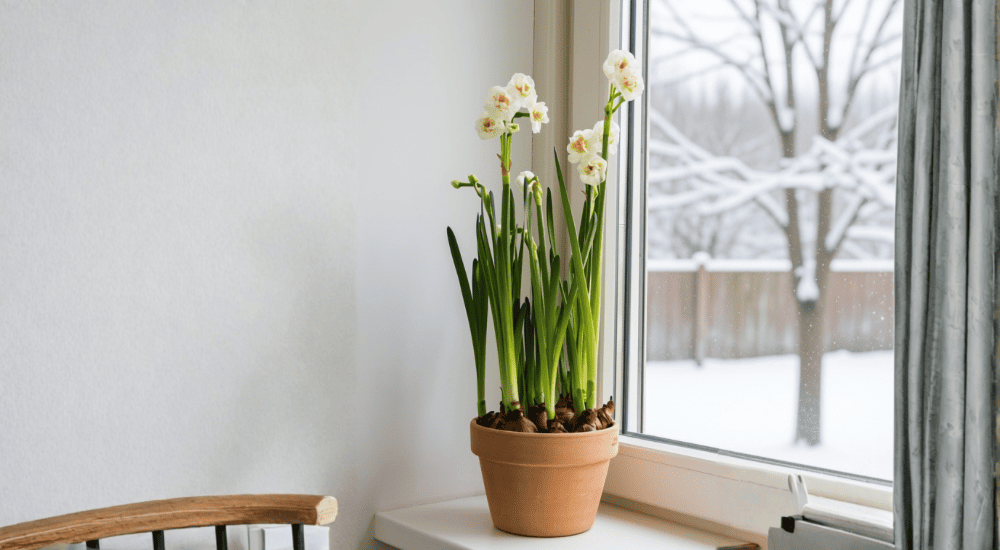
Paperwhites (Narcissus papyraceus) are the fastest route from bag to bloom. Set them on pebbles with water just below their bases and, in about four to six weeks, clusters of small, starry white flowers open on slender stems. They need no cold treatment.
Their fragrance is famous and divisive: sweet and musky to some noses, overpowering to others. ‘Ziva’ is the tall, intensely scented standard, while ‘Inbal’ is generally considered milder and is a good choice if your household is split on the subject. Plant a few bulbs before you plant fifty.
Prepared Hyacinths: The Perfumer
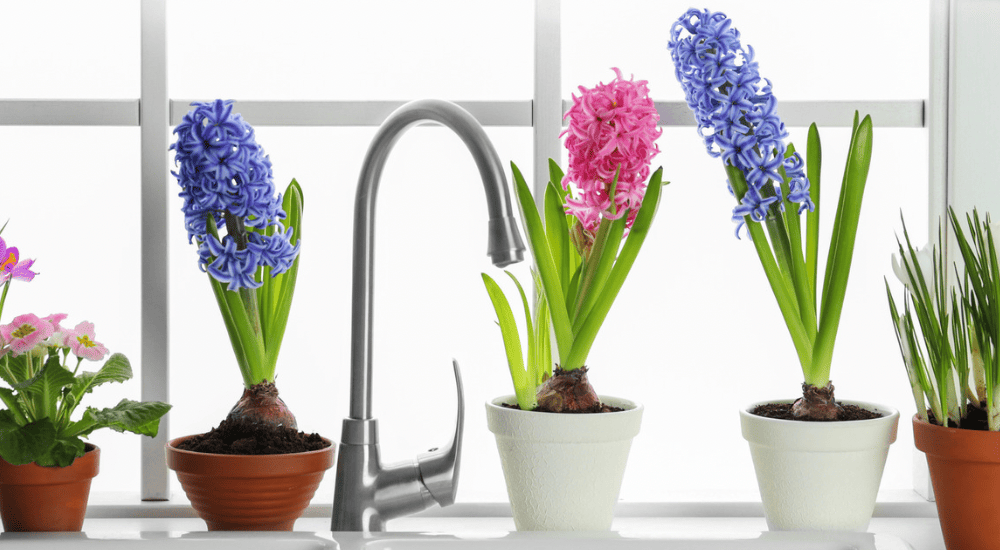
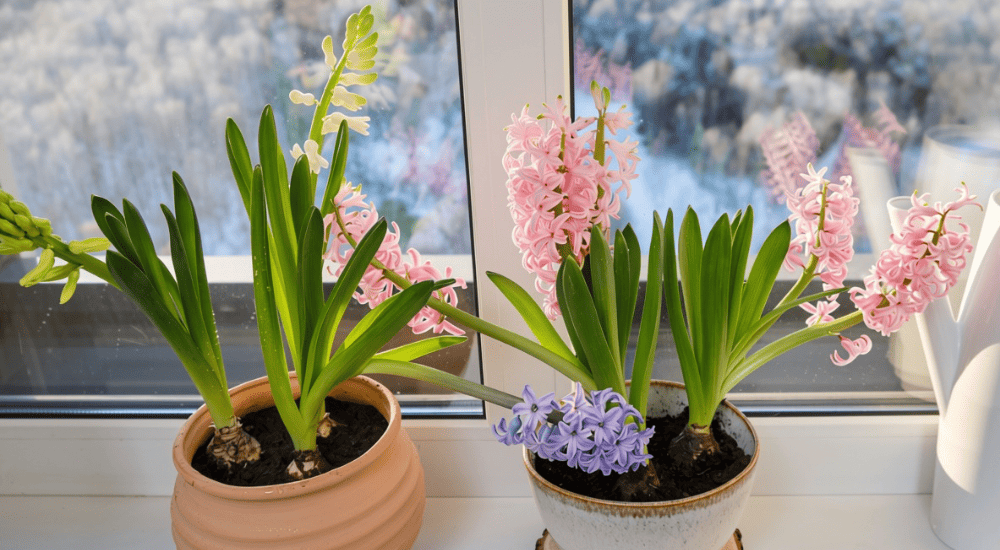
Hyacinths (Hyacinthus orientalis) pack an extraordinary amount of scent into a compact, upright spike. Think of ‘Delft Blue’ in soft porcelain blue, ‘Pink Pearl’ in deep rose, ‘Jan Bos’ in vivid cerise, and ‘Carnegie’ in pure white.
The grower has given “prepared” hyacinths temperature treatments so they flower earlier than ordinary garden bulbs. That does not mean they skip the cold entirely. Most still need several weeks in a cool, dark place to build roots before they come into the heat, so read the package carefully since suppliers often state how long their bulbs need. You can also force unprepared hyacinths, but expect a longer chilling period of roughly 12 to 14 weeks. One practical note: hyacinth bulbs can irritate skin, so wear gloves when handling them.
Tulips, Daffodils, Crocus, and Friends: The Patient Ones
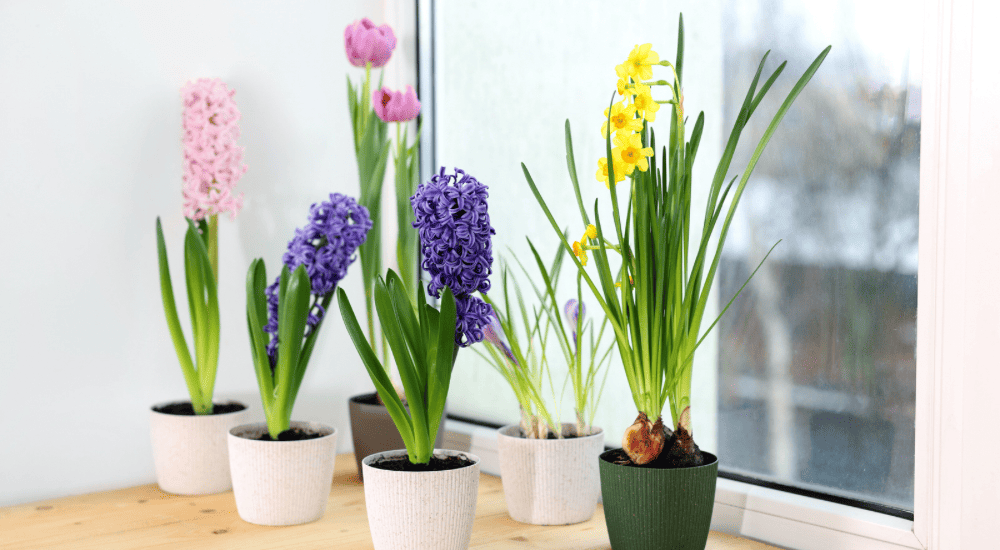
These are the marathon runners. Tulips and daffodils generally need about 12 to 16 weeks of steady cold, between 2 and 9°C, before they flower properly indoors. Crocus and grape hyacinths (Muscari) usually need less, often 8 to 15 weeks depending on variety. Once the chill is complete and the pots are in a cool, bright room, expect flowers in about two to four weeks.
Shorter, sturdier varieties force best. Tulip ‘Apricot Beauty’ is a long-time forcing favourite, and compact greigii tulips such as ‘Red Riding Hood’ suit pots well. Among daffodils, ‘Tête-à-Tête’ is small, cheerful, and reliable. Large-flowered Dutch crocus such as ‘Jeanne d’Arc’ and the striped ‘Pickwick’ make charming low bowls.
Where to chill them is the Alberta question. A refrigerator works as long as it holds no ripening fruit because apples and pears release ethylene gas, which can damage the flower buds forming inside a bulb. A cold room or root cellar is ideal. An unheated attached garage can work too, but only if it stays above freezing, and a February cold snap can change that overnight. Put a minimum-maximum thermometer out there before trusting it with your bulbs.
Create Your Indoor Bulb Calendar
Succession planting works backward. Choose when you want flowers, subtract each bulb’s growing time (and chilling time, where needed), and you’ll have your planting date. Instead of one fireworks display, you get a string of lights switching on one by one.
Before the Calendar Begins: October Groundwork
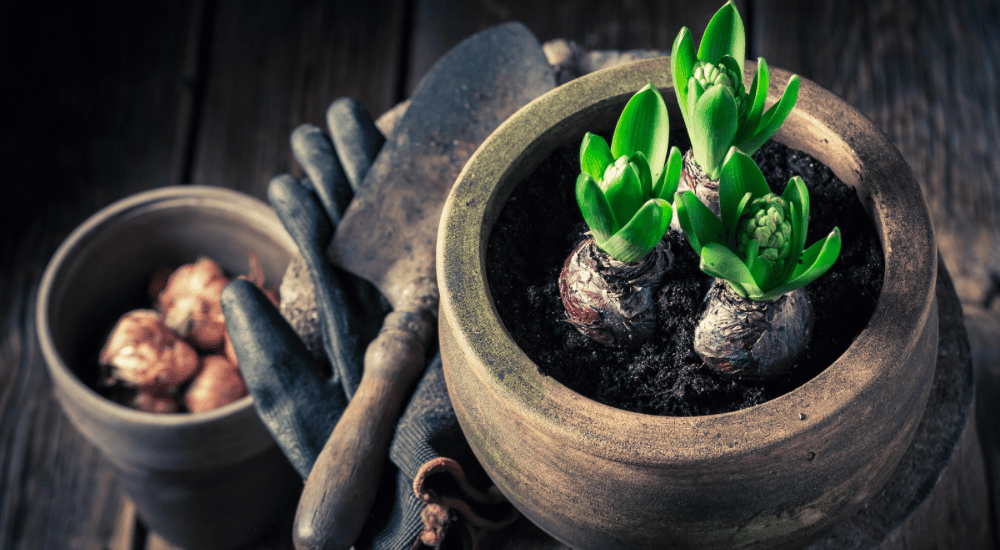
Bulbs that need a long chill have to start early. If you want tulips, daffodils, or crocus in February and March, pot them in October and move them straight into cold storage. This is also the time to settle prepared hyacinths into a cool, dark rooting spot if you’re aiming for January or early February colour.
Early November: The First Wave
Plant your first batch of paperwhites. In four to six weeks, they should open in mid to late December. Pot your first amaryllis now as well. Plenty will flower in time for the holidays, but if you want a Christmas bloom, look for bulbs labelled for early or Christmas flowering since some bloom faster after potting. Check your chilling pots while you’re at it, and water any that have dried out.
Late November to December: Keep the Conveyor Belt Moving
Plant another round of paperwhites every two to three weeks so a fresh batch is always coming along. Start a second amaryllis in late November or early December for flowers in late January or February. If you haven’t started your prepared hyacinths yet, pot them or set them in hyacinth glasses now. Give them their cool, dark rooting period, and expect blooms around February.
Store bulbs you’re holding for later plantings somewhere cool, dry, and ventilated, such as a paper bag in a cool basement. Avoid plastic bags, which trap moisture and invite rot.
January to February: Bring the Cold-Treated Bulbs Out of Hiding
Now the October investment pays off. Check your chilled pots: they are generally ready when roots show at the drainage holes and shoots stand about 2.5 to 5 centimetres tall. Move them first to a cool spot (around 10 to 15°C) with indirect light for a week or so, then into brighter light. Crocus and grape hyacinths usually come out first, followed by tulips and daffodils.
Plant your final paperwhites by mid-January, as stored bulbs lose vigour the longer they wait. Pot a third amaryllis for late winter colour. Meanwhile, watch the hyacinths emerging from their dark period and bring them into the light as their shoots reach the right stage.
March and Early Spring: The Grand Finale
Late tulips and daffodils, the last amaryllis, and any stragglers from the chilling shelf carry the display through March. Since Alberta’s outdoor bulbs rarely bloom before late April or May, this indoor finale bridges the gap between the last winter flowers and the first crocus pushing through a melting bed.
A Sample Calendar at a Glance
| When to start | What to plant or move | Approximate bloom time |
| October | Pot tulips, daffodils, and crocus; begin chilling | February to March |
| October to early November | Prepared hyacinths into cool, dark rooting | January to February |
| Early November | Paperwhites (batch 1) and amaryllis (round 1) | Mid-December to early January |
| Late November to December | Paperwhites every 2 to 3 weeks; amaryllis (round 2) | January to February |
| January | Final paperwhites; amaryllis (round 3); first chilled pots out | February to March |
| February | Remaining chilled tulips and daffodils out | March |
Treat every date here as an estimate, not a contract. Variety, bulb size, room temperature, light levels, and the grower’s preparation all nudge the timing. A paperwhite in a 22°C living room will race ahead of the same bulb in a 16°C sunroom. Plan with a little slack, and the overlaps will smooth themselves out.
The Secrets to Successful Indoor Bulb Growing
Choose the Right Bulbs
Pick bulbs the way you’d pick onions: firm, heavy for their size, and free of soft spots, mould, or deep cuts. A papery, slightly loose outer skin is normal. Size matters, especially for amaryllis, where larger bulbs generally produce more flowers and more stalks. Look for varieties described as suitable for forcing and shop early in the fall while selection is at its best.
Use Suitable Containers
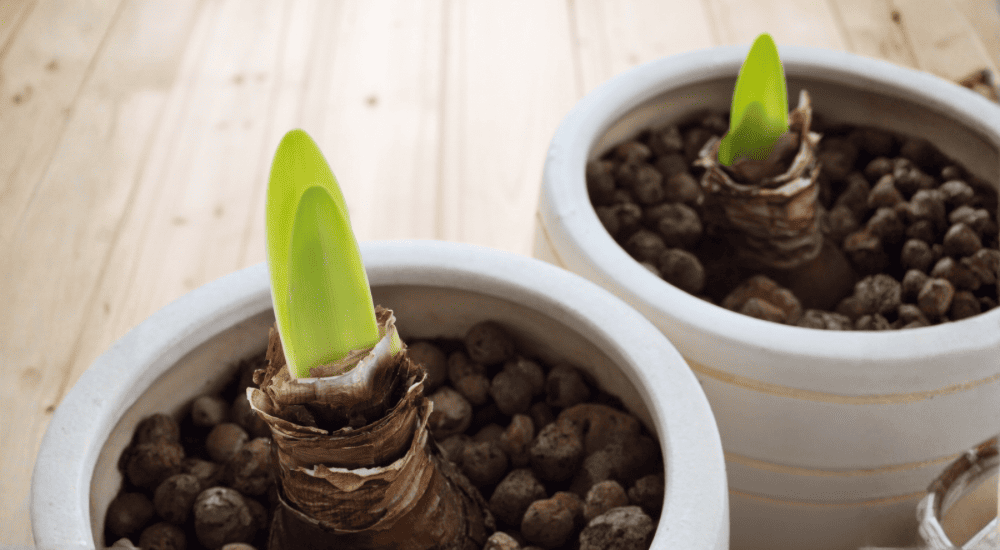
For bulbs grown in soil, choose pots with drainage holes and use a fresh, well-drained potting mix rather than garden soil. Planting depth varies by bulb:
- Amaryllis: Use a pot only about 2.5 to 5 centimetres wider than the bulb and leave the top third of the bulb above the soil.
- Hyacinths: Plant with the tips at or just above the surface, close together but not touching.
- Tulips: Set the tips level with the soil, and turn each bulb so the flat side faces the edge of the pot. The first broad leaf grows from that side and will drape neatly over the rim.
- Paperwhites: Nestle them into pebbles or gravel inside a container without drainage, keeping only the base and roots in water.
Get the Temperature Right
Warmth is the accelerator, and cold is the brake. Amaryllis starts fastest at about 20 to 24°C, and setting the pot on a warm (not hot) surface can help wake a sluggish bulb. Paperwhites become shorter and sturdier in cooler rooms, around 15 to 18°C. Chilled bulbs should warm up gradually from cold storage rather than leap from the fridge to a sunny window.
Once flowers open, keep them cooler. Blooms last noticeably longer at around 15 to 18°C, and moving pots to a cool room overnight can add days to the display. Keep every pot away from heat registers, fireplaces, and the icy air that pools against window glass on a minus-thirty night.
Give Blooms the Light They Need
Bright light builds short, strong stems; low light breeds long, weak ones that lean and flop. A south- or west-facing window is the best seat in the house during an Alberta winter. Rotate pots every few days so stems grow straight instead of bowing toward the glass. If good windows are scarce, a simple LED grow light positioned a short distance above the foliage can make a real difference throughout the darkest weeks. Once buds open, move pots out of direct sun to extend each flower’s life.
Water Thoughtfully
Bulbs rot far more often from too much water than too little. Water a newly potted amaryllis once, then sparingly until you see active growth, increasing as the leaves and stalk develop. For paperwhites and hyacinths in glasses, keep the water level just below the bulb base so roots can reach down to drink while the bulb stays dry. Chilling pots need only light moisture, checked every couple of weeks. Forced-air furnaces dry pots faster than you might expect, so check with a finger rather than a schedule and never leave a pot standing in a full saucer.
Track Planting Dates
Write the variety, planting date, chilling start date, and expected bloom window on a plant label and push it into each pot. Keep a simple notebook or phone note as a backup. By next winter, that record becomes your most valuable tool because it shows how bulbs actually behave in your house, with your light and your thermostat.
Troubleshooting: When Winter Blooms Keep You Waiting
Flowers Arriving Early or Late
Temperature is usually the culprit. A warm room speeds everything up; a cool one slows it down. Use that to your advantage: move a pot that is racing ahead into a cooler spot, and give a laggard a warmer one.
Tall, Floppy Stems
Paperwhites are notorious for this, usually because of too much warmth and too little light. Cooler temperatures and brighter light help. Research from Cornell University also found a useful trick: once roots have formed and shoots are about 5 centimetres tall, replace the water with a dilute alcohol solution of roughly one part 40 percent spirit, such as vodka or gin, to seven parts water. It shortens the stems without harming the flowers. Skip beer and wine since their sugars cause problems. A few twiggy stakes or a loop of raffia also work and look charming.
Leaves but No Flowers
On amaryllis, this often points to a small or exhausted bulb that lacked the stored energy to bloom. Sometimes the flower stalk emerges after the leaves, so give it a few weeks before you give up.
Stunted Flowers or Shriveled Buds
In hyacinths, tulips, and daffodils, flowers stuck low within the leaves or buds that dry up before opening usually mean the bulbs didn’t get enough chilling or warmed up before their roots were established. Give the next batch the full cold period and a gradual transition into the light.
Soft, Mushy Bulbs or a Sour Smell
That’s rot, usually from overwatering or poor drainage. Discard affected bulbs. Make sure pots drain freely and water less often.
Patience is part of the method. A bulb that blooms two weeks late hasn’t failed; it has told you something about your conditions. Note it, adjust next year’s dates, and your calendar grows more accurate every winter.
Design Beautiful Indoor Bulb Displays
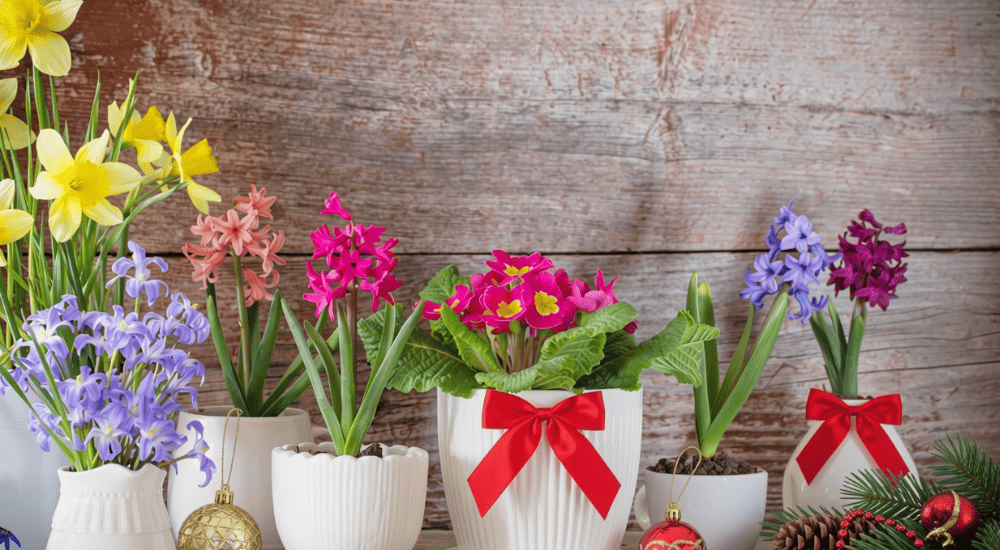
Treat your bulbs like a small indoor border. Group pots of different heights: tall amaryllis at the back, mid-height hyacinths and paperwhites in the middle, low bowls of crocus or grape hyacinths in front. Mixing pots at different stages—one in bud, one in full flower, and one just breaking soil—keeps the arrangement alive and shifting week to week. Unlike most winter indoor plants, which hold the same pose all season, a bulb display changes its outfit constantly.
Choose containers that suit your home without stealing the show. Weathered terracotta, matte ceramic, galvanized metal, and clear glass all work. A plain plastic pot can disappear inside a decorative cachepot, and a layer of moss over the soil gives a finished look. Hyacinth glasses are a pleasure in their own right, letting you watch white roots coil downward like slow-motion lightning.
Location matters as much as styling. Windowsills offer the best light for pots still growing; once they bloom, move them to a dining table, entryway, or coffee table for a few days in the spotlight before rotating them back. Be strategic with scent. A single pot of hyacinths can perfume a whole entryway, while a mass of paperwhites may be happier in a bright hallway than beside the dinner table. Many popular bulbs, including amaryllis, narcissus, hyacinths, and tulips, are toxic to cats and dogs, so place them out of reach.
The best displays layer colour, fragrance, and texture over time: the waxy gloss of amaryllis petals beside the frothy spikes of hyacinths, the starry clusters of paperwhites against the cupped blooms of a dwarf tulip. Retire spent pots promptly and bring the next ones forward to keep the display evolving right through to spring.
Let Winter Bloom on Your Terms
Picture it again: snow drifting past the window, the yard silent and white, and inside, a sequence of flowers taking turns in the light. That doesn’t happen by chance. It happens because someone tucked a pot of tulips into the cold in October, planted paperwhites in November, and potted an amaryllis in December.
Staggering is the whole secret. Planting at different times, rather than all at once, turns a single burst of colour into a season of bloom. Start small with a handful of paperwhites, one amaryllis, and a pot or two of prepared hyacinths. Mark your dates, watch how each bulb responds, and add a chilled pot of tulips or crocus once you’ve found your rhythm.
When you’re ready to build your own winter bloom calendar, visit Salisbury Greenhouse for indoor bulbs, containers, potting mix, and growing supplies, along with friendly advice on which varieties will keep your home flowering from December to spring.