When the Garden Comes Alive After Dark
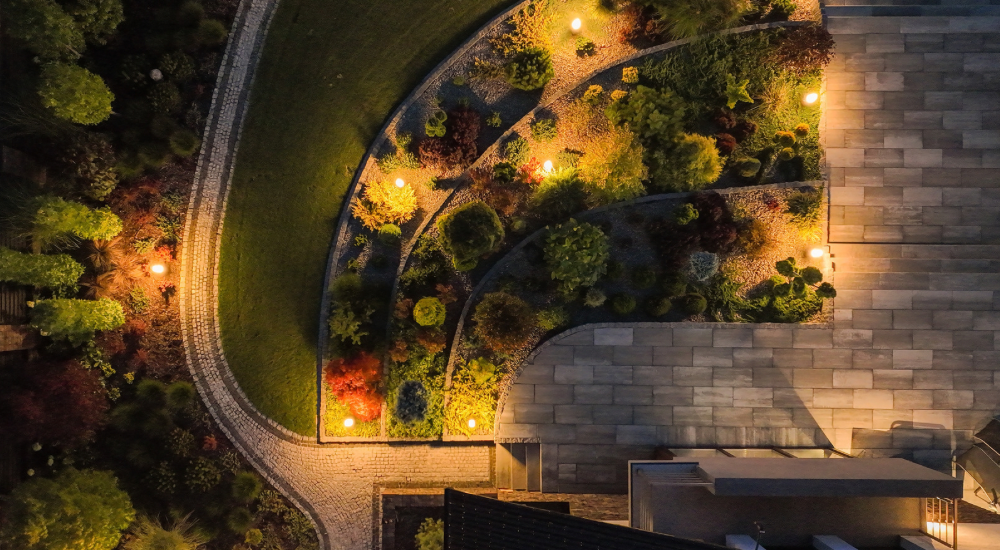
Outdoor lighting ideas can transform a garden’s typical shapes when the sun slips below the horizon, allowing pathways, leaves, branches, and gathering spaces to emerge in an entirely different light. Daytime colour gives way to shadow and silhouette. Flowers soften into shapes, trees become dark sculptures against the sky, and carefully placed points of light begin to lead the eye through the landscape.
Lighting after dark is not simply about seeing where you are going. It changes how a garden feels.
A patio that seems open and bright during the day can become intimate below a canopy of tiny lights. A pathway can turn into a gently illuminated invitation through the garden. A mature tree that blends quietly into the background at noon can become the commanding focal point of the entire yard once you gently light it from below.
The most successful nighttime landscapes don’t try to recreate daylight. Instead, they welcome the darkness and work with it. Light reveals just enough—the edge of a path, the texture of bark, the movement of ornamental grasses, the outline of a pergola—to give the garden warmth, dimension, and mystery.
With a considered approach, nighttime lighting can also make patios, pathways, entrances, and gathering spaces easier to use after sunset, extending the landscape’s life beyond daylight hours.
Why Atmospheric Lighting Could Transform a Landscape
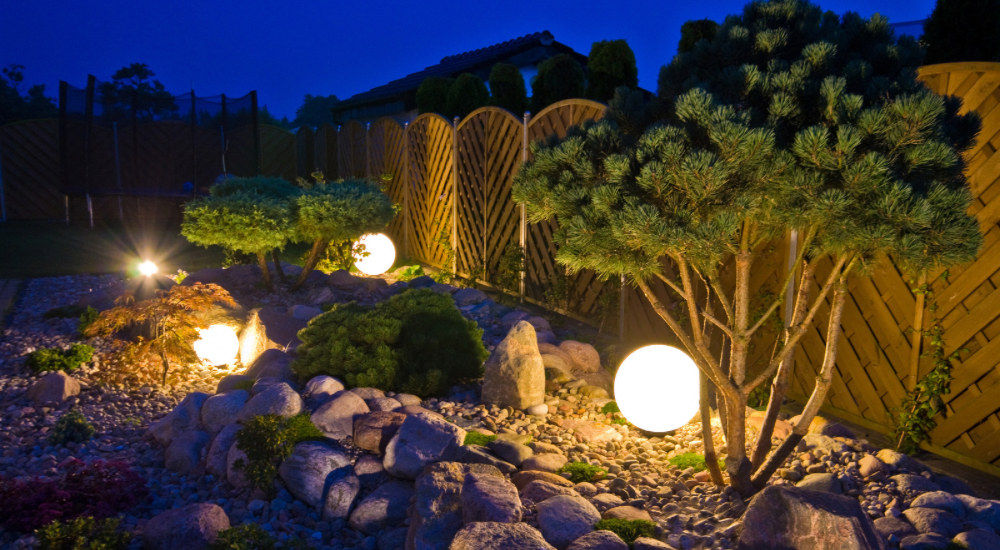
A beautifully lit landscape has layers.
Some areas radiate softly. Others remain in shadow. A tree catches the eye in the distance, while a pathway gently directs movement toward a patio or garden gate. The contrast creates visual depth that broad, uniform illumination cannot achieve.
Atmospheric lighting can bring several benefits to a landscape at once.
It creates warmth around seating areas and gathering spaces, making them feel more comfortable and inviting. It can show structural features such as stone walls, pergolas, specimen trees, garden beds, and water features. It can also make important transitions—steps, pathways, entrances, grade changes—easier to see.
Perhaps most importantly, lighting changes the relationship homeowners have with their landscapes.
A garden does not need to disappear when daylight does.
With a few carefully considered fixtures, a backyard can become a quiet place for an evening coffee, a comfortable setting for dinner outdoors, or a peaceful garden to admire from inside the house after sunset.
There’s a difference between illuminating and flooding.
Harsh lighting can erase shadows, flatten textures, and make a garden feel more like a parking lot than a retreat. Subtle lighting allows darkness to remain part of the design. Rather than exposing everything at once, it reveals the landscape selectively.
That restraint is what creates atmosphere.
Start With the Landscape: What Should the Light Reveal?
Before choosing fixtures, look at the landscape itself.
Lighting works best when it has a reason to be there. Instead of starting with where fixtures can fit, proceed by identifying what deserves attention.
A winding pathway may need subtle illumination so its direction remains visible after dark. A beautifully branched tree may be worth highlighting. A pergola may benefit from overhead lights that define the structure while creating a sheltered feeling beneath it.
Consider features such as:
- Garden pathways
- Flower beds and planting areas
- Mature trees and shrubs
- Pergolas and arbours
- Patios and seating areas
- Steps and entrances
- Retaining walls
- Water features
- Architectural elements
- Garden sculptures or focal points
Then consider the views from inside the home.
A prominent tree framed by a living room window may be just as important to illuminate as a patio used for entertaining. Lighting visible from indoors can make the garden feel connected to the house, even on evenings when no one is outside.
Think of light as a guide directing the eye through a nighttime landscape.
One illuminated feature should lead naturally toward another. A softly glowing path might draw attention toward a pergola. Beyond it, a tree’s silhouette could provide the next visual destination.
The result comes across less like a collection of fixtures and more like a nighttime tour through the garden.
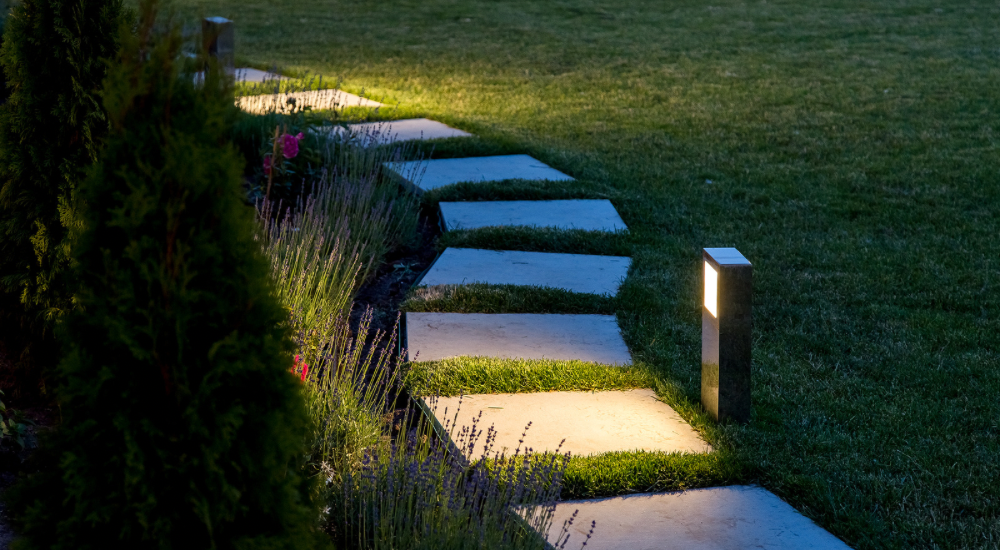 Create a Welcoming Glow Along Garden Paths
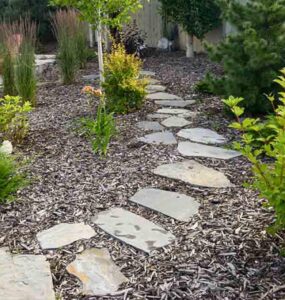
Path lighting is one of the easiest places to combine beauty with practicality.
After sunset, changes in direction, steps, edges, and uneven surfaces become more difficult to see. Low-level lighting can make those transitions clearer while also adding rhythm and movement through the landscape.
Solar pathway lights are an accessible starting point. They require no electrical wiring and can be repositioned as planting beds change. Low-voltage fixtures offer another option when homeowners want stronger or more steady illumination.
Lantern-style lights can introduce a more decorative character, especially near cottage gardens, patios, gates, or informal paths.
The secret is spacing.
Placing identical lights at perfectly even intervals on both sides of a walkway can create what designers sometimes describe as a runway effect. The eye notices the fixtures before it notices the garden.
Instead, use light more naturally.
Alternate fixtures from one side of the path to the other. Allow the spacing to respond to curves, plants, steps, and landscape features. Some areas may need more illumination, while others need very little.
Used thoughtfully, a path becomes a ribbon of light winding through the garden rather than a row of glowing markers.
Pay particular attention to stairs and changes in grade. These areas may need slightly brighter or more direct illumination than purely decorative sections of the garden because visibility is part of the function.
The best pathway lighting does both jobs quietly: it helps people move comfortably while adding atmosphere without attracting attention.
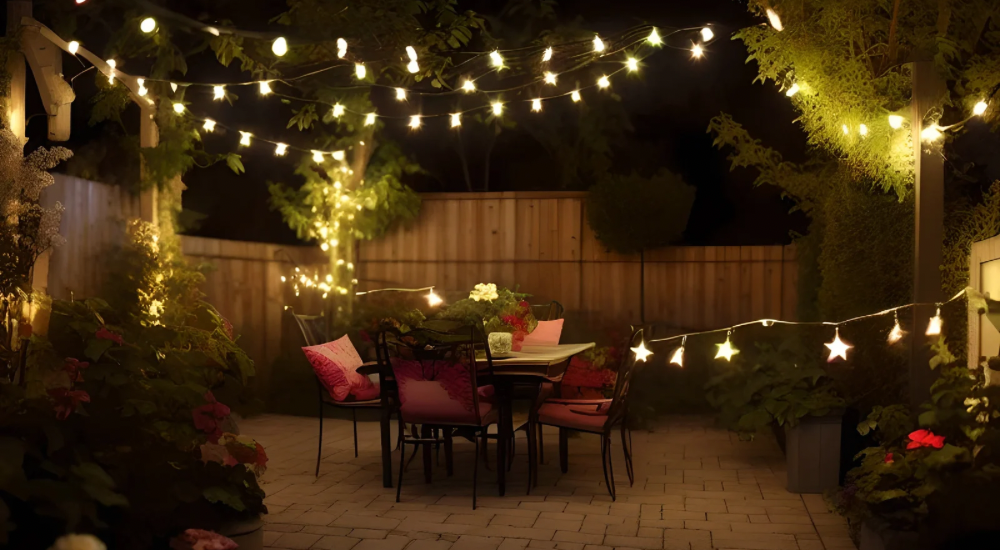
Let Patios and Pergolas Glow
Outdoor living spaces take on an entirely different personality after dark.
During the day, the patio may be defined by furniture, paving materials, containers, and surrounding plants. At night, light becomes one of the strongest elements determining how the space feels.
String lights are especially effective around pergolas. Draped overhead or along the structure’s beams, they create a soft ceiling of light that makes an open patio feel more intimate.
Solar-powered fairy lights can wrap around posts, twist through overhead structures, or be incorporated into nearby planting, where small points of light appear to float among the foliage.
Lanterns add another layer. They can sit on tables, walls, steps, or other stable surfaces, providing concentrated pools of heat around seating and dining areas.
Hanging fixtures can create stronger visual anchors over outdoor tables, while subtle accent lighting around pergola posts or adjacent planting helps connect the structure to the surrounding landscape.
Layering several softer sources is usually more atmospheric than relying on one very bright fixture.
For homeowners researching patio ideas in Edmonton, this layered method is especially useful because it lets the patio function as both an entertaining space and an inviting visual feature viewed from indoors.
The goal is not to illuminate every corner equally. Allow brighter areas around tables, cooking areas, steps, or entrances, while keeping softer pools of light elsewhere.
A patio should glow, not glare.
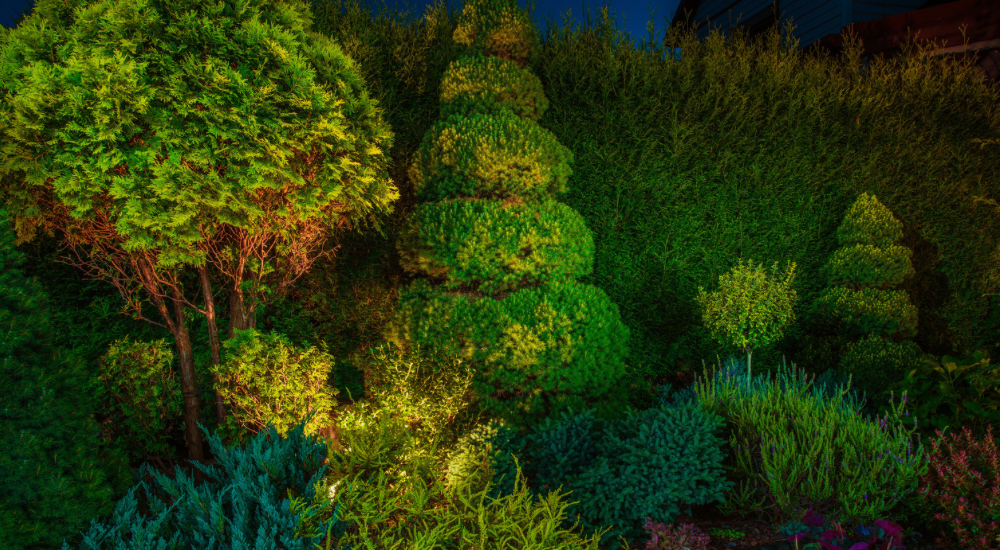
Highlight Plants, Trees, and Garden Features
Plants that command attention during daylight can become even more dramatic after sunset.
The difference lies in how light reveals form.
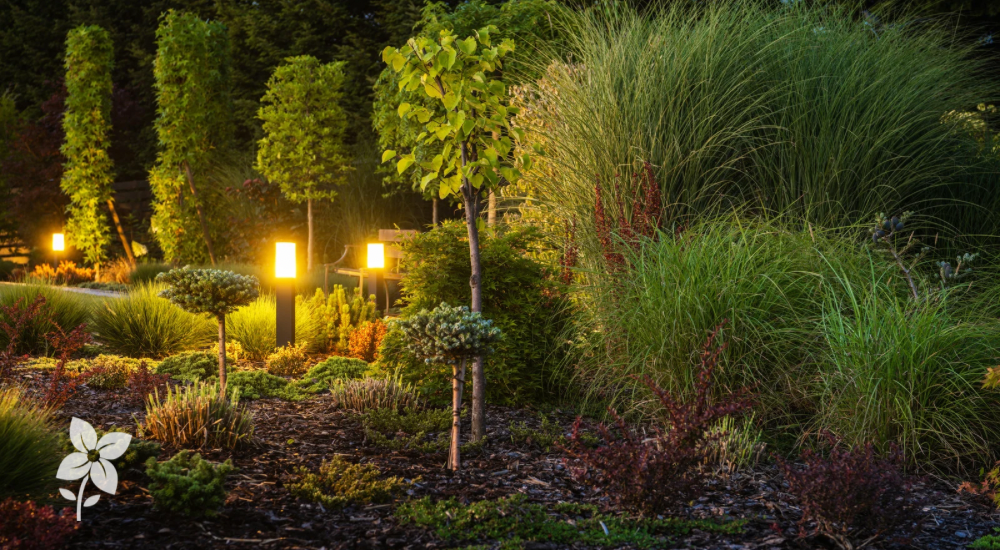
Uplighting a mature tree from near its base can draw attention to the architecture of its trunk and branches. From a distance, the canopy becomes a sculptural contour against the darkness.
Architectural plants with strong forms can also respond beautifully to directional lighting. Upright grasses, columnar shrubs, textured evergreens, and plants with distinctive branching patterns can cast shadows that add movement and depth.
Backlighting offers another effect.
Place the light behind a shrub or ornamental grass and aim it toward the viewer’s general direction, without letting the bulb itself become visible. Leaves and stems catch along their edges, creating a luminous outline.
A mature tree becomes a sculptural silhouette, while ornamental grasses shimmer at the light’s edges.
You can treat flower beds more subtly. Rather than illuminating every bloom, choose one section, specimen plant, piece of garden art, or structural element to emphasize.
This principle applies equally to decorative outdoor lighting around containers, sculptures, small trees, and feature beds. The illumination should support the composition already present in the landscape, not become the composition itself.
Let plants remain the stars. Light is simply stagecraft. As you bring your landscape to life after sunset, discover more ways to create a beautiful fall garden with seasonal colour, texture, and thoughtful planting ideas that keep your outdoor space captivating throughout autumn.
Choose the Right Kind of Glow
Not all white light feels the same.
Colour temperature plays an important role in a nighttime landscape’s mood. Warm white light generally creates a softer, more relaxed feeling that suits wood, stone, brick, foliage, and outdoor furniture.
Cooler or very bright white lighting can feel more clinical and may appear harsh when used extensively in planting areas or around intimate seating spaces.
Intensity matters as much as colour.
Entrances, cooking areas, stairs, and important transitions may require stronger illumination for visibility. Garden beds, pergolas, ornamental trees, and quiet seating areas usually benefit from a softer approach.
Different intensities can also create depth.
If every fixture produces the same brightness, the landscape can appear flat. Allowing one focal point to glow more strongly while surrounding areas remain dimmer creates visual hierarchy.
A useful way to approach the design is through tiered lighting:
Ambient lighting establishes the general mood around patios, pergolas, and seating areas.
Pathway lighting provides soft guidance through walkways, steps, and transitions.
Accent lighting draws attention to trees, plants, stonework, water features, or other focal points.
Together, those layers create a landscape that feels composed rather than illuminated.
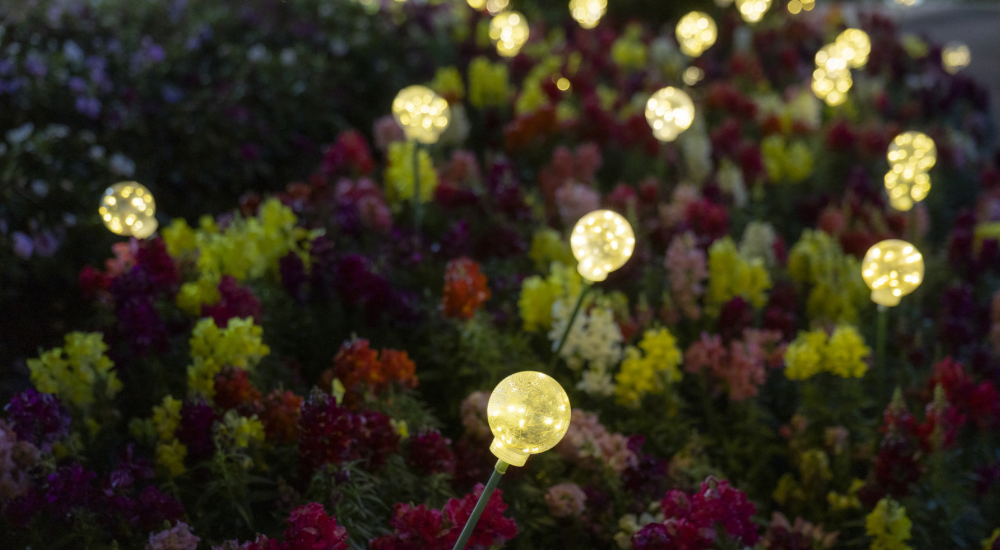
Solar Lights: Small Lights, Big Impact
Solar lighting can be surprisingly effective when it is used for the right purpose.
Modern solar options include pathway lights, lanterns, fairy lights, string lights, and small accent fixtures. They are especially useful where installing electrical wiring would be inconvenient or where homeowners want to experiment with placement before committing to a permanent system.
Solar lights work well along informal pathways, around garden beds, in containers, near patios, and throughout pergolas or arbours.
Their greatest advantage is flexibility.
You can move a solar lantern from a table to a garden ledge. Pathway lights can shift when beds expand. Fairy lights can follow a different branch or structure as the garden evolves.
Placement, however, is important.
The solar panel needs enough daylight to charge effectively. Dense shade beneath mature trees, the north side of solid structures, and heavily covered areas may not provide enough sunlight for continuous performance.
Before installing several fixtures permanently, observe how sunlight moves through the property.
A location that appears sunny in the evening may have spent most of the day beneath the shade of a building or tree canopy.
Solar fixtures also work best when homeowners accept their role as atmospheric rather than expecting every small fixture to provide strong task lighting.
Tiny points of light can have a large visual impact precisely because they are restrained.
The Art of Subtlety: Less Light, More Atmosphere
One of the most common mistakes in nighttime landscape design is adding too much light.
More fixtures do not automatically create a better result.
When the entire landscape is illuminated evenly, shadows disappear. Trees lose their sculptural quality. Plants blend. Architectural features no longer stand apart.
The landscape becomes visually flat.
Strategic darkness is not space; it is part of the composition.
Imagine a mature tree glowing gently in an otherwise quiet section of the yard. Because the surrounding area remains darker, the tree gains presence.
The same principle works along pathways. A series of gently lit areas separated by darker intervals creates far more atmosphere than continuous brightness.
Harsh light can also work against relaxation. Bright bulbs shining directly into seating areas, windows, or neighbouring properties can make an outdoor space feel uncomfortable rather than welcoming.
Shield fixtures whenever possible so the source remains discreet. Ideally, people notice the illuminated tree, pathway, wall, or planting bed before they notice the fixture creating the effect.
This is an important principle when exploring landscape lighting ideas in Alberta, particularly for homeowners trying to create a polished landscape rather than simply increasing brightness around the property.
Use light where it contributes something.
Leave darkness where it creates contrast.
The goal is not to make the night disappear, but to make the garden shine within it.
Design Lighting Around How You Use the Space
A beautiful lighting plan should also make sense for everyday life.
Begin by thinking about what happens outside after sunset.
For homeowners who entertain regularly, patios, dining areas, entrances, and pathways between the house and gathering spaces deserve priority. Guests should be able to move comfortably without the setting feeling overly bright.
For evening walks through the garden, pathway lighting and clear illumination around steps become more important.
A pergola used for quiet relaxation may need little more than a few strings of cozy lights, a lantern near the seating area, and subtle illumination in nearby planting.
Garden lovers who enjoy viewing their landscape from indoors may prefer to focus light on specimen trees, sculptural shrubs, ornamental grasses, or favourite garden beds.
Outdoor dining requires another balance. People need enough illumination to see the table comfortably, but a glaring overhead fixture can quickly destroy the mood. Softer hanging lights, lanterns, or surrounding sources create visibility without turning dinner into a spotlighted event.
Lighting has to follow behaviour. Where people walk, guide them. Where people gather, warm the space. Where the garden deserves attention, reveal it.
This approach makes nighttime lighting feel like an extension of the landscape design, not an accessory added afterward.
Bringing Everything Together: Create a Landscape That Glows
A simple way to remember the principles of atmospheric landscape lighting is:
Guide → Gather → Highlight → Soften
Guide: Brighten pathways, steps, entrances, and important transitions so movement through the landscape feels comfortable and intuitive.
Gather: Create pools of welcoming light around patios, pergolas, dining areas, benches, and seating spaces.
Highlight: Choose a few significant landscape features—perhaps a mature tree, ornamental grass grouping, stone wall, fountain, or architectural plant—and give them visual importance after dark.
Soften: Tie the design together with warm, restrained illumination and enough darkness to preserve depth and atmosphere.
The formula is simple, yet the possibilities are remarkably varied.
A formal landscape may rely on precise architectural lighting and carefully selected focal points. A cottage-inspired garden may feel more natural beneath scattered lanterns and gently illuminated pathways. A contemporary patio may use minimal fixtures and dramatic uplighting to emphasize strong plant forms and clean structural lines.
Not every landscape needs to glow the same way.
The lighting should reflect the garden’s existing character.
Professional landscape design and lighting services can also become valuable when a property has multiple outdoor living areas, complex grade changes, mature planting, architectural features, or a need for combined electrical systems. A coordinated plan can help ensure fixtures, intensity, viewing angles, and focal points work together, rather than being added one by one without a larger vision.
Ultimately, atmospheric lighting is not about accumulating fixtures.
It is about composing an experience.
Let Your Landscape Have Its Evening Moment
As evening settles in, the landscape begins its second act. Pathways glow gently beneath each step. Trees rise as shadowy outlines against the night sky. Lanterns cast small pools of light around the patio, while string lights form a soft canopy above conversation and dinner. Garden beds retreat partly into shade, letting a favourite tree, a sweep of ornamental grass, or the edge of a stone wall catch the eye.
Daylight reveals almost everything at once. Nighttime lighting has the luxury of choosing what to show.
That is where its beauty lies. As the seasons shift and your garden takes on richer autumn tones, discover more fall landscaping ideas to complement your nighttime glow and keep your outdoor space vibrant, layered, and inviting through the season.
A successful nighttime garden still feels unmistakably like a garden. Plants remain plants, darkness remains darkness, and the natural character of the landscape is never lost beneath excessive brightness. Light gives familiar spaces another personality—quieter, warmer, more intimate, and sometimes surprisingly dramatic.
Thoughtful outdoor lighting ideas can turn an ordinary yard into an inviting nighttime retreat, giving the landscape an evening moment of its own and letting homeowners enjoy the garden well after the last daylight has disappeared.
Bring Your Garden to Life After Dark
The right lighting can transform the way you experience your landscape after dark. Visit Salisbury Greenhouse to explore our selection of solar fixtures, lanterns, garden accents, and other outdoor lighting that complement your landscape and help create the atmosphere you’re after. Our team is happy to help you choose lighting that suits your space and style.