What You Do in Fall Shows Up in Spring
Fall lawn care is less about what you can see in October and more about what the grass is quietly doing below the surface. As daylight shortens and top growth slows across Sherwood Park, St Albert and Edmonton, cool-season turf still uses favourable soil temperatures to maintain roots, store energy, and recover from summer wear. A lawn that looks sleepy above ground can still be remarkably busy beneath it.
That makes early October a useful transition point. The goal is not to force lush new growth just before winter or to pile on every treatment available. It is to remove the problems that would otherwise follow the lawn under the snow: matted leaves, overly long grass, nutrient deficiencies, compacted soil, and small damaged areas that may worsen through winter. A few deliberate jobs now can mean denser turf, more even green-up, and fewer weak spots when spring finally returns. The work you put into fall lawn care can make a noticeable difference in how quickly your grass recovers and fills in once spring arrives.
In Alberta, timing matters as much as technique. Cold can arrive quickly, so work with the lawn’s condition and the weather instead of following a fixed calendar. Think of October maintenance as giving the turf a clean runway into dormancy, not asking it to sprint at the finish line. A thoughtful fall lawn care routine can help Edmonton area lawns recover from summer stress, strengthen their roots, and head into winter in better condition for spring.
 Start by Reading Your Lawn
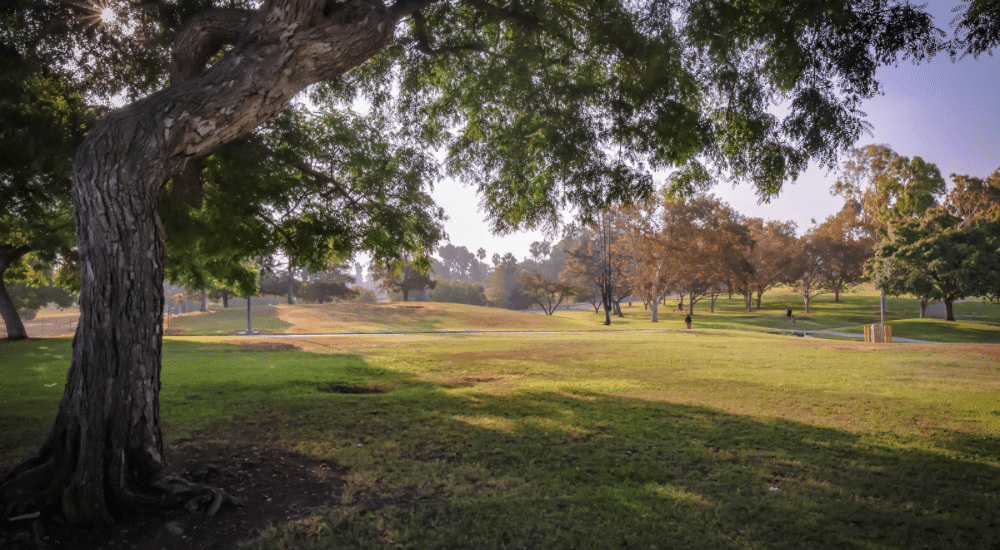
Before opening a bag of fertilizer or scattering seed, walk the lawn slowly. Turf has a way of keeping a record of the season. A pale area may point to nutrient stress. Bare soil along a familiar shortcut may be from traffic damage. Water remaining in a low spot may reveal compaction or grading problems. Thin grass beneath a tree may be struggling with shade and root competition rather than a lack of fertilizer.
Look for thinning, bare patches, weeds, spongy thatch, hard soil, standing water, uneven colour, and areas that repeatedly dried out through summer. Push a screwdriver into moist soil in several locations. If it enters reasonably easily in one area but meets strong resistance in another, compaction may be playing a role in poor root growth. After rain or irrigation, note where water disappears quickly and where it sits.
Also distinguish between an established lawn and young turf. Mature grass with a well-developed root system can tolerate corrective work much better than sod that was installed recently or seedlings that are still becoming anchored. New turf needs consistency; established turf can sometimes benefit from intervention.
The point of this inspection is simple: treat the cause, not just the symptom. A thin lawn caused by compacted soil will not become permanently dense simply because more seed is scattered over it. A wet patch caused by drainage problems will not be fixed by extra fertilizer. Good lawn care begins with diagnosis.
Give Grass the Right Fall Feeding
Autumn feeding supports the plant as it moves toward dormancy, not increased tender top growth. Grass still requires nutrients when temperatures are cool enough for root activity, and an appropriately timed application can support recovery from summer stress and help turf store resources for the next growing season.
When selecting a fall lawn fertilizer, look for a product intended for established turf and follow the label rather than assuming a larger application will produce a better lawn. Nitrogen remains important for turf growth and recovery, while other nutrients should be supplied based on the product, soil conditions, and actual need. The City of Edmonton also recommends slow-release fertilizer in its fall lawn guidance.
Application timing matters. Fertilize while the grass is still physiologically active and the ground is not frozen. Apply evenly with a properly adjusted spreader, avoid overlapping at turns, sweep stray granules off driveways and sidewalks, and water according to label directions if rainfall is not expected. Fertilizer that lands on hard surfaces should be swept back onto the lawn rather than washed into the street or stormwater system.
More is not better. Doubling the recommended application will not double the benefit. Excess fertilizer wastes product, can increase the risk of nutrient runoff, and may encourage growth the lawn does not need heading into winter. If a lawn has recurring problems with colour or vigour despite regular feeding, a soil test may provide more useful information than another heavy application.
Fall feeding works best as support, not rescue. Fertilizer cannot correct poor drainage, deep compaction, chronic shade, or badly degraded soil on its own. It is one piece of the puzzle.
Rethink the Last Few Mows
The lawn mower shouldn’t disappear into the shed just because the nights are colder. Continue mowing while grass is actively growing, but expect the interval between cuts to stretch as temperatures drop.
For the final cuts, resist two opposite impulses: leaving the grass long “for protection” or shaving it down to the soil before snow. Long, floppy turf can mat beneath snow and leaves, while mowing too short removes too much photosynthetic tissue and stresses the crowns of the plants.
A final height of around 6 cm, or roughly 2.5 inches, is a useful local benchmark. Regional guidance from the City of Edmonton recommends mowing to approximately that height before hard frost. You do not need to hit the number with laboratory precision. The more important principle is to reduce the height gradually rather than suddenly removing a large portion of the grass blade.
Keep the mower blade sharp, too. A clean cut tears less than a dull blade and leaves smaller wounds. Ragged, shredded blade tips signal that sharpening is overdue.
And if October delivers a mild stretch and the lawn keeps growing, mow again. The “last mow” is determined by the grass, not by a ceremonial date on the calendar.
 Don’t Let Fallen Leaves Become a Winter Blanket
A scattering of leaves is harmless. A thick, wet layer is another story.
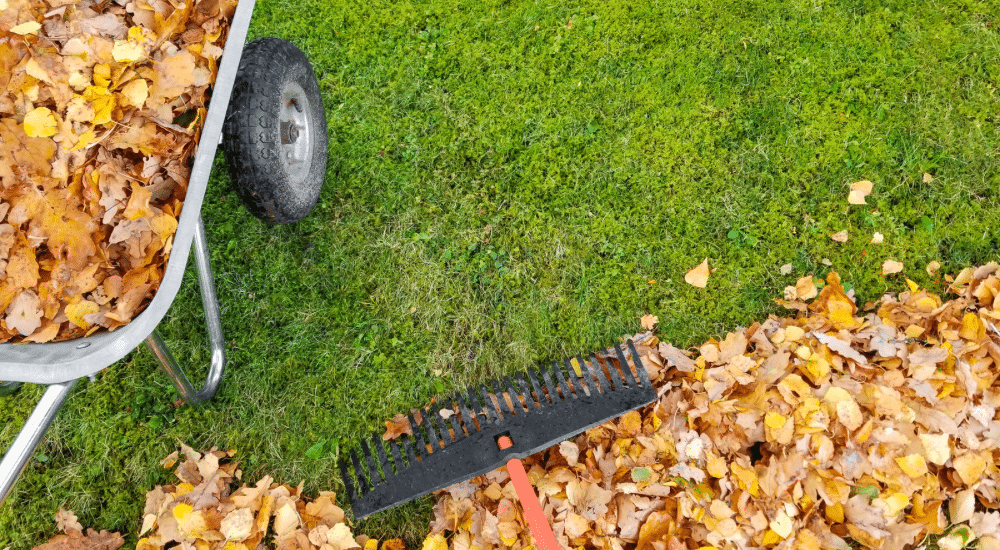
Once leaves begin collecting in corners, along fences, and beneath trees, they can flatten grass, reduce light, restrict air movement, and trap moisture against the turf. Under snow, that mat may remain in place for months. What looked like a colourful autumn carpet in October can become a heavy lid over living grass.
Regular removal is easier on both the homeowner and the lawn than waiting until every tree is bare. Rake or collect deep accumulations, especially where leaves are wet or packed together. You can also mulch dry leaves in modest quantities with a mower so the fragments settle between the grass blades instead of forming another layer on top.
The key word is manageable. If a pass or two with the mower turns the leaves into fine pieces that disappear into the turf, mulching can be an efficient option. If the chopped leaves still form a visible mat several layers thick, you have simply too many. Collect the excess.
Pay particular attention to sheltered areas. Wind may keep the centre of the lawn relatively clean while piling leaves knee-deep against shrubs, fences, retaining walls, or the side of the house. These are often the places where turf suffers most.
Leaf management is one of the least glamorous autumn jobs, but it pays twice: the grass enters winter with fewer obstacles, and the first spring cleanup is considerably less soggy.
 Repair Thin and Bare Areas While There’s Still Time
Early fall is often an excellent season for establishing cool-season grasses because the soil can stay warm while air temperatures become gentler. Early October in the Edmonton region, however, is late enough that homeowners need to be realistic.
The City of Edmonton’s grass-seeding specifications identify May 1 through September 15 as the recommended seeding period. That does not mean a seed is physically incapable of germinating after September 15. Still, it illustrates why October seeding becomes a gamble: cold weather may arrive before seedlings have enough time to establish.
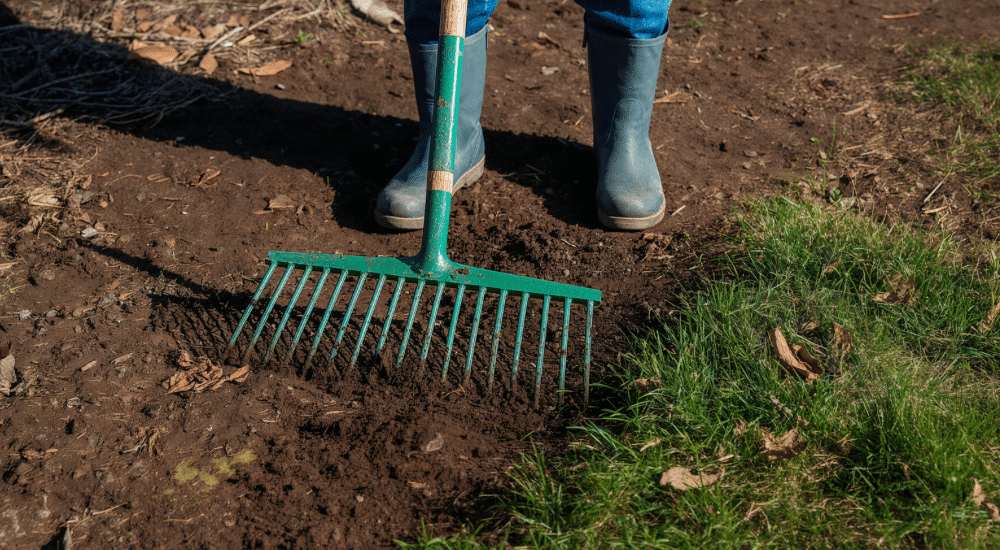
If conditions have remained unusually mild and a very small bare patch needs attention, a homeowner may still choose to make a minor repair. Loosen the surface, remove dead debris, create good seed-to-soil contact, sow at the recommended rate, and keep the seedbed consistently moist while germination occurs.
Simply tossing seed over hard, compacted ground is unlikely to accomplish much. Seeds need contact with soil, moisture, and sufficient growing weather. They cannot establish themselves on wishful thinking alone.
For larger thin or damaged areas in early October, it is often wiser to identify the cause now and plan the actual seeding for an appropriate spring window. Loosen or aerate compacted areas where necessary, note drainage problems, remove debris, and keep a record of areas that need attention.
Homeowners searching for fall lawn care Edmonton advice will encounter plenty of recommendations written for climates with much longer autumns. Local timing changes the equation. A technique can be perfectly sound in theory and still be poorly timed for central Alberta.
Look Beneath the Grass
Grass is only the visible half of a lawn. Soil is the engine room.
Compacted soil has fewer useful pore spaces for air and water movement, making it harder for roots to explore deeply. The result can be shallow rooting, poor infiltration, puddling after rain, increased drought stress, and thinning in heavily travelled areas.
Core aeration can help when genuine compaction is present. The machine removes small plugs of soil, creating openings for air and water while giving roots room to expand. The City of Edmonton identifies aeration as an appropriate response to compacted turf soils, not something every lawn automatically requires.
That distinction matters. Aerating simply because “it’s fall” can turn a useful technique into an unnecessary ritual.
Look at how the lawn behaves. Does water sit on the surface after ordinary rainfall? Is the soil difficult to penetrate even when moist? Are the worst patches concentrated along walking routes or areas where children, pets, equipment, or vehicles repeatedly cross? Those clues make compaction more likely.
Aeration is also best done when soil is moist enough for the tines to penetrate but not saturated. Bone-dry soil can be difficult to core effectively, while waterlogged ground can turn the operation into a muddy mess.
Low organic matter can create other problems. A very thin topdressing of quality compost or suitable topsoil can gradually improve soil surface conditions without burying existing grass. Edmonton’s regional guidance recommends approximately 1 cm of compost or topsoil as part of lawn improvement.
Drainage deserves its own diagnosis. If the same depression holds water after every rain or each spring snowmelt, extra fertilizer or another handful of seed will not solve the underlying issue. Compaction may be involved, but grading, soil depth, soil texture, or the direction of water flow around the property may also be contributing factors.
Healthy turf begins underground. When the same patch fails year after year, the answer is often beneath your boots rather than inside another bag of grass seed.
 New Lawn? Give It a Little Extra Attention
New sod and newly seeded turf need a gentler hand because their root systems are still under construction.
Recently laid sod should remain evenly moist enough to encourage rooting without being kept continuously waterlogged. Once the roots begin anchoring into the soil, watering can gradually become deeper and less frequent, guided by rainfall, temperatures, and actual soil moisture.
Avoid unnecessary foot traffic as well. Repeated shortcuts, children’s play, furniture, equipment, and pets running the same route can all disturb young turf before its roots have firmly knitted into the soil below. Established grass can shrug off a surprising amount of activity; newly rooted grass has much less margin for abuse.
Mow new sod only when it has anchored firmly enough that the mower will not shift or lift it. A slight tug at an edge can help indicate whether roots are beginning to take hold. When mowing, use a sharp blade and avoid removing too much height at once.
Seeded lawns also need patience. Let seedlings establish enough to tolerate mowing before chasing a perfectly uniform appearance.
Feeding deserves similar restraint. If you incorporated fertilizer during installation or applied it recently, don’t assume the young lawn automatically needs another application. Follow the establishment recommendations for the sod or seed and the directions for any fertilizer you use.
A new lawn’s first autumn is about building roots, not pushing it to perform. Constant care now gives that young turf its best chance of meeting its first Alberta winter as a lawn, not a collection of vulnerable individual plants.
A Simple Early October Lawn Care Checklist
The best way to prepare a lawn for winter is to focus on the work the grass genuinely needs, in a logical order.
- Assess the lawn first. Identify thin areas, bare patches, compacted sections, drainage problems, heavy thatch, and signs of lingering summer stress.
- Keep mowing while the grass grows. Gradually finish around the locally recommended 6 cm height instead of stopping too early or mowing the turf too short.
- Stay ahead of fallen foliage. Rake or collect heavy accumulations and mulch only quantities that can be chopped finely enough to settle into the lawn.
- Feed with purpose. Choose an appropriate product, follow the labelled rate, and apply only while turf and soil conditions remain suitable.
- Be realistic about seeding. By early October, the Edmonton area is generally past the preferred seeding period, so plan substantial overseeding for spring.
- Aerate where compaction is actually present. Do not make aeration an automatic annual treatment if the soil already drains well and supports healthy roots.
- Topdress thoughtfully. A thin layer of appropriate compost or topsoil can help improve surface soil without burying existing grass.
- Investigate persistent wet areas. Correct the reason water collects rather than repeatedly replacing the grass that dies there.
- Treat young lawns gently. Protect developing roots through appropriate watering, mowing, feeding, and traffic management.
- Skip unnecessary treatments. More products, more fertilizer, and more intervention do not automatically add up to healthier turf.
A good October routine should feel surprisingly simple. The goal isn’t to squeeze another season of lush growth from the grass. It is to remove obstacles, support the root system, and allow the lawn to move into dormancy in sound condition.
Put the Lawn to Bed Strong
Spring lawns tell stories about the autumn that came before them. Grass that entered winter smothered beneath leaves, cut too short, chronically compacted, or already thin has more work to do when the snow retreats. Turf that entered winter at a sensible height, with appropriate nutrition and fewer unresolved stresses, begins the next growing season from firmer ground.
You don’t need to turn October into a marathon of treatments. Pay attention to what the grass is showing you, make the corrections that are still timely, and leave poorly timed jobs for the right season. Sherwood Park and Edmonton homeowners can visit the garden centre for locally appropriate fertilizer, grass seed, soil amendments, and practical advice based on their lawn’s actual condition. Thoughtful fall lawn care now is not about chasing a perfect green carpet before snowfall; it is about giving the lawn the strongest possible foundation for spring.
If you’re unsure which fall lawn care products are right for your yard, stop by Salisbury Greenhouse. Our team can help you choose fertilizers, grass seed, compost, and soil amendments suited to your lawn’s needs and our local growing conditions.